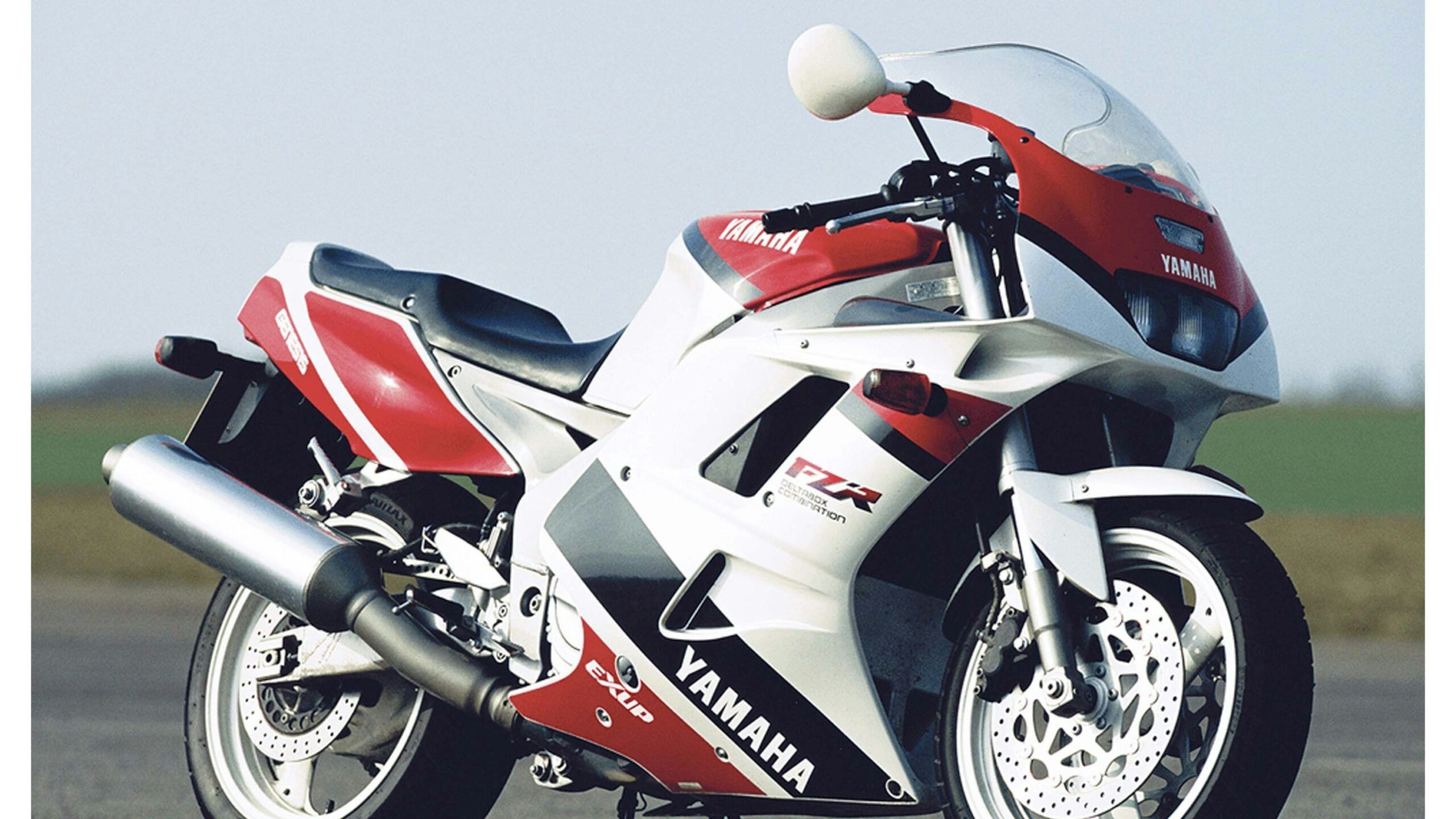
FZR1000 EXUP
Fast and sharp yet flexible and forgiving, Yamaha’s FZR1000 EXUP is the defining 1980s superbike – and a modern-classic bargain. Mike Armitage explains why it’s so special
Photography BAUER, GARETH HARFORD, YAMAHA
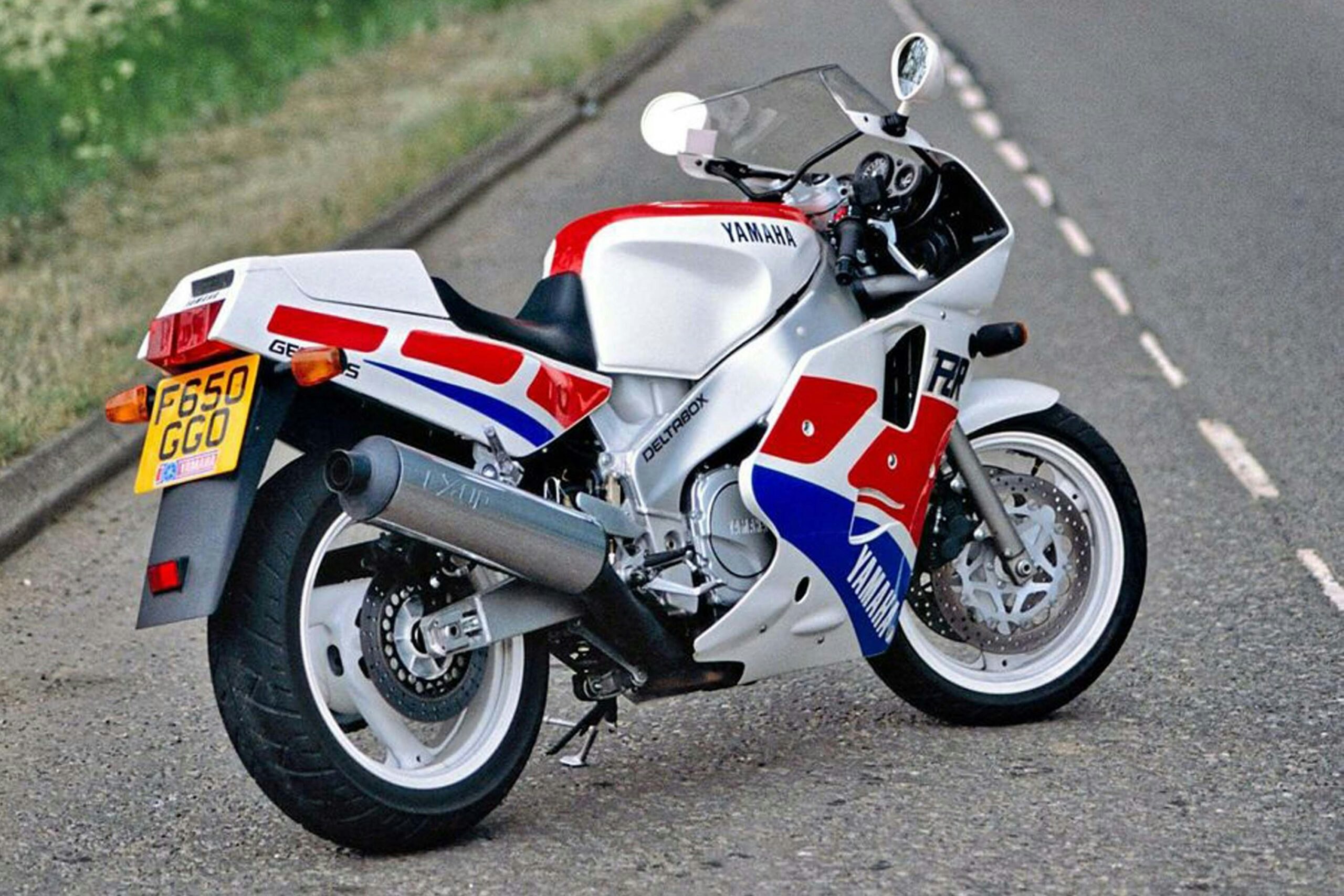
My crush on the Yamaha FZR1000 started in summer 1987. It was Mat Oxley’s fault. The Classic Bike contributor was on the front of the July issue of Performance Bikes, which sported the headline ‘Ringaround a Lambo’ and a picture of him scooting past a ridiculous yellow car. Mat was riding an FZR.
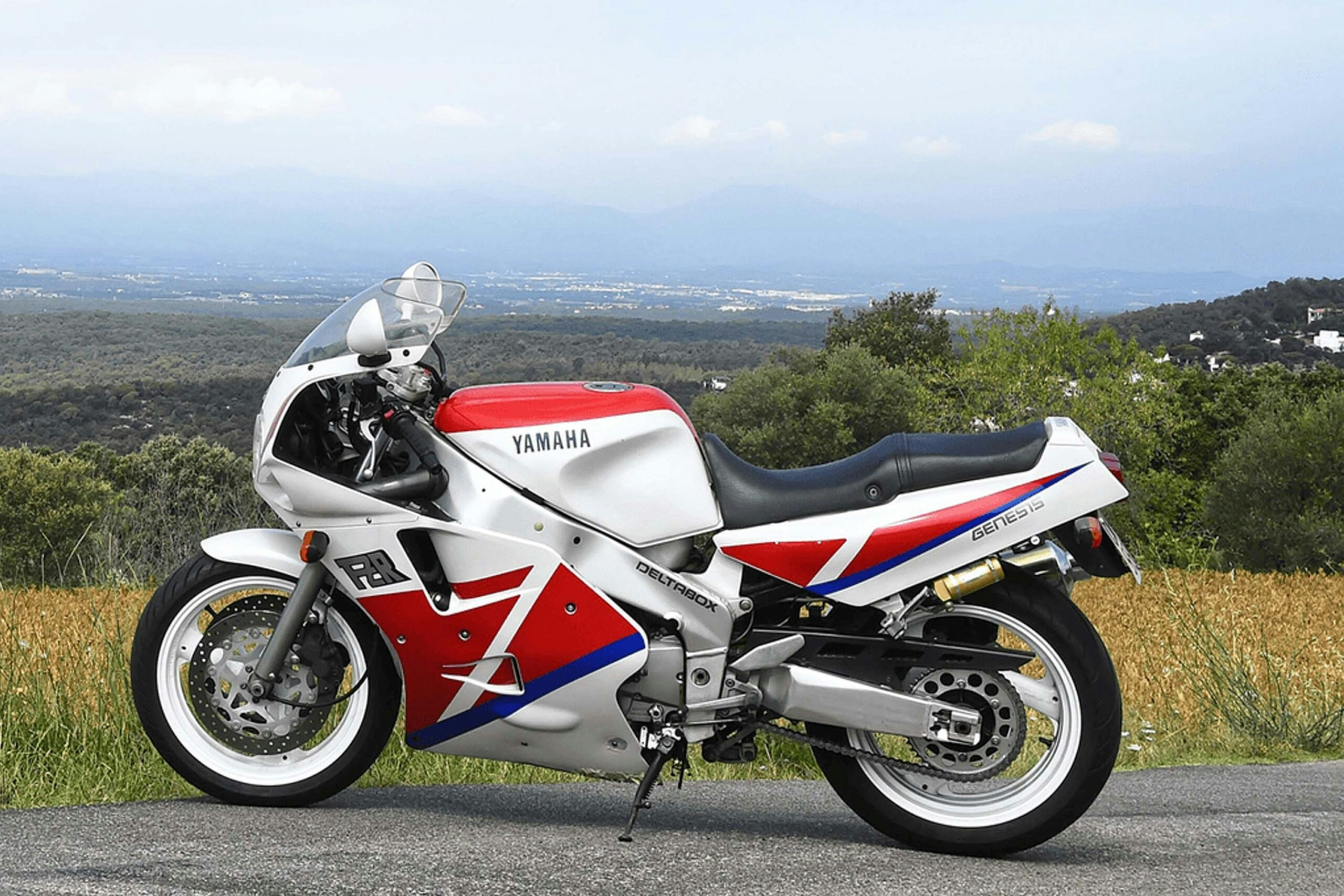
New that year, the Yam was the first 1000cc sports bike with a twin-spar aluminium beam frame. Twin round lamps made it look like an endurance racer. Scoops in the fairing (vaunted as the FAI or ‘fresh air induction’ system) directed atmosphere into the airbox. And the 20-valve 989cc inline four used the Genesis concept, being tipped forward 45° for near-vertical downdraught inlets and a low centre of gravity. Speedblock paint, too. Phwoar.
With a dyno-tested 107bhp and the ability to do 0-125mph in just eleven and a half seconds, the FZR matched the performance of the benchmark Suzuki GSX-R1100 – but also scurried around corners like no big bike had ever done before. It was the most intoxicating machine I’d ever seen.
Or it was until 1989, when Yamaha released a new FZR with something called EXUP.
Variable engineering
We all love a good acronym, and EXUP – EXhaust Ultimate Powervalve – is right up there. It’s not really a four-stroke version of the Yamaha Power Valve System used on the firm’s two-strokes, though. YPVS changes the engine’s timing; EXUP also brings variability, but uses it to effectively fool the engine into thinking it has a different exhaust.
When a four-stroke’s exhaust valve opens, the ‘blowdown’ of the pressurised hot gas shoves it down the exhaust pipe. This positive pressure wave goes down the header, arrives in the larger-diameter collector (or a change of section) and expands. This slows it down and sends a ‘negative’ wave back to the cylinder. It reflects up and down a bit.
There’s a period during which the inlet and exhaust valves are both open, known as overlap. In high-revving engines, the valves need to open for sufficient time to let enough gas past, so exhaust closing gets later, inlet opening earlier, and overlap increases. Though good for making power, the valve timing isn’t then great at low revs and gas flow suffers – exhaust gas finds its way back in, hampering volumetric efficiency and torque, and causing worsening combustion.
But the exhaust’s pressure waves can become useful. Header pipe diameter and length can be tuned so the negative wave returns as overlap occurs, effectively drawing waste gas out and a fresh charge in; as the exhaust valve starts to close, a positive pressure then prevents fuel escaping into the exhaust. Handy.
However, pressure waves move at a speed that’s dependent on gas temperature but irrespective of revs. Short headers can put the negative/positive double-hit at the right point for high revs, but won’t be right at low-speed running; a pipe working at 12,000rpm will also work at 6000rpm, but will be unsuitable in between. Pressure waves will be out of sync, ruining efficiency and knocking holes in the torque. Silencing causes problems as well – abrupt restrictions reflect high pressure back towards the engine, making it work harder to push exhaust gas out.
This is why you see bikes with staggered headers, link pipes and tapers. They’re to give reflections over a wider range, and work to a point. But what we really need is variable geometry.
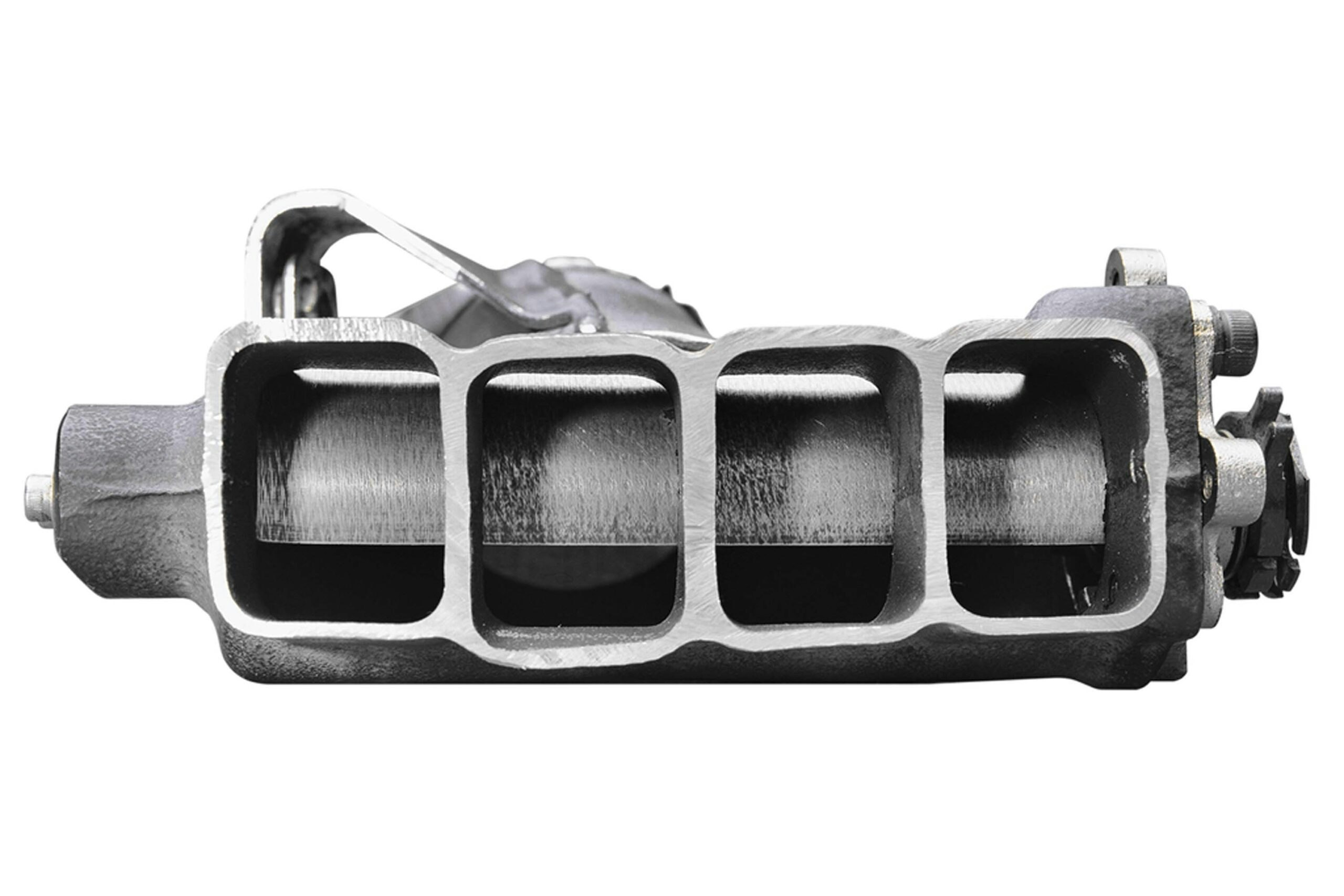
Yamaha discovered that a throttle valve at the collector could control pressure waves. The original EXUP was a sort of guillotine across the end of the header pipes and before the collector. Controlled by a servo, it partially-closed the outlet and varied the reflection. Very clever. Its position was varied with revs and it allowed them to use what was essentially a race pipe for horsepower, but alter the geometry using the valve to clean-up holes in the torque. Experiments with a four-cylinder FZR400 gave 10% more power, 40% more torque, and reduced noise. Adorned with a suitable acronym, the system debuted on the Japanese-market FZR400R in 1987. It reached the mass market on the FZR1000 two years later.
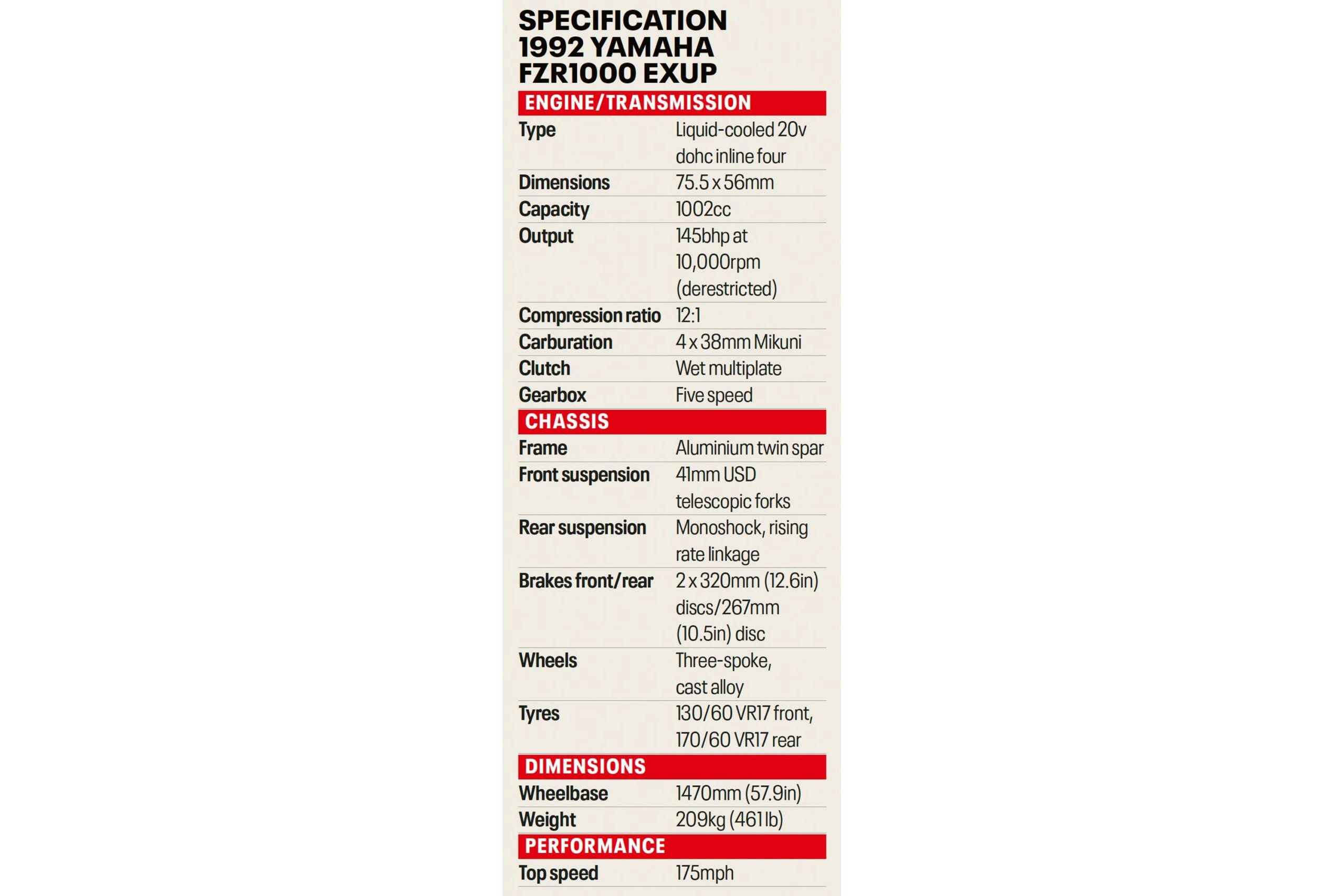
With a 0.5mm wider bore giving 1002cc, increased compression ratio, larger carbs and fatter airbox, the 1989 FZR1000 EXUP made 108bhp on the dyno and hit 158mph at the test strip. Not much different to the earlier FZR, but that’s because Yamaha sent restricted versions to some markets. Introducing a Stanley knife to the rubbers bunging up the inlet tracts released the full potential of the EXUP-equipped engine – the Yam could nudge 130bhp and an unprecedented 175mph. Bewildering. Crucially, it was also useable. Thanks to the cunning exhaust valve, the big FZR was tractable and manageable, delivering effortless overtakes and smooth, surging corner exits.
‘This is the pivotal point when it comes to balance’
The complete package
There was another change to the EXUP’s engine. It was more upright and less ‘Genesisy’. This new 35˚ angle allowed the motor to sit further forward, giving more weight on the front for stability and permitting a shorter wheelbase, down 10mm to 1460mm.
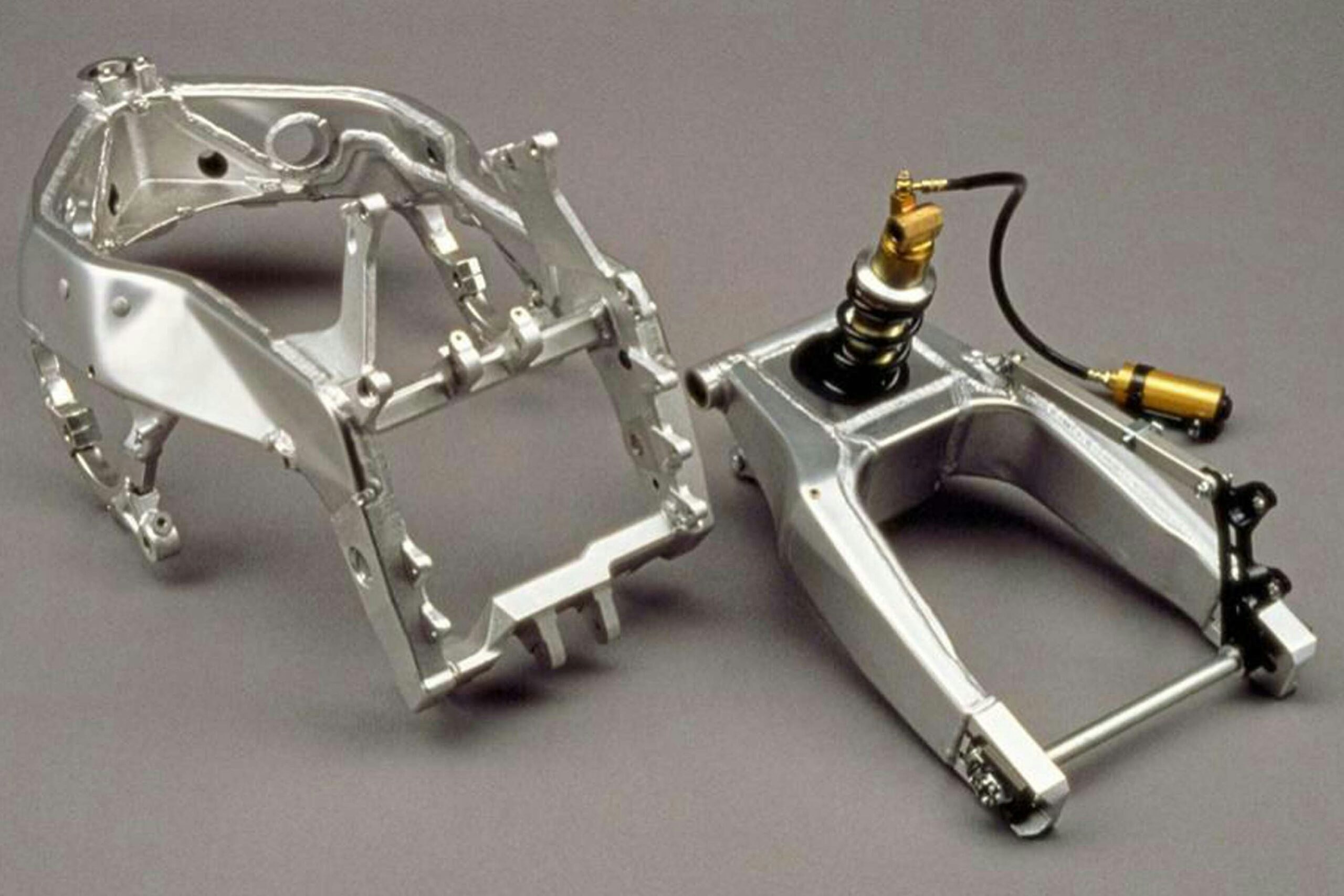
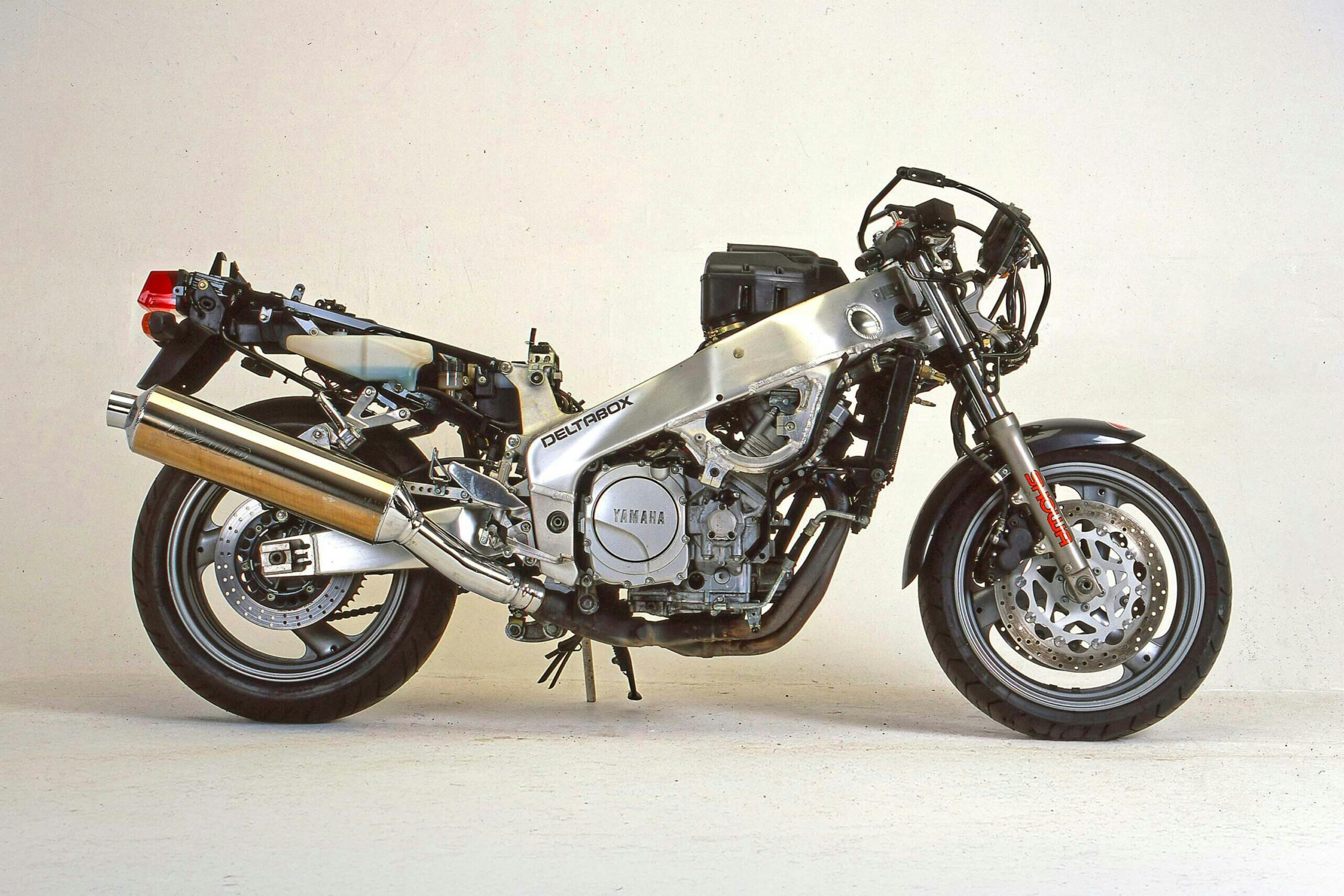
It was part of a big chassis refresh, inspired by the YZF750 endurance racer. The engine hung from the beams of a sculpted frame, rather than sitting in a cradle, and there were hollow wheel and swingarm spindles plus a GP-style swingarm with hefty chain adjusters.
“Advances in three-dimensional stress analysis technology made it possible for us to reduce torsional rigidity on the aluminum Deltabox frame while increasing lateral rigidity,” said Jiro Izaki, a member of Yamaha’s test team. “Tyres meant for big bikes were further developed and size settings that could bring out the inherent benefits of the low-profile radial tyre were found.” The rear wheel became 17in rather than 18in and grew to a 170 section, and the shock boasted rebound damping adjustment, rather than just spring preload.
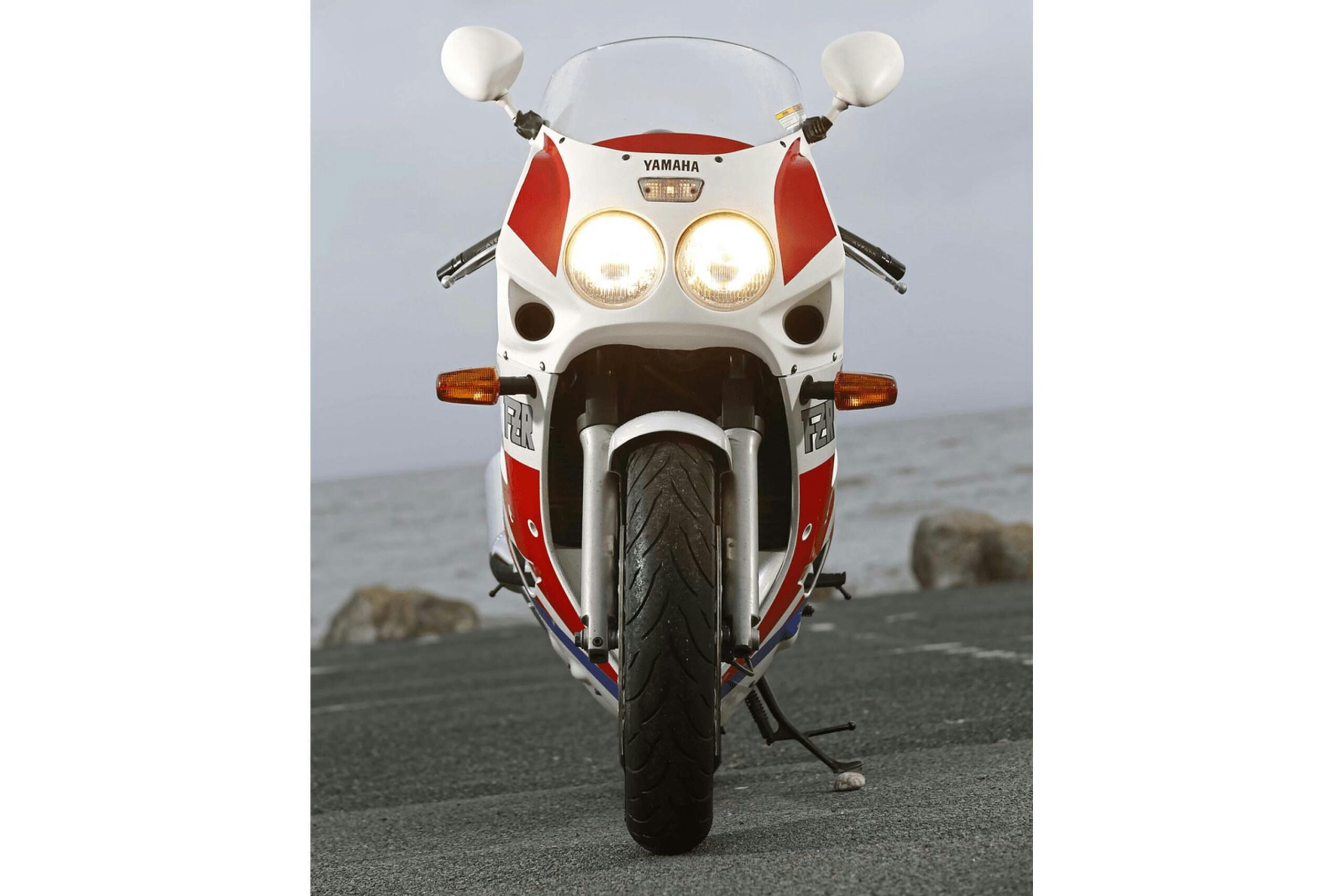
“We brought the handling to a new level of maturity by improving the bike’s overall balance rather than trying to aim for lightness and agility... With a big bike, the chassis always has to outperform the engine. I believe that this is the pivotal point when it comes to balance in a big bike,” continued Izaki.
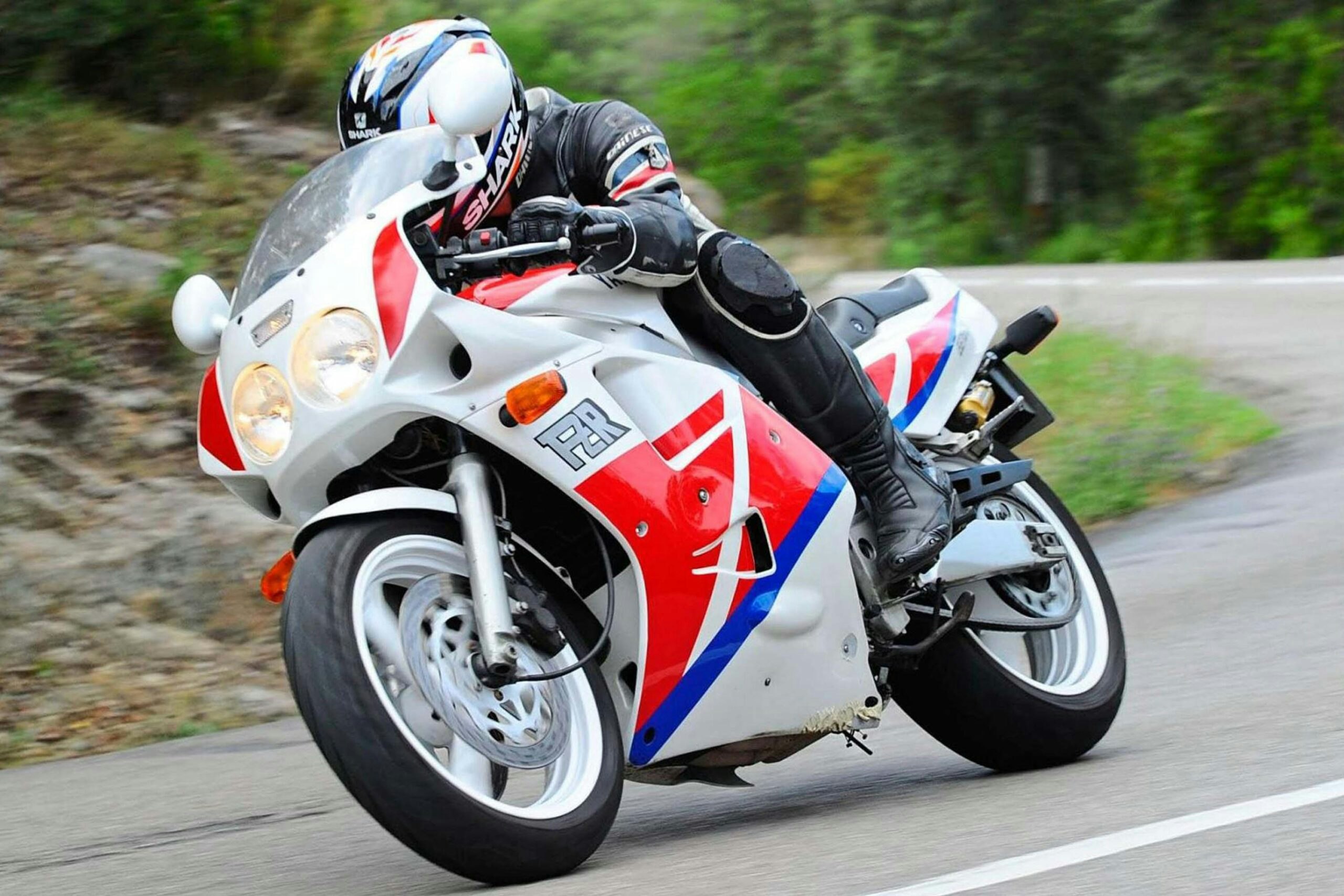
The FZR dominated comparison tests. It showed the bludgeoning GSX-R as dated, skipped around Kawasaki’s ZX-10 and ZZ-R1100, and made the Honda CBR1000F look like a chaise longue. “The Yam is silk,” gushed Bike. “Smooth controls, cleaner carburation, less vibes and more progressive power... the Yamaha manages to be both more stable and more responsive than you’d expect. The [front end of the] Yam is a model of well-controlled compliance... it’s much the same story at the rear; the Yam’s as near perfect as any mass-produced bike has any right to be.” They loved it in the US too, with Cycle World declaring it Bike of the Decade. The 1989 Production TT was the last year stipulating bog-stock bikes; in the 1300 class, the first eight finishers were all on FZRs.
Homologation machines like the RC30 and OW-01 may have been more exotic, but they were an irrelevance to most people. The smart EXUP-equipped FZR was the turning point – after a decade of engines tying chassis in knots, handling and useability had caught up with power. The superbike blueprint was set.
‘I’ve got two’
Classic Bike reader Howard Martin-Taylor
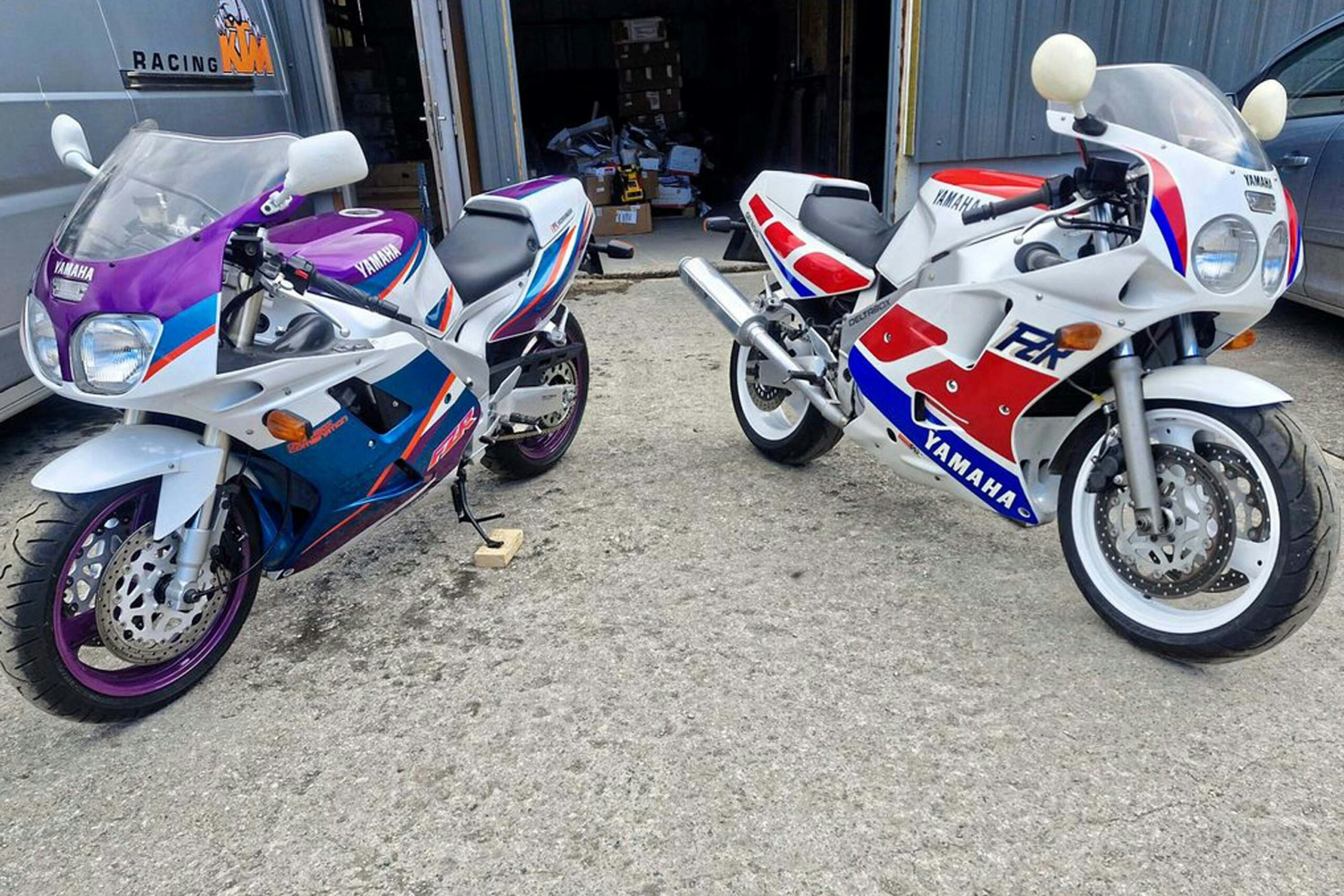
“Back in ’89 the EXUP was the bike to have, the ultimate sports bike. I had a few when I was younger, from original models through to RUs [the ’91 facelift version]. I really loved them. At one point I sold mine to buy a Suzuki GSX-R1100J – but that was like a barge compared to the FZR, so it didn’t take long for me to swap back. Now I’ve got two: an ’89 original and a ’94 fox-eye.
“It wasn’t only the performance that made the EXUP stand out – removing the restrictive rubber webs in the inlets was something we all did to release full power – it was the bike’s handling that really shone. A 170mph missile that could go around corners – there was nothing else like it. It took Honda’s FireBlade to change the game again.
“I’ll not sell my two. They really mean something to me and capture a perfect moment in time. If anything, I’d even buy another because they’re currently cheap to buy – £3500 gets an absolute minter – and they will go up in value. Plus, they’re still great fun to ride.”
‘I loved it’
Road tester, racer and bike tech Bruce Dunn
“I owned three in the early 1990s: two originals and an RU with USD forks. The EXUP was a little heavier than the model it replaced, but it made it a better bike – it seemed to give more mechanical traction and stability. And the engine felt revolutionary. It was super smooth from low down, with a ton of user-friendly torque and power. A bike that could do everything.
“I distinctly remember blasting to the Bol d’Or in the South of France, hammering down the autoroutes and encounters with like-minded randoms on ZZ-Rs and GSX-Rs, wheel-to-wheel at don’t-tell-anyone speed. Downside? Fuel consumption – we filled up every 60 or 70 miles.
“A couple of mates and I entered the Kent Racing Combine six-hour endurance on that bike. I fitted race tyres, put heavier oil in the forks and that was it. It ran faultlessly. Only issue was the silencer kissing the tarmac. Next day at work at A&J Motorcycles in Ramsey, I started the FZR and it was lumpy. A valve check showed they all needed reshimming. I spent hours measuring, swapping shims and putting it back together. Great times.”
Get it bought…
The EXUP was the peak of 1980s superbike development – and today offers peak modern-classic value. In the ’80s and ’90s, the World Superbike championship was the preserve of 750cc fours and bellowing big twins, and in 1992 Honda rolled out the CBR900RR FireBlade – and both these factors mean the defining 1000cc machine gets overlooked. Fast, stable, reliable, confidence inspiring and handsome, good examples of the FZR1000 EXUP are around £2000 – about the same as the average BSA Bantam. Utter bargain.
Later FZRs got upside-down forks, frame mods and new looks, including YZF750-style ‘fox-eye’ lights from ’94. The changes let it remain the go-to big bike until the mid-1990s. For us, the first 1989-90 model is the standout – all the bewildering capabilities of the later bikes, with styling and aura that characterise the heady late-1980s. But whichever version you choose, they’re all stupendous motorcycles. And so affordable. Read about how to buy a good one below...
What to look for
Exhaust
Take a good look at the exhaust if it’s still the original – which ideally it will be, as you’ll want it to benefit from the EXUP system. The downpipes and collector box (which houses the EXUP) are all in one piece. End cans are widely available. Hindle still list a full replacement system (without the EXUP valve) at $1015 (£760), plus shipping and duties. Serviceable originals do occasionally turn up on eBay as well.
Shock absorber
The standard shock isn’t up to the job – or at least it isn’t once the miles really start racking up. Most will have been replaced by now – but if not, budget for a replacement. There are plenty of good quality aftermarket units available.
Engine
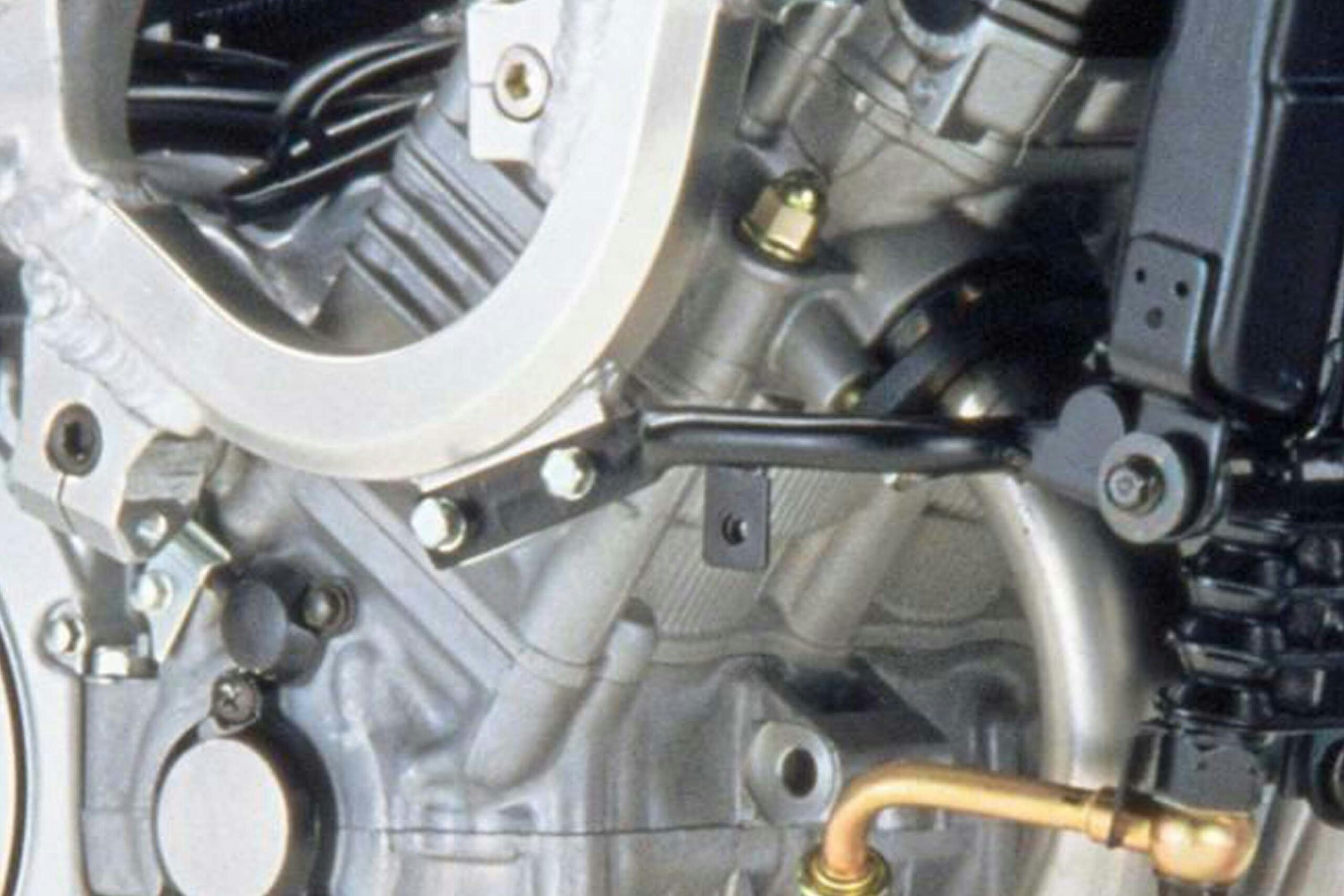
It’s reliable, but burns a little oil. The oil light is a level sensor, so it can flicker on under hard acceleration; don’t be alarmed, just check the level. Look for oil leaks from the gearbox output bearing; it can suffer premature wear if the chain is too tight. Check second gear engages positively and doesn’t slip out under load – the engagement dogs can wear.
Frame
Look for any damage. The EXUP’s frame is massively strong, but the twin-beam alloy construction means it’s not easy to repair. Many frames were mirror polished by keen owners in the day, so you may want to look for a bike with the original finish if you want to avoid ‘Autosol finger’. The EXUP was a popular target for thieves too, so make sure that you check frame numbers carefully.
Bodywork
Fairing panels are easily damaged, so look for broken lugs and cracks around mounting points. Decent used panels regularly appear on eBay, but factor-in repainting costs. Copper grease on fairing bolts is essential; they’re captive nuts and can seize in place.
Brakes
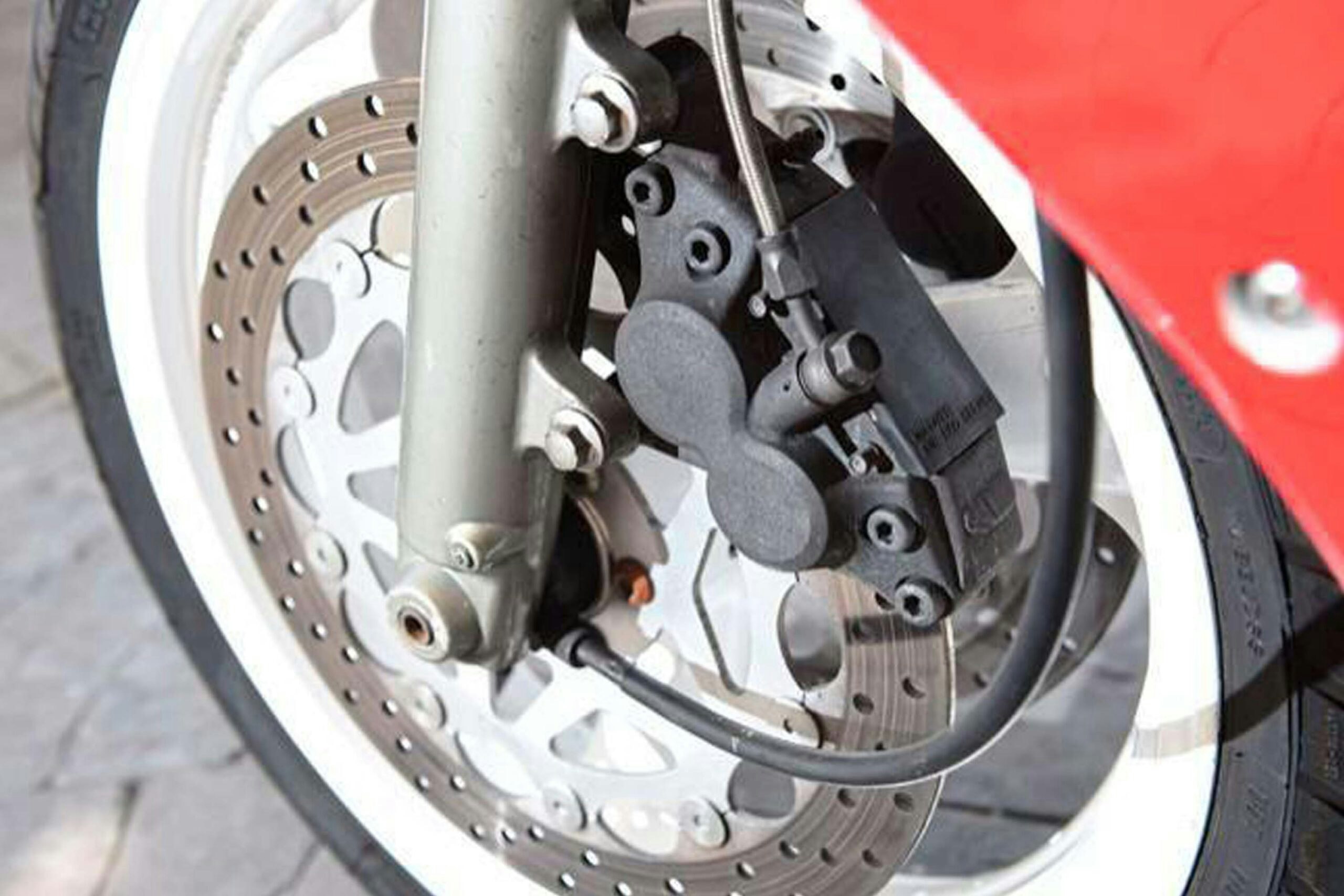
Examine the twin front discs for wear, especially on early models. They wear fairly quickly and can warp, too. Replacements are readily available, but it’s another cost to factor in. The six-piston front calipers fitted to 1994-on bikes can be tricky and a little costly to refurbish if the pistons are seized. Check them carefully.
THE BIG QUESTION
Is the EXUP working as it should?
Keith Alderman has been working on Yamahas for more than 45 years. He’s raced twinshock and classic motocrossers, restores TZ750s and knows his way around EXUPs, having owned and worked on plenty of them over the years.
“The EXUP system gives the FZR1000 its fabulous low and midrange torque while retaining top-end performance,” he says. “But they do need regular maintenance. The valves don’t cycle when you turn on
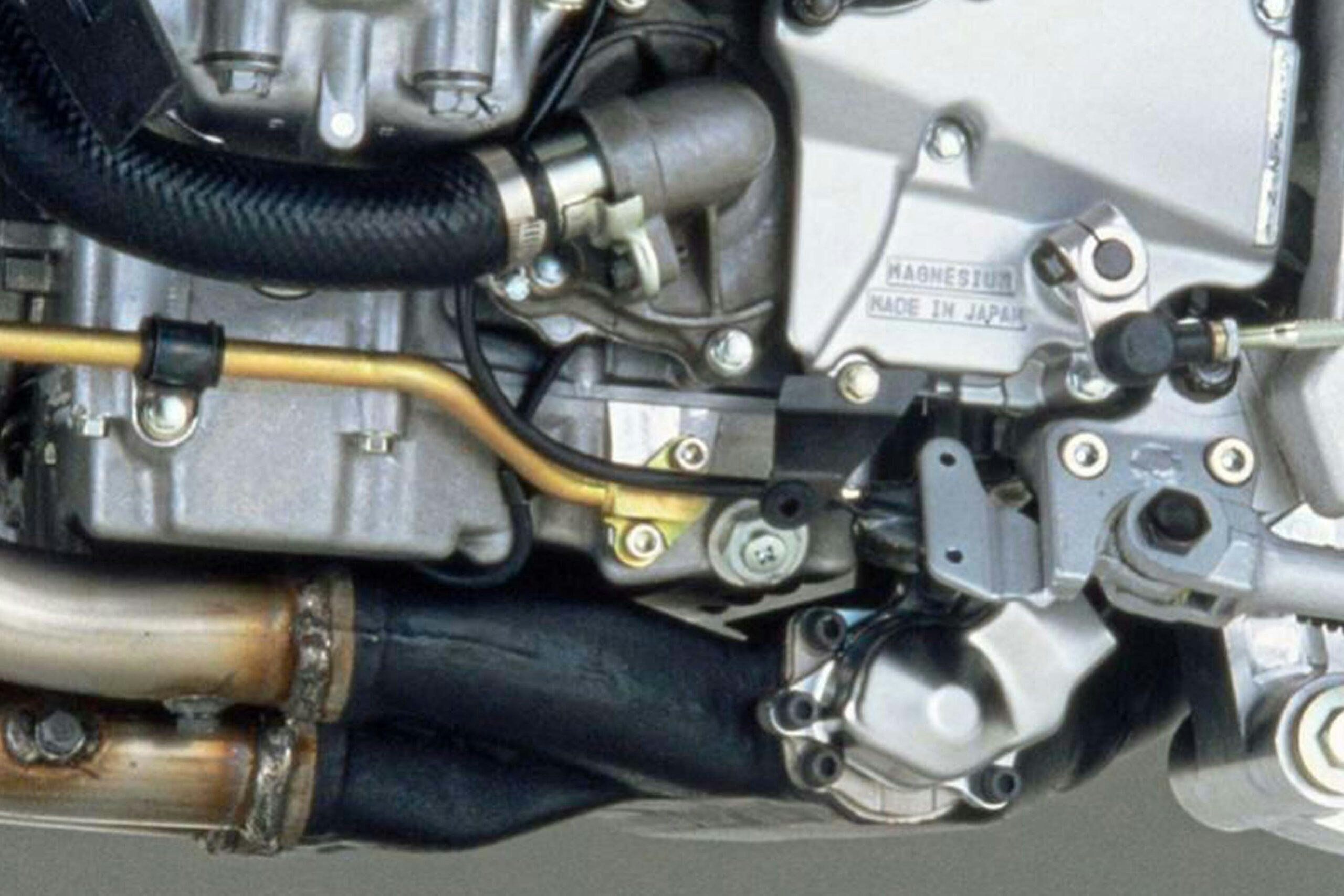
the ignition (though you will hear the fuel pump clicking for a few seconds as it gets fuel pressure up), so you have to check their operation by hand. Remove the tank, as the servo is underneath it near the battery. Turn the pulley and check that the cables aren’t stuck. The EXUP valve is in the exhaust collector box – if you remove the triangular cover, you’ll be able to see if the valve is turning when you rotate the pulley on the servo motor. Even if it is, it’s a good idea to pull the EXUP apart and grease the spindles and bushes if you do buy the bike.”
Serial owner Howard Martin-Taylor says to also watch out for warping. “The valve is held by bushes at either end. These collapse over time. If one goes, it allows the blade to warp – and when reinstalled with new bushes it won’t rotate as it should because it’s no longer straight.”
Which to buy, what to pay…
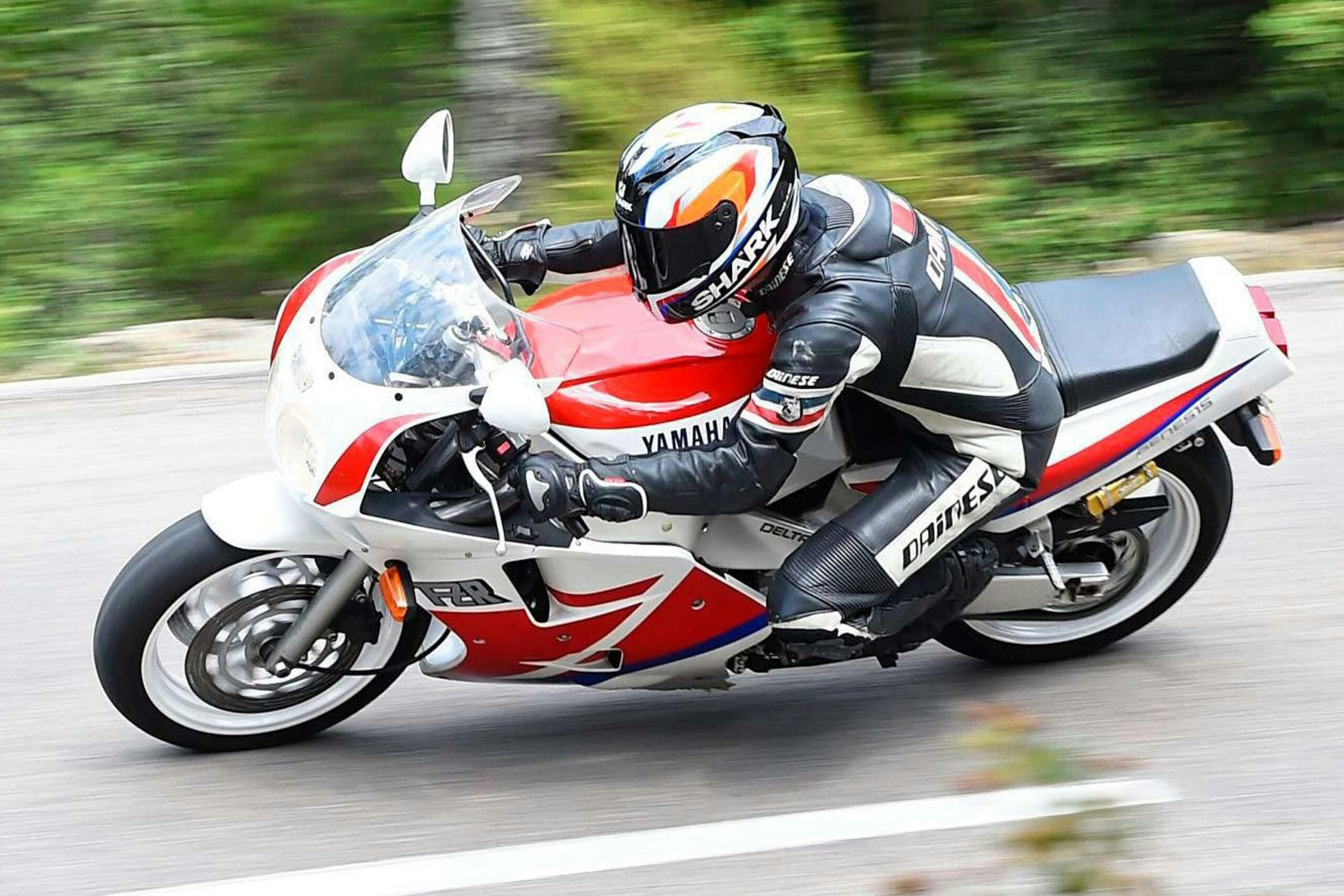
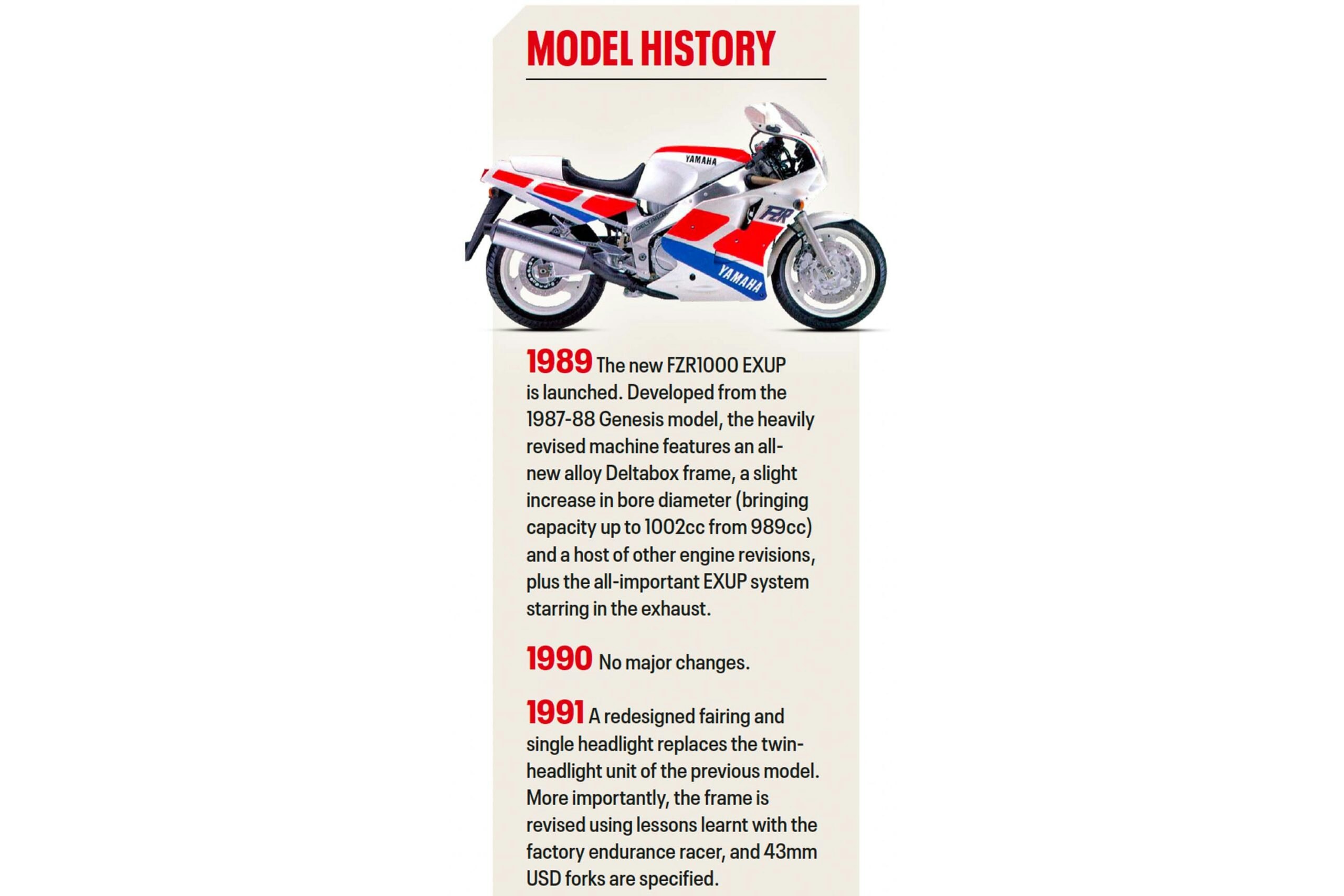
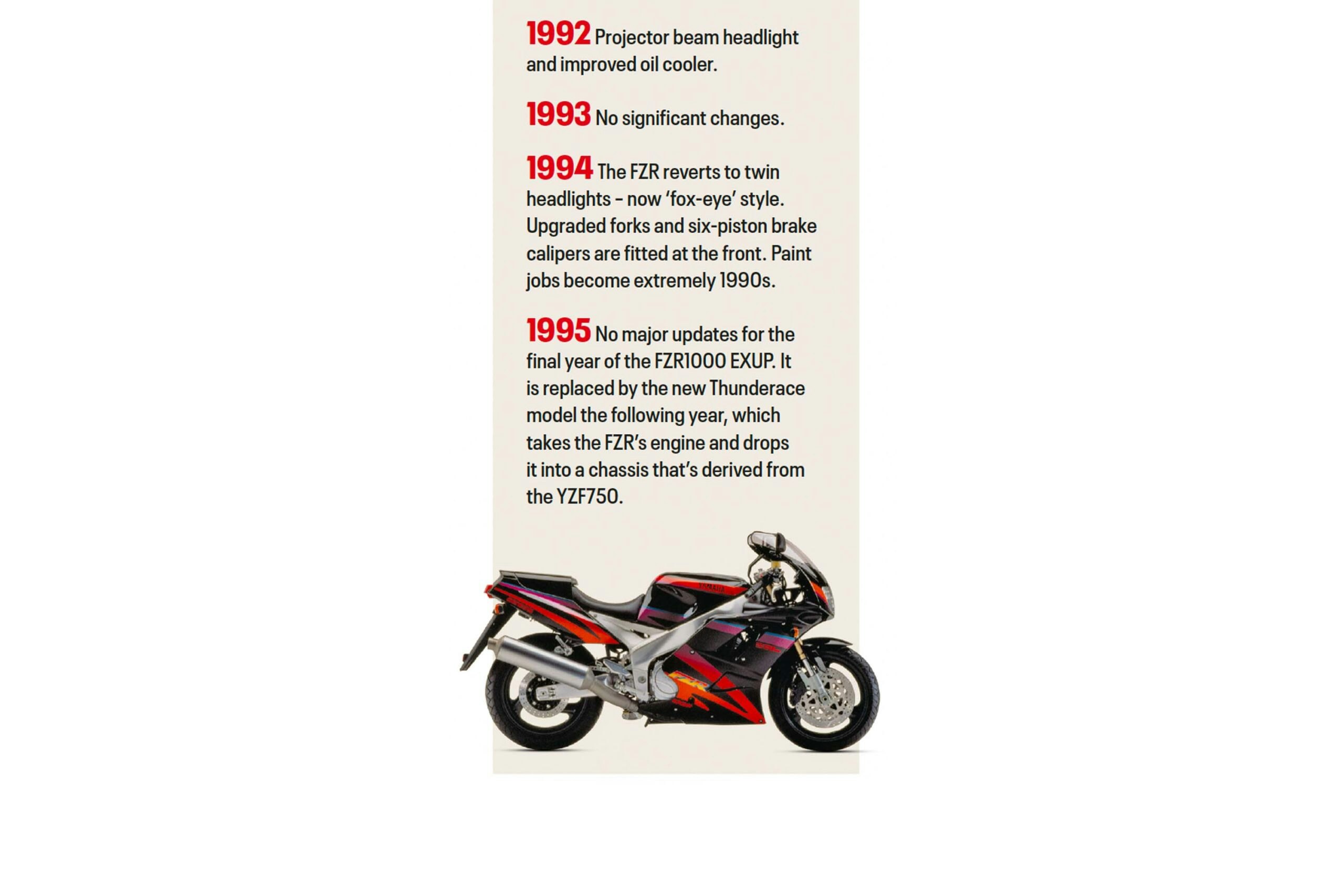
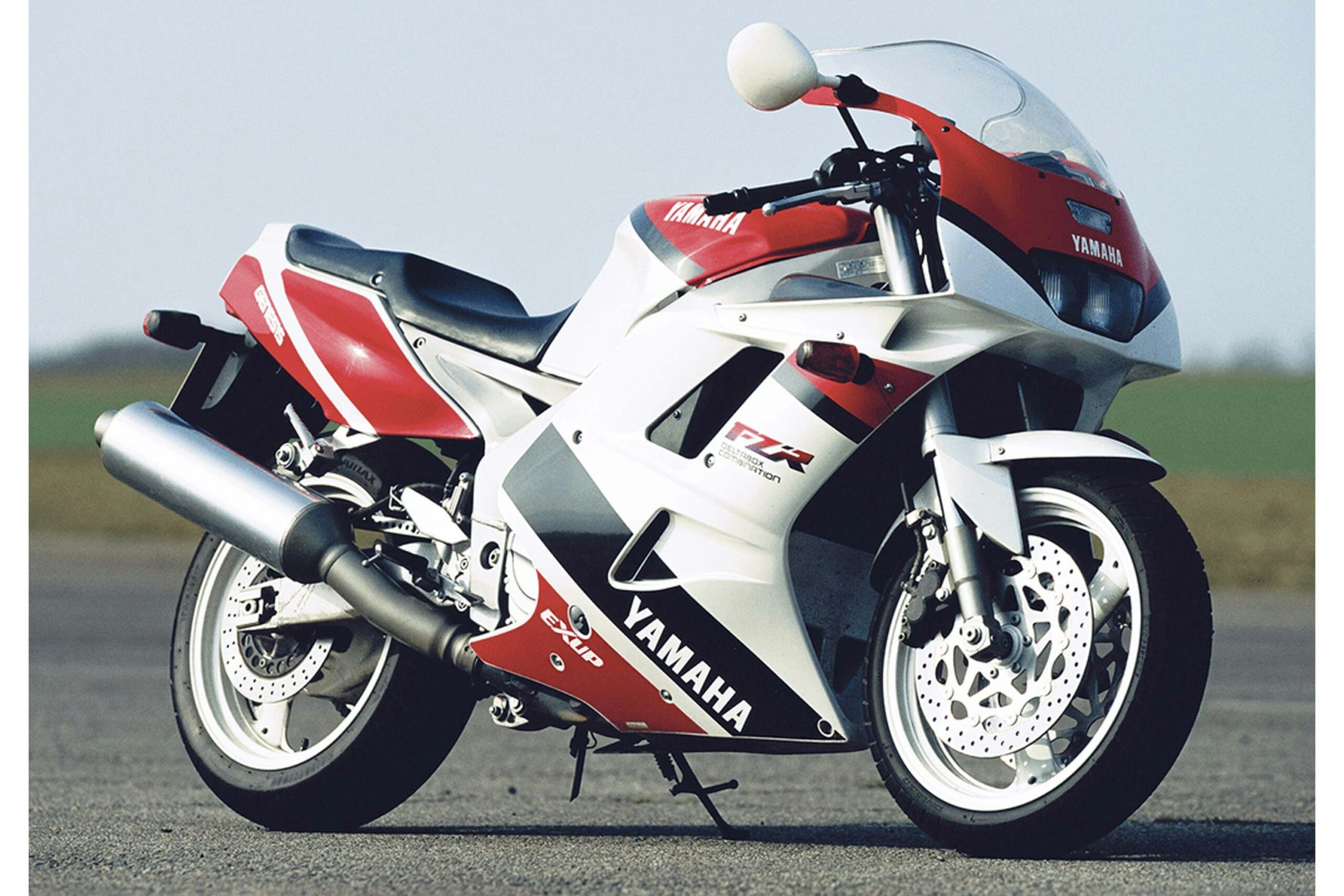
There are essentially three models of EXUP. The first two years of production (1989-90) have conventional forks and twin round headlights; in 1991, bikes got USD forks, revised frame and a single headlight; and the final 1994-95 models have twin ‘fox-eye’ lights, uprated fork internals and six-piston front brake calipers. Values seem to be broadly similar – but, for us, it’s the first version all day long.
In practical terms, the final variant is probably the best, but all versions deliver an electrifying experience. None are lightweights, but they handle remarkably well and that engine remains an utter joy.
There aren’t always many EXUPs on the market, but lack of supply hasn’t pushed up prices. Even examples in show-stopping condition cost little over £3000, while tidy bikes sell for around £1800. Stonking value for the class-defining machine of its day.
It comes down to the well-used adage: just buy the best example you can afford. Why buy a project for £1000 when you can buy a great ready-to-ride bike for £2000?
Once you’be bought your FZR, at least once a year you’ll need to strip and grease the EXUP valve to keep it doing its job of providing a wave of seamless power and torque throughout the rev range. It’s fiddly rather than difficult, involving removing the EXUP cover on the exhaust collector box, slackening the adjustment of the operating cables enough to get them off the valve pulley, then removing the retaining plate that holds the valve in. If the job hasn’t been done for a while, be careful not to break the 6mm bolts holding the cover on. Penetrating fluid, heat and patience are all your friends.
As it was launched during a time of possible Euro power restrictions, the UK market bikes were restricted to 125bhp. The restrictor webs moulded in the carb intake rubbers will more than likely have long been trimmed back. If they haven’t, just dig out a craft knife – it’s the quickest, easiest performance gain ever.
Handsome, engaging to ride, dependable and an ’80s icon for two grand. Doesn’t sound like much for the best big sports bike of its generation.