ENDURANCE RACING
Australia’s Castrol 6-Hour endurance race was an annual fixture around this time of year from 1970-87. Run to strict production rules, spectators enjoyed packed grids, fierce racing and a great spectacle. These shots from the Classic Bike archive reveal the gritty history of the event
Every man for himself
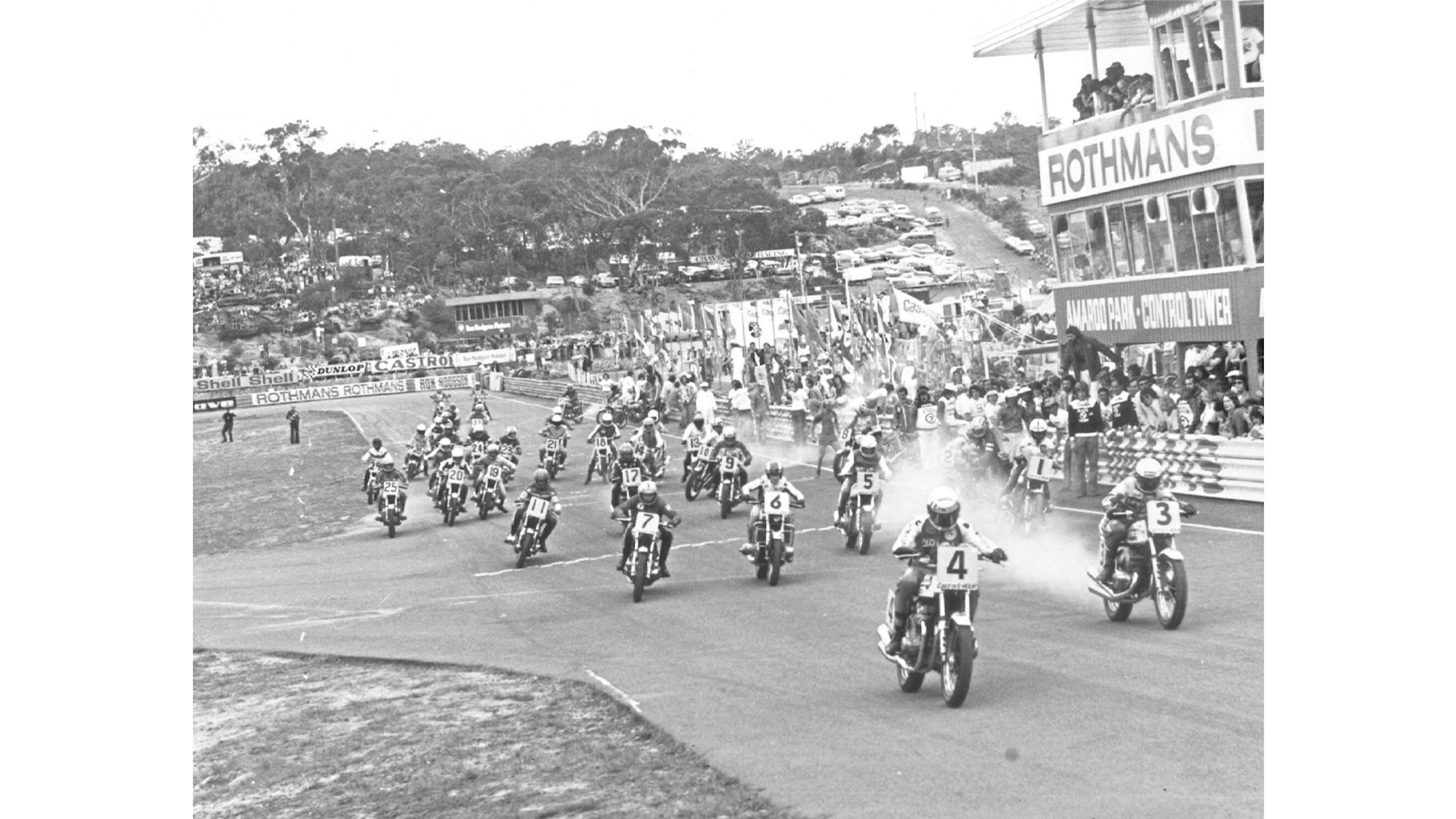
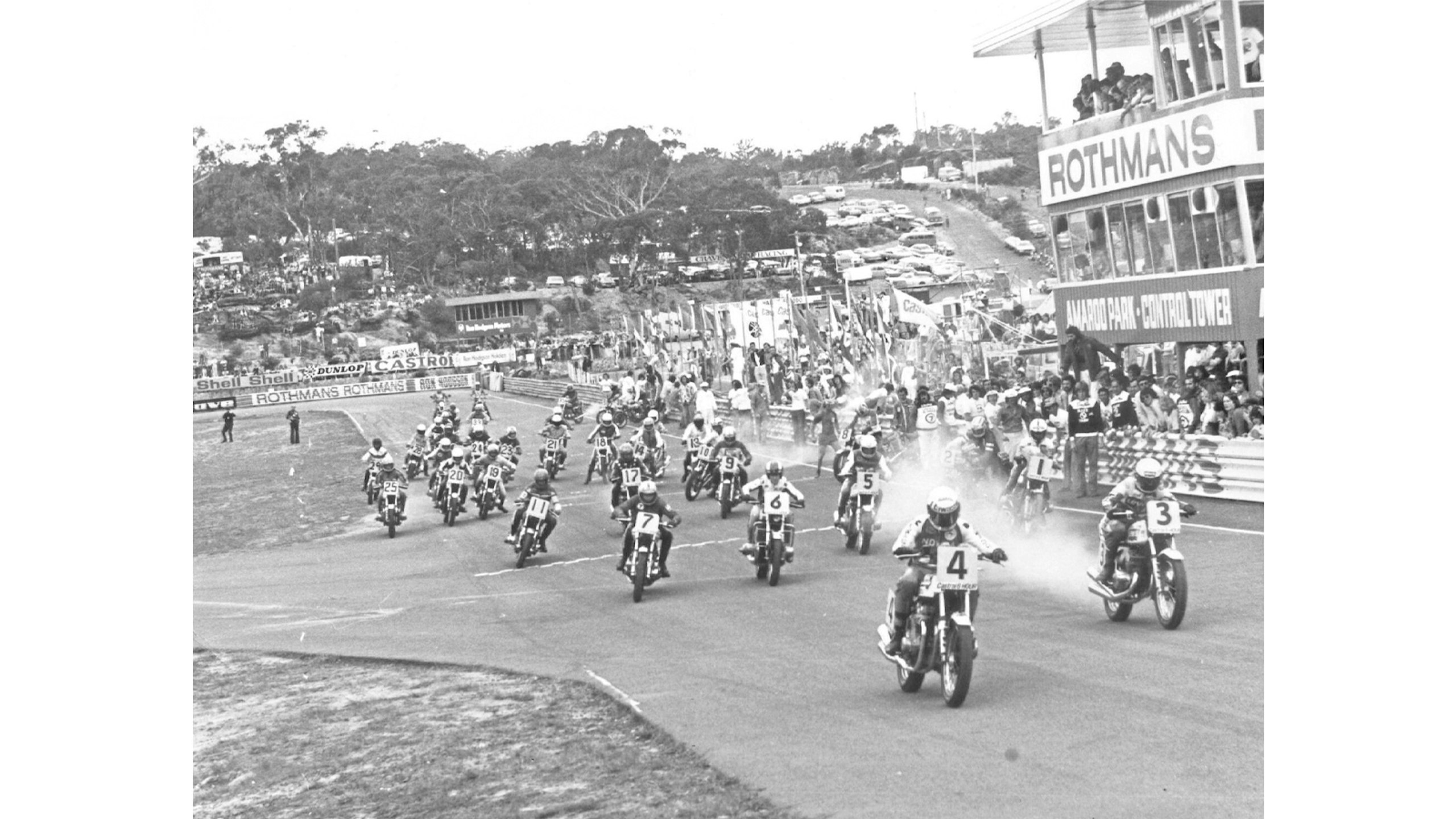
Amaroo Park Raceway was the home of the Castrol 6-Hour from its inception in 1970 to 1983. The spectator-friendly 1.199-mile circuit was set in the undulating terrain of a natural amphitheatre 25 miles north-east of Sydney. This startline shot from 1975 conveys the atmosphere of the place, with the freeform fan viewpoints contrasting with the strictly regulated racing on track. The smoke from Warren Willing’s Kawasaki 750 H2 (#3) isn’t the best advert for Castrol’s clean burning two-stroke oil, but the two-stroke triples figured strongly in the early years. Willing and John Boote had finished second on a H2 in 1973, and Mike Steele and Dave Burgess had won the race in 1972. The 1975 race was won by a Kawasaki Z1 ridden by Greg Hansford (#5), who went on to have a distinguished international career. After he quit riding, Warren Willing worked as a race engineer for Kenny Roberts, helping Wayne Rainey to three World Championships.
Hard men, cast iron rules
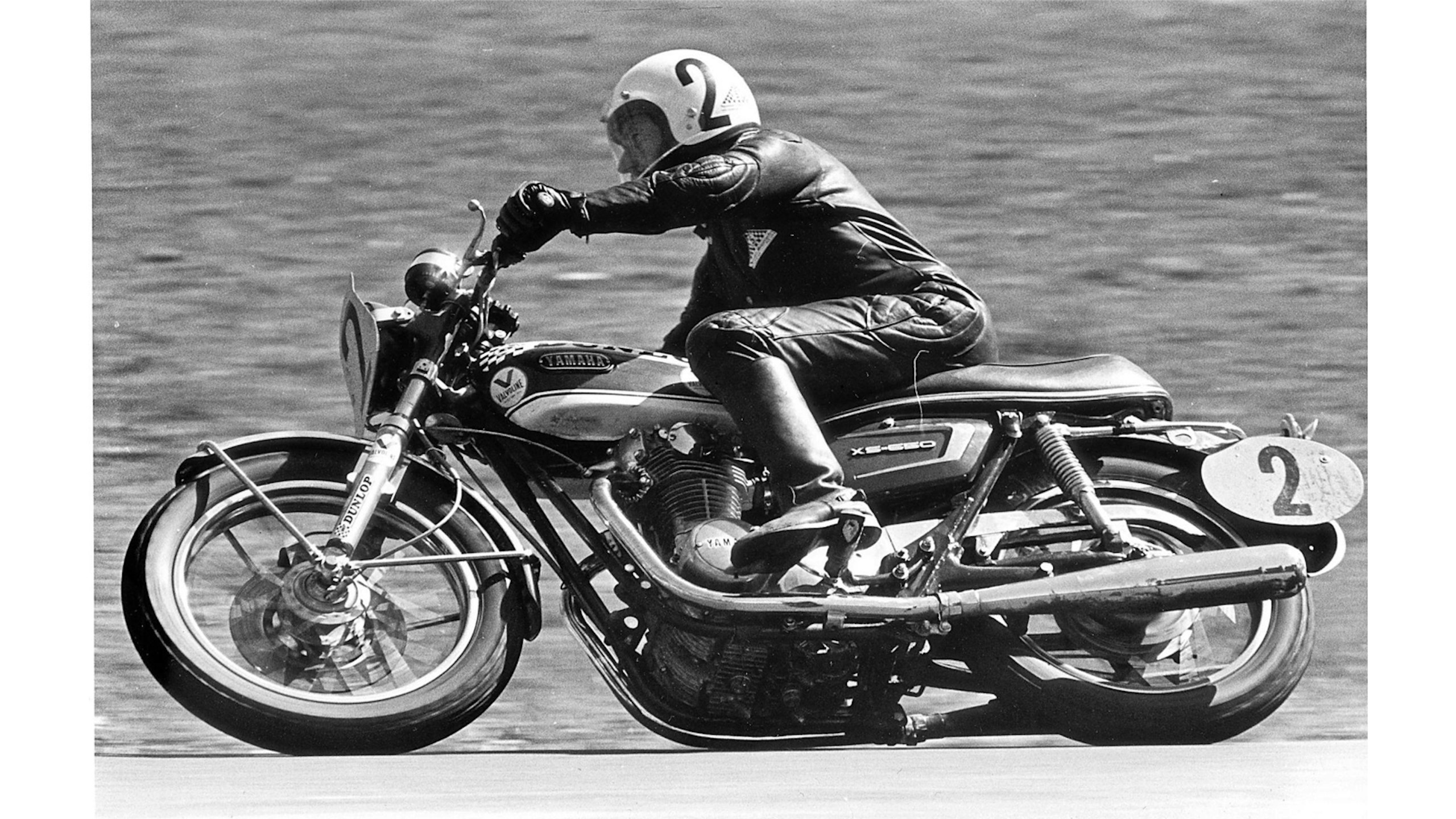
Road tyres had to be used, and handlebars and footrests couldn’t be changed. Scrutineering was tough – one team was disqualified for not having a horn. Ground clearance was a real problem for 1970s road bikes, as shown by the footrest on this Yamaha XS650. And tyre management was an issue. Tony Hatton and Paul Spooner, riding this bike, finished second in 1971 as the nine Honda CB750s that filled out the top ten made lengthy stops to change rear tyres. The lower-powered, lighter Yamaha did 330 laps on a single set of Dunlop TT100s.
Cornering without grinding
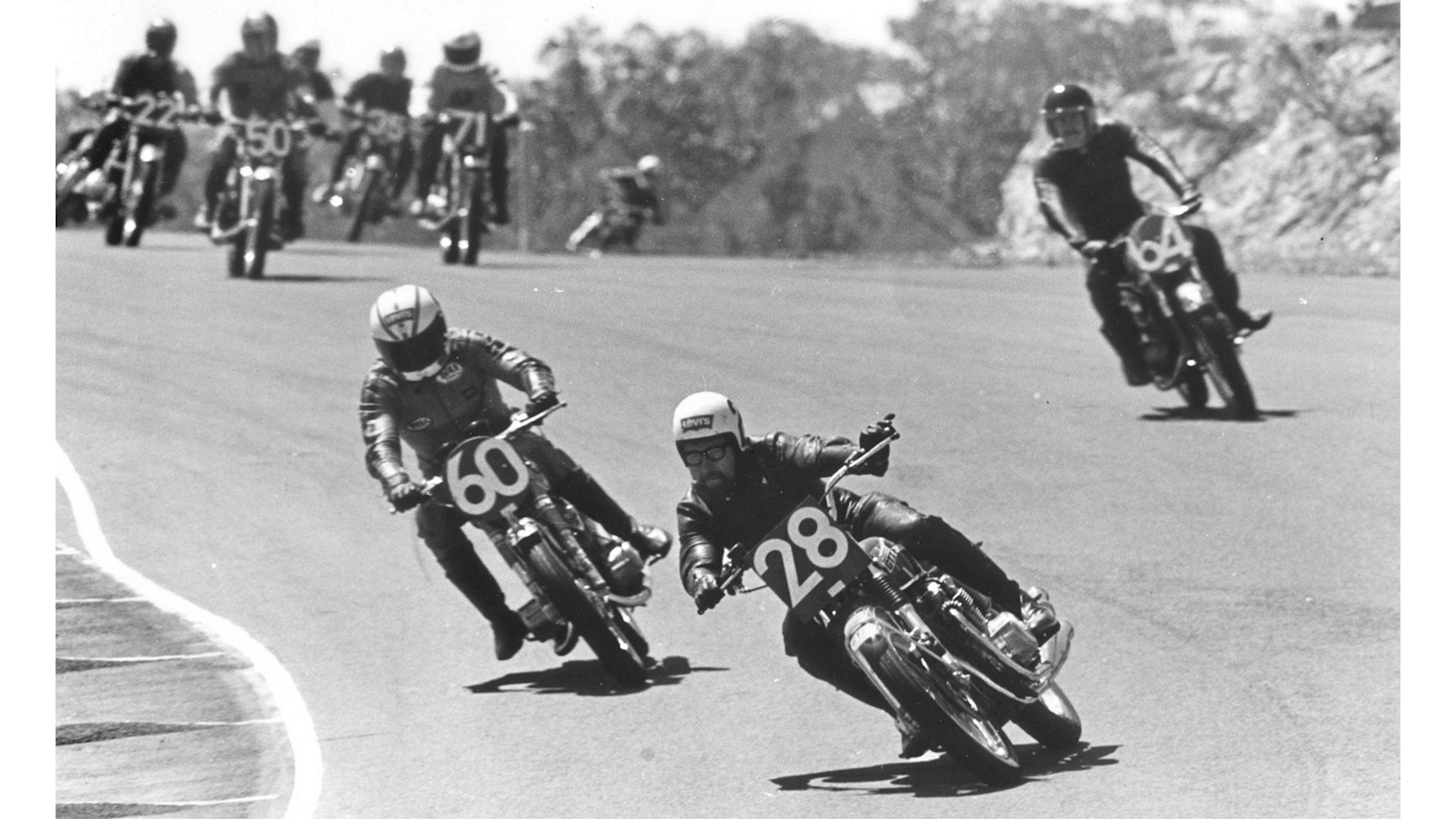
Maintaining the right line was compromised by attempting to stop the bike’s scraping undercarriage from lifting the wheels off the tarmac. We have no record of the names of these riders from the 1971 race, but we very much like the style of the Honda CB750 rider (#28). We think they’re entering the downhill Dunlop Loop at Amaroo. The first ever race in 1970 commenced with a chaotic multi-bike crash, although bad accidents were not commonplace, despite there being up to 50 bikes on track.
Going all the way
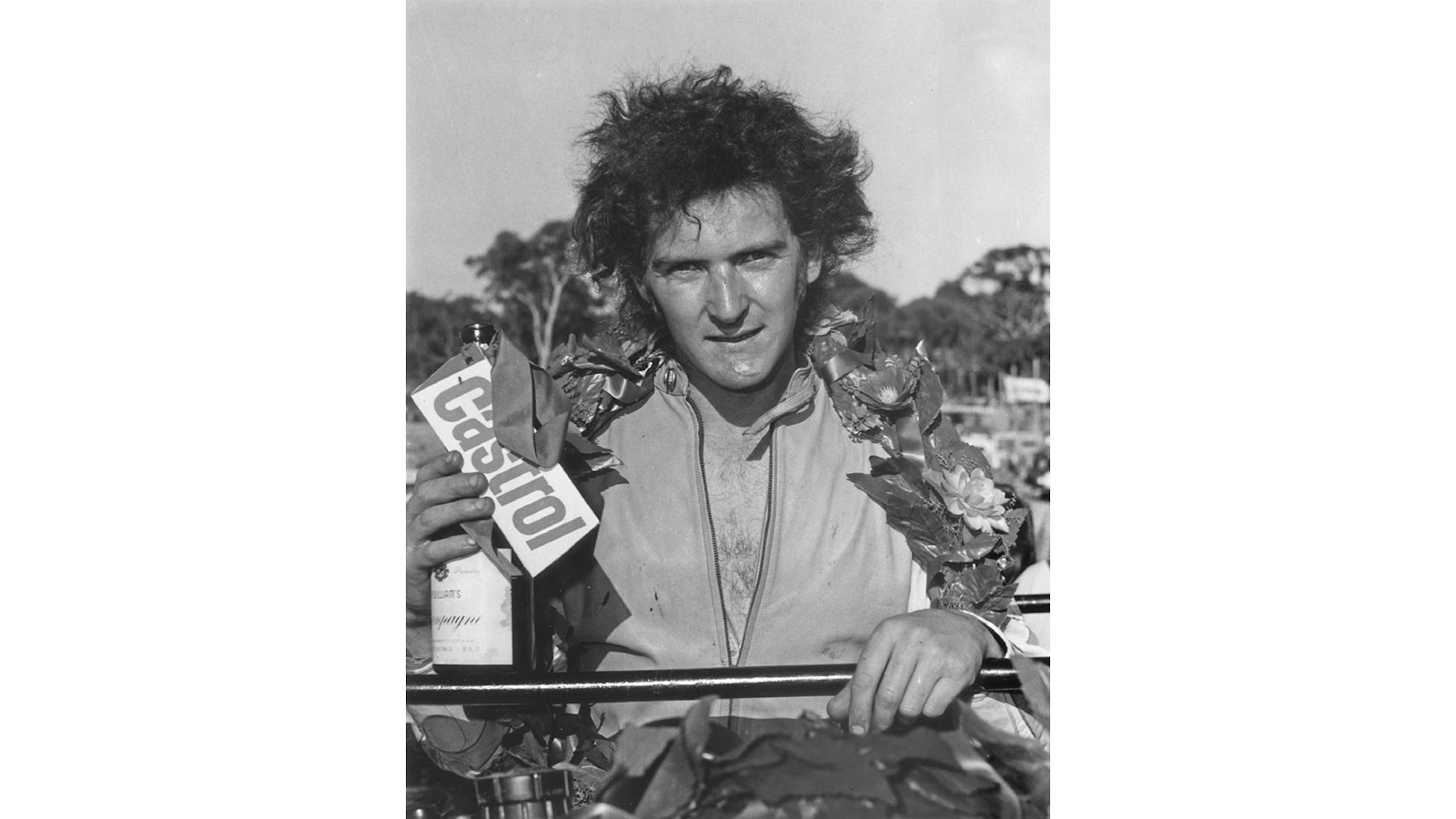
In the early years of the race, a few riders attempted to ride the whole six hours solo – but the only person ever to win on his own was Aussie legend Kenny Blake (above) in 1973, when he gave the Kawasaki Z1 its first victory after covering 342 laps. He won twice more – although riding with partners – in 1974 and ’77, also finishing second twice (once riding solo) as well as scoring a third and a fourth. Two of the wins were on Kawasaki 900s, with one on a BMW R100S. Kenny also partnered Ron Haslam on the ill-fated Honda CB1100R in 1980. Tragically, he was killed at the Isle of Man the following year.
The promotion of lubrication
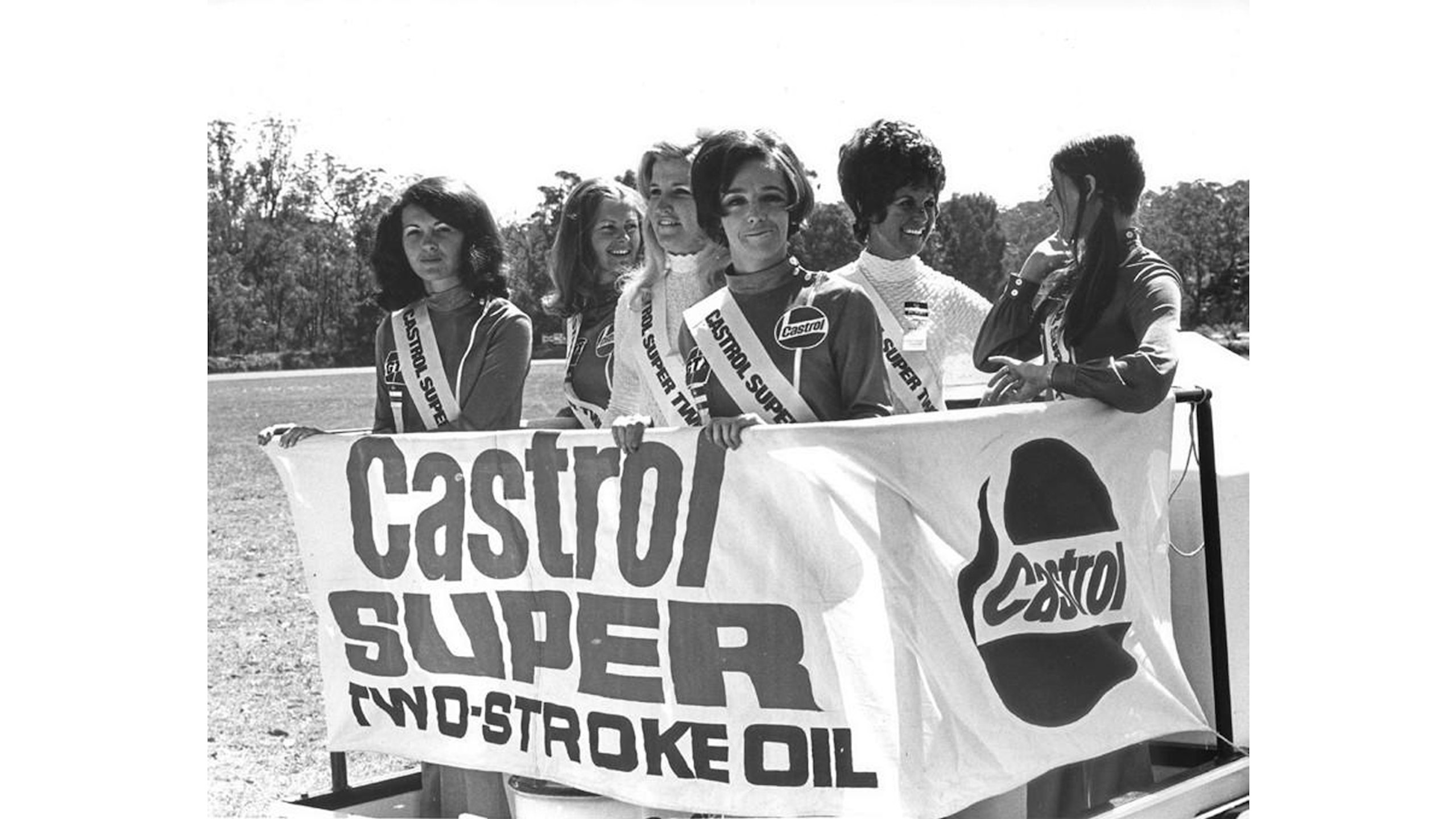
Originally the race was called the Castrol 1000, on account of the top prize of 1000 Australian dollars provided by the race sponsor. Naturally, a team of suitably-attired young ladies were employed to promote the oil company’s products at the venue. The success of the event inspired New Zealand race organisers to put on their own event at the Manfeild Park circuit from 1974, with the same name and sponsor. It ran annually until 1988.
Filtering through traffic
In this first-lap picture at Honda Corner in 1973, Kenny Blake (#5) is back in the pack, having been last away at the start. Number 25 is Mick Grant, who was racing another Kawasaki 900 partnered by Percy Tait. Negotiating the on-track congestion on the Amaroo Park circuit was always an issue – especially in the early years when the race included a 250cc class.
Face of fearlessness
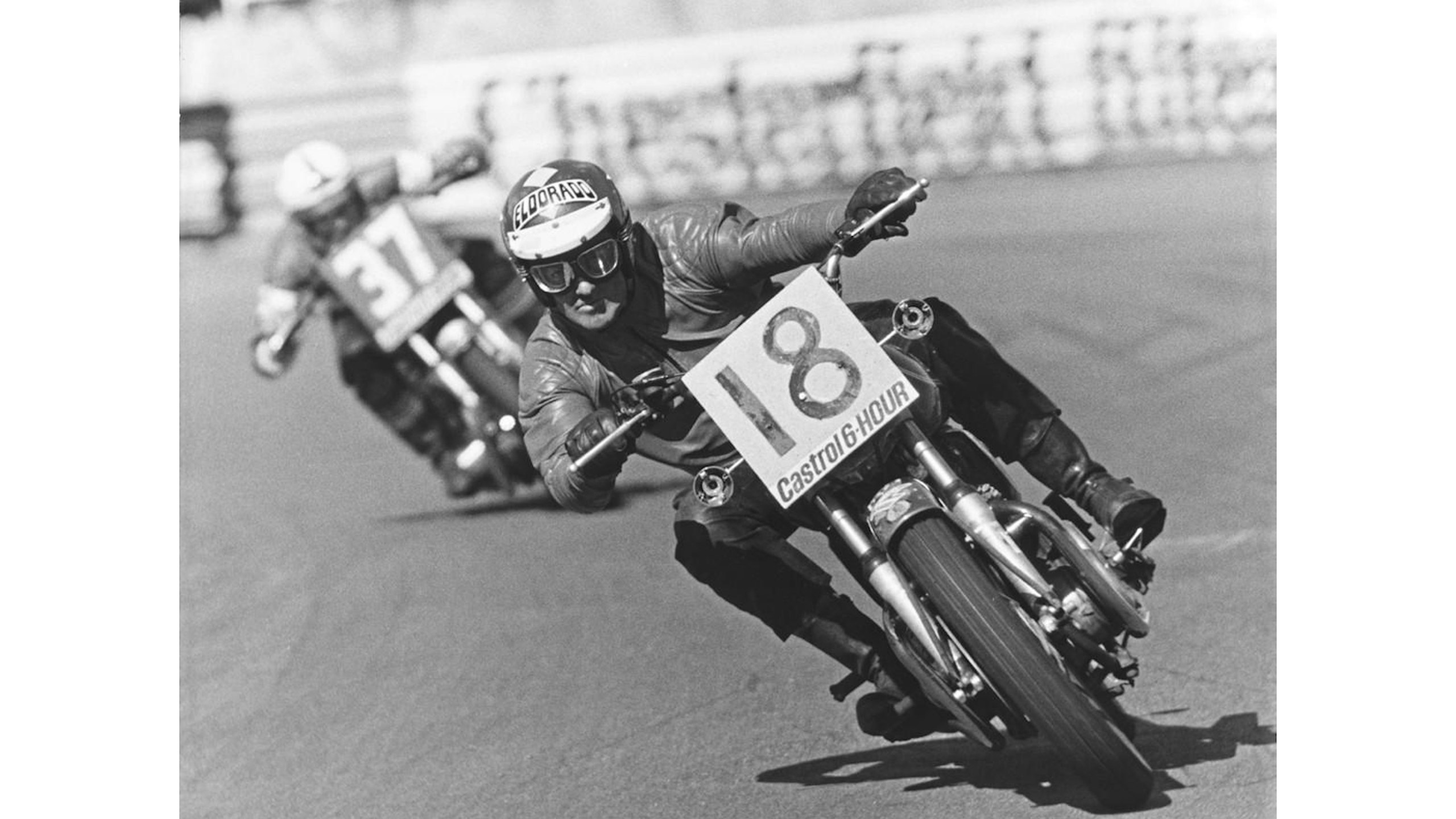
This study in grim determination focuses on another Aussie bike racing hero – Jack Ahearn. He started racing bikes immediately after World War II and by the mid-’50s was in Europe, racing in Grand Prix as part of the travelling Continental Circus. On a Norton Manx, he was runner-up to Mike Hailwood in the 1964 500cc World Championship, although he gave up on Europe and returned home in 1967. But he kept on racing. Aged 46 in 1970, he finished the first Castrol 6-Hour race riding a Triumph Bonneville 650. In this shot from the 1973 race, he’s pictured riding a Norton Commando 750 Interstate. He reckoned he could do two hours on the Norton’s five-gallon tank, and that the engine’s flexibility meant that he could lap Amaroo Park with two gearchanges per lap. After crashing out of the race in 1974, he finally quit. A Triumph Bonneville ridden by Len Atlee and Brian Hindle had won the first six hour in 1970, but that was the only British win.
The superbikes weigh in
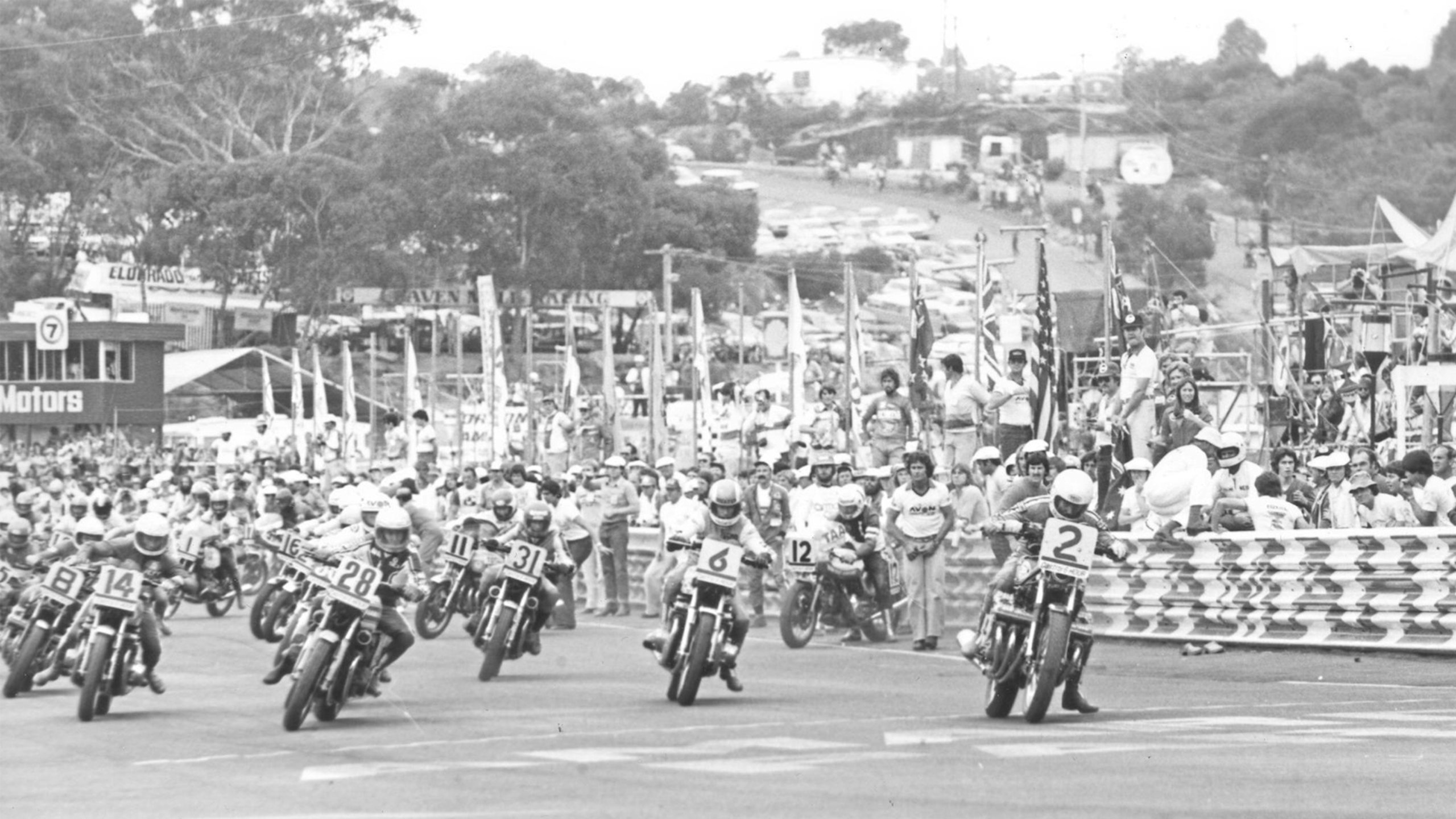
By the late ’70s, all the Japanese manufacturers were fully engaged in the superbike market and desperate for 6-Hour success. 1978 saw the Amaroo Park debut of the Honda CBX1000, Suzuki GS1000 and Yamaha XS1100. Against expectations, it was the 95bhp, 598lb Yamaha that won the battle, ridden by Roger Heyes and Jim Budd. That’s partly because the Avon team could perform a mid-race rear tyre change in around a minute on the shaft-drive Yam, while the same operation took nearly five minutes on the Hondas. At the start it was Graeme Crosby on the Honda (#2) who led from pole before retiring, leaving Mick Cole and Dennis Neil (#3) to uphold six-cylinder honour. The winning Yamaha was a slow starter – but not as slow as the Ducati 900SS (#12) of John Warriman and Terry Kelly, which had to be kickstarted. But the Italian bike had a longer fuel range and didn’t require a tyre change, so it beat the Honda CBX to second place.
Wayne wins in the wet
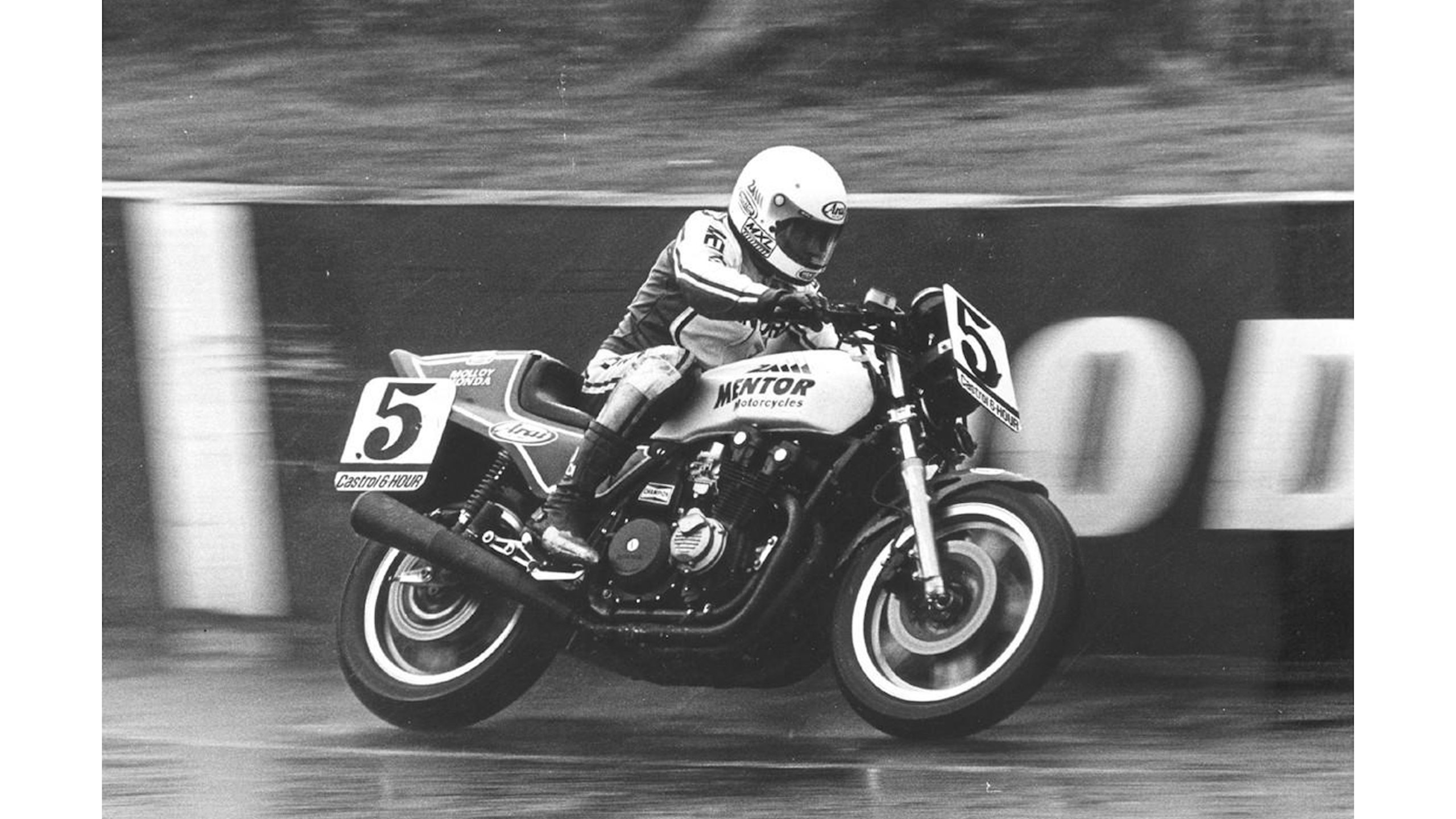
Things were turned up a notch when Honda produced the limited-production CB1100R in 1980, apparently aimed at winning the 6-Hour. Among the riders was 21-year-old Wayne Gardner, teamed with Andrew Johnson. It rained solidly for the first four and a half hours – but Gardner barely noticed, leading from the start and at one point pulling out a two-lap lead. The 1100R was banned in 1981, apparently since it had no pillion seat. With a modified seat, they were allowed back in 1982 and Gardner won again – this time, in dry conditions, he and his partner did an extra 42 laps.
That wasn’t in the plan
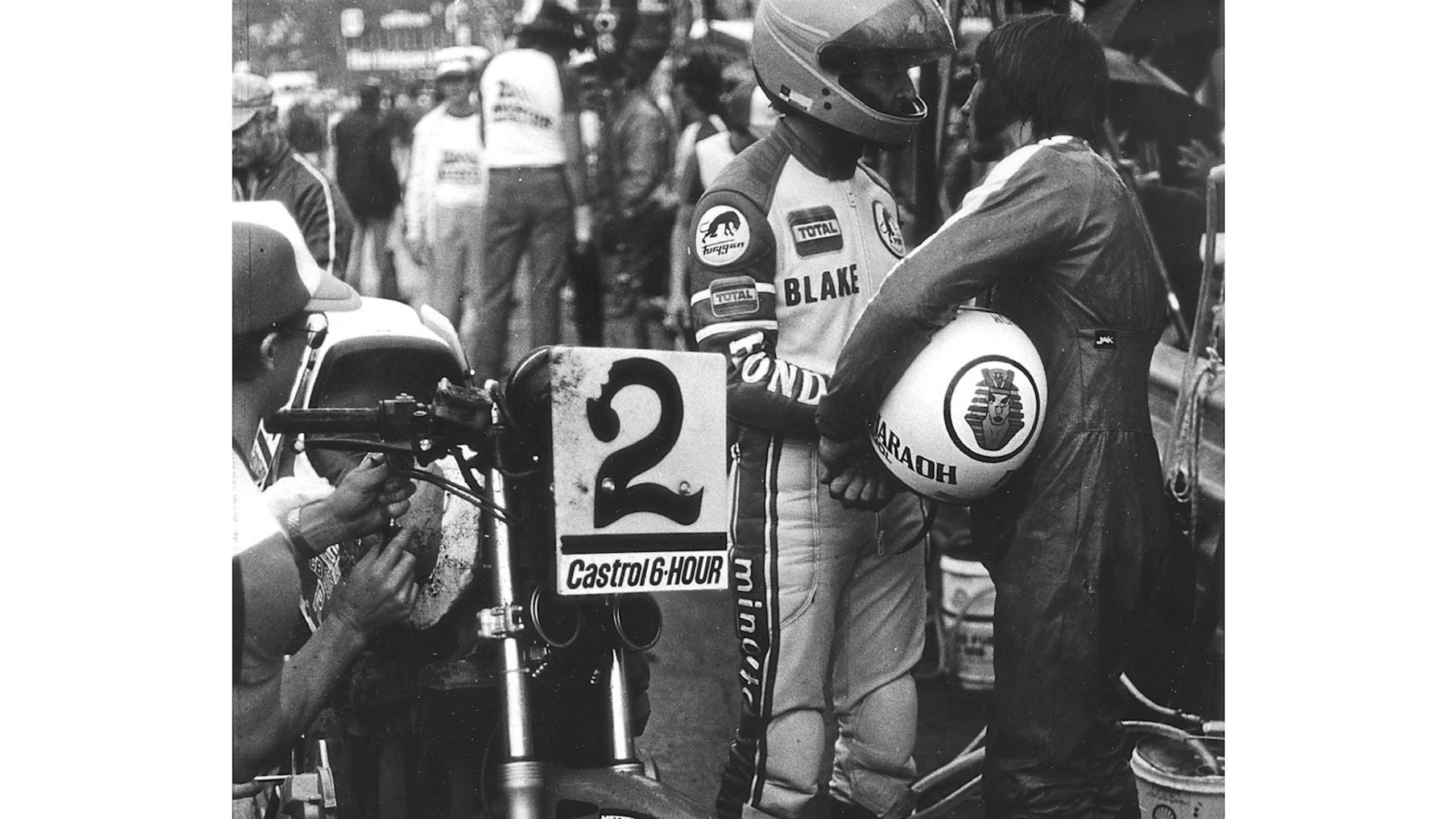
Honda also provided a CB1100R for Ron Haslam to ride with Kenny Blake, who’d gained experience racing with the Honda France endurance team. They must have been confident of a good result, but their bike didn’t handle in the wet – Ken struggled in the first session, then Ron crashed in the second. After limping back the pits for repairs, they re-joined the fray on the battered bike.
V4 takes victory
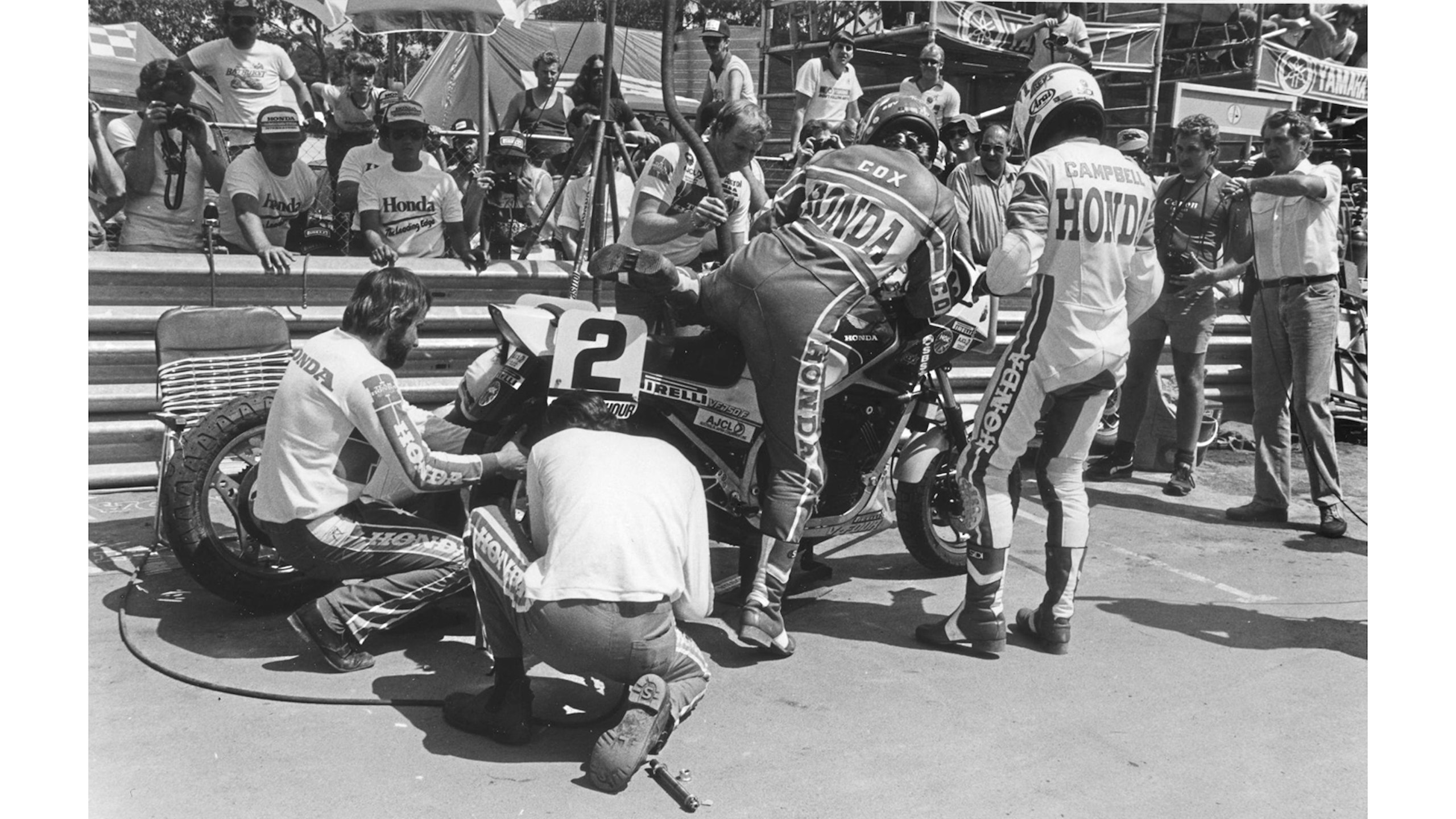
Seven of the top ten qualifiers for the 1983 race were on the new Honda VF750F, running on their choice of Metzeler, Pirelli or Dunlop rubber. Variations in compound meant that the big question was how many tyre changes each team would attempt. Some were opting for a new tyre at every stop. Malcolm Campbell and Rod Cox (here in the pits) won the race, with second place taken by Rob Phillis (soon to become a Superbike star) and Geoff French. The previous year’s winner, Wayne Gardner, who’d flown back from England for the race, didn’t get to ride after his co-rider wrecked the bike on lap one. Graeme Crosby crashed out late in the race. Roger Heyes and Rob Holden were third on a Suzuki GSX1000 Katana, but after six hours the top three were all on 372 laps.
David beats Goliath
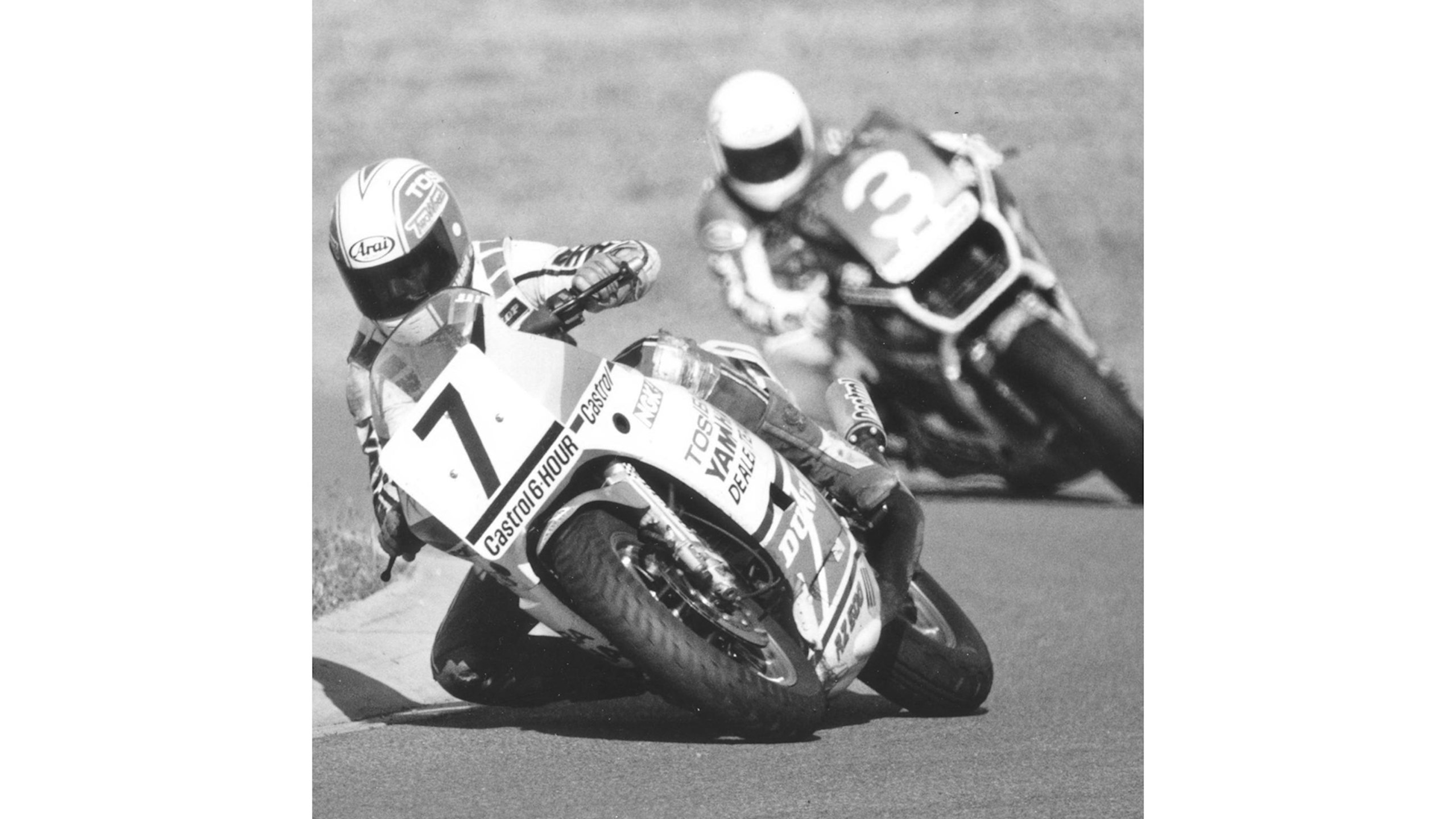
For the 1984 race, the venue switched to Oran Park, just south of Sydney, with spectators treated to what one commentator called ‘The most exciting 6-Hours in history’. It was a David and Goliath struggle between the 186kg, 80bhp Yamaha RZ500 (the alloy-framed version of the two-stroke RD500LC) and the 250kg, 130bhp Honda VF1000R. Both bikes had top-flight riders, with Richard Scott (pictured) and Michael Dowson on the Yamaha, and John Pace (second in the picture, on the Honda) with Wayne Gardner. The two bikes were this close, occasionally swapping positions, for most of the second half of the race, with the smaller bike eventually crossing the line first. It was the first two-stroke victory since a Kawasaki 750 won in 1972 – and also the last. The race was last run in 1987, becoming a victim of rising costs.