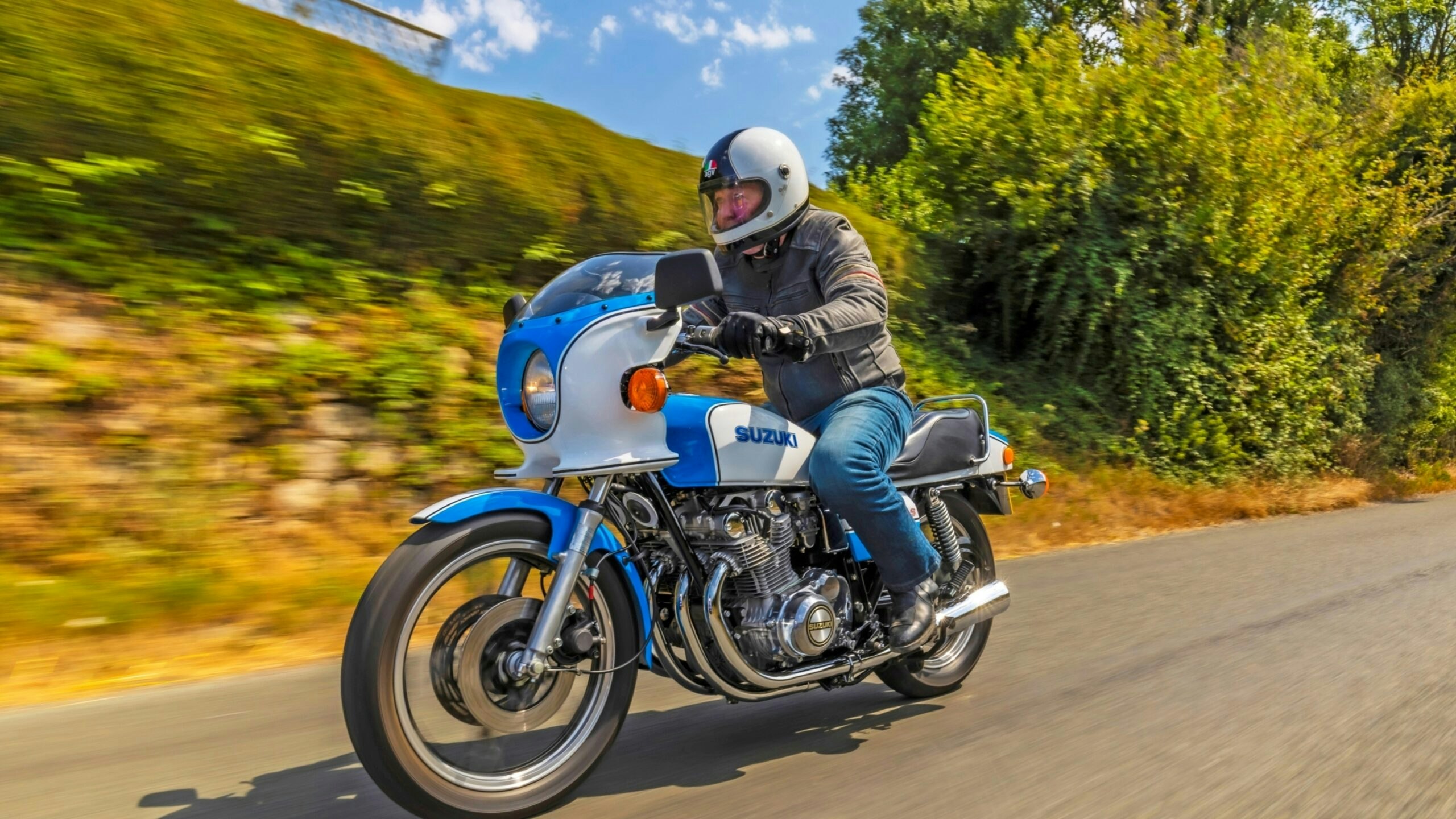
Ahead of me the smooth, hot, grippy tarmac flicks away – right, left, right. A squeeze on the front brake, two rapid dabs on the gearshift lever and a double blip of the throttle and the big Suzuki scrubs off speed before railing precisely through the turns. Back on the throttle and thrust builds smooth and quick, firing me up the next straight in a heady rush of revs, wailing exhaust and adrenaline. This might be just a roundabout on the A21 north of Hastings on a baking hot and most un-British summer’s day, rather than Willow Springs Raceway in the early ’80s – but, hey, a man can dream.
And on a bike like Ian Webster’s US-market GS1000S homologation model, it’s all too easy to dream. I’m certainly no Wes Cooley – the American racer who inspired the model – but I feel instantly at home and confident in my own modest abilities. Sometimes a bike just feels right – and this is one of those machines.
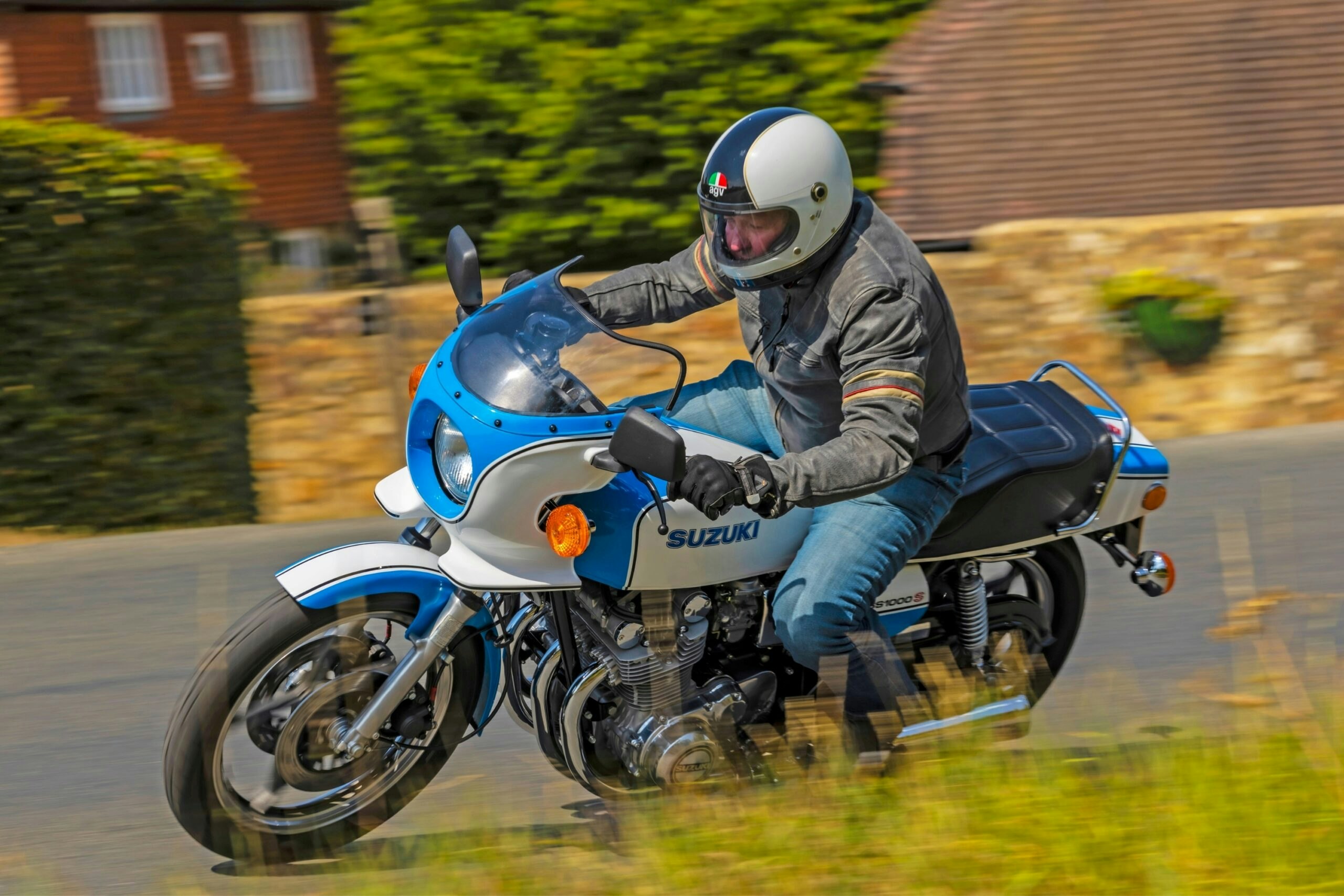
Back at Ian’s workshop, I want to find out more about this bike. At first glance, you’d be forgiven for thinking that this is ‘just’ another Suzuki GS1000S – albeit a very well restored one. Suzuki only produced the striking S model for two years – 1979 and 1980 – before it gave way to the 16-valve GSX1100, and it’s a rare enough occurrence to come across one anyway. But this is more than a GS1000S; this is a US-market homologation model, designed to make the most of (and cash in on) Cooley’s remarkable success in AMA Superbike racing on a Yoshimura-tuned GS1000.
Over a welcome brew, Ian – a serial restorer whose bikes have appeared in CB before – explains the back story to his latest project. “I was after a UK S-model originally,” he tells me. “I couldn’t find a decent one at first, but I spotted a really nice E model – it’d had around £13,000 spent on it – for sale at Manor Park Classics auction and bought it. But then I heard about this homologation model for sale. The owner had imported it from the States himself; I ended up buying it unseen and picked up both bikes on the same day.”
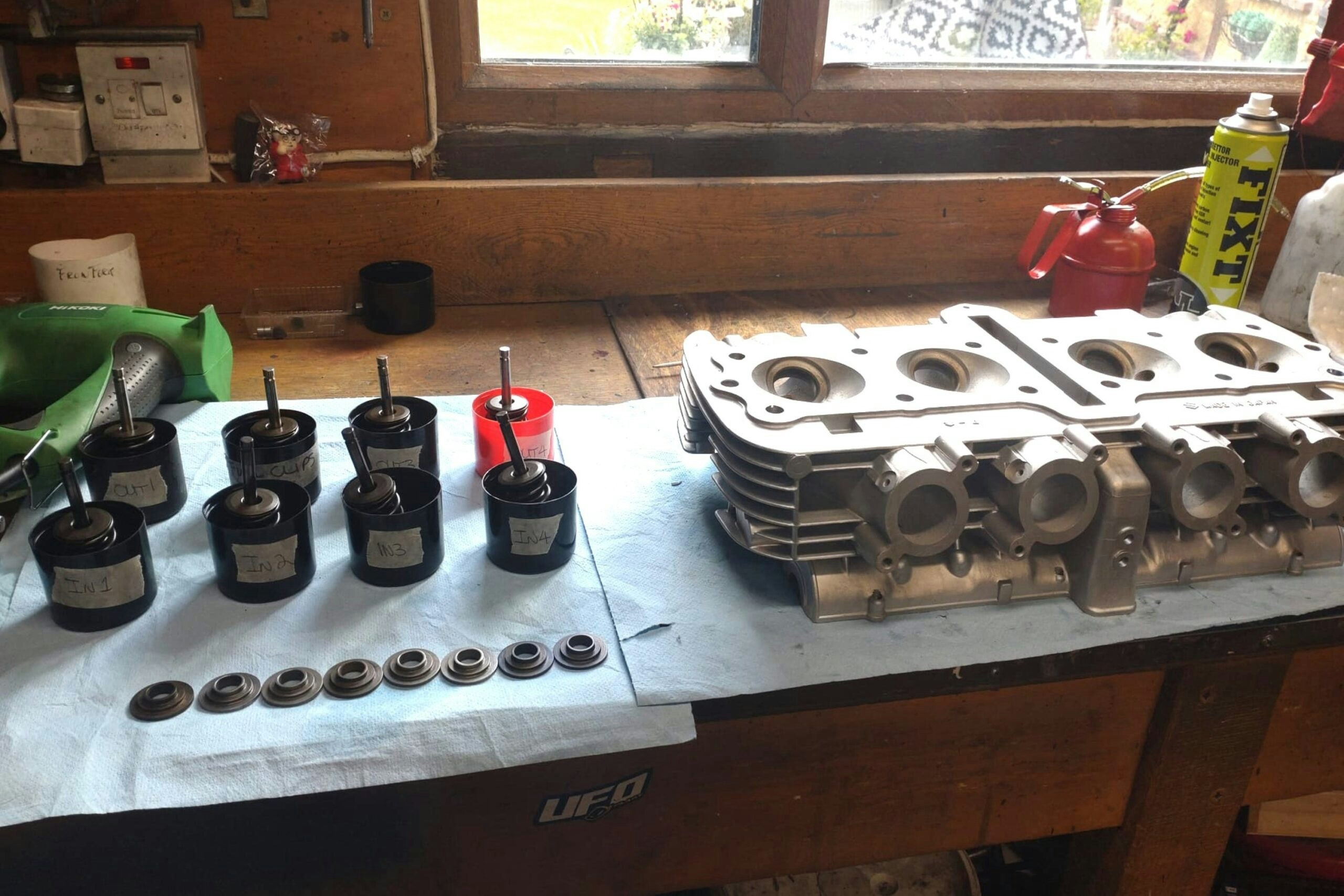
The engine only had 17,000 miles on it, but Ian stripped it and measured every single clearance
That was back in 2023 and, back home, he assessed both bikes. “The E was lovely, but it needed finishing off,” he says. “I could see the S was something special, so I offloaded the E and concentrated on the S. But the first thing I had to do was try to find out exactly what it was. I’m still learning, but it’s a fascinating story.”
It certainly is. Ian doesn’t claim to have unearthed all the facts yet, but he’s happy to share what he knows. “Apparently, after Wes Cooley had switched from Kawasakis to the new Suzuki GS1000E for the 1978 season and was doing well, Suzuki decided to reap the benefit of that by producing a racier version of the GS for the following year – the result was the S.”
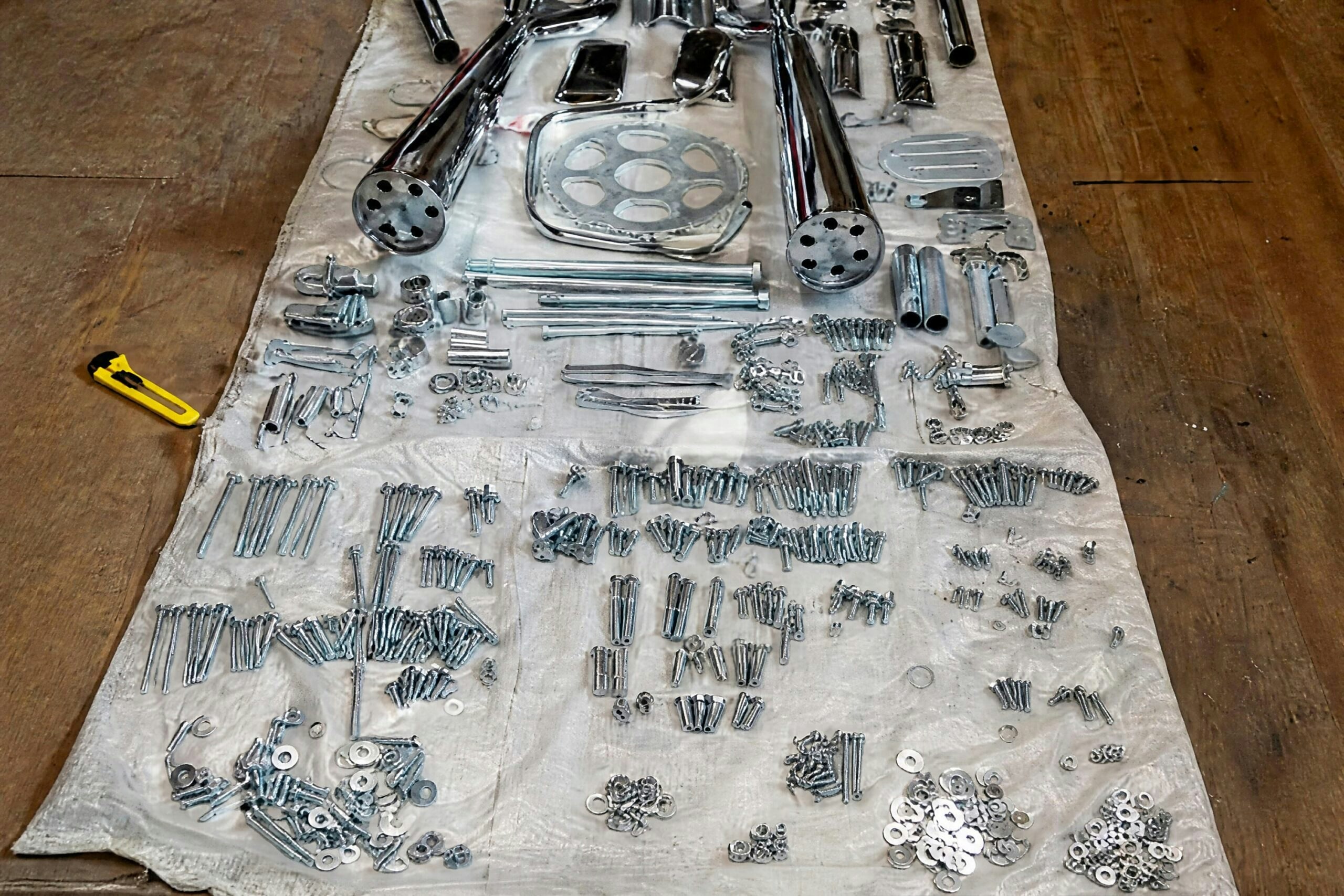
_Forensic restora_tion included having all the original fasteners replated
The new model certainly looked the part with its striking red and white or blue and white colour scheme, and handlebar fairing. “There was just one problem, though,” adds Ian. “The new model wasn’t available in America. Suzuki dealers were up in arms once they’d seen it, so Suzuki Japan sent around 700 bikes to the USA. It worked out at about one bike per dealer. Because they’d missed a trick there, for 1980 they produced a limited run of homologation specials, primarily for the US market. This is one of them.”
Some of the upgrades on the homologation models made it to the rest of the 1980 production machines. The slotted front brake discs and front master cylinder, for example. But there are many features unique to the few hundred homologation models. The frame is different at the rear, to accommodate the rearset footrests with revised brake linkage and a stepped seat, while the silencers are shorter and more free-flowing. The carbs are bigger, too – 34mm CV instruments – and there’s a larger airbox to allow them to breathe more efficiently. Engine mods include bigger valves – 2mm up on the inlet and 1mm on the exhaust side – plus higher-lift cams and altered cam timing, with more advanced timing on the inlet side.
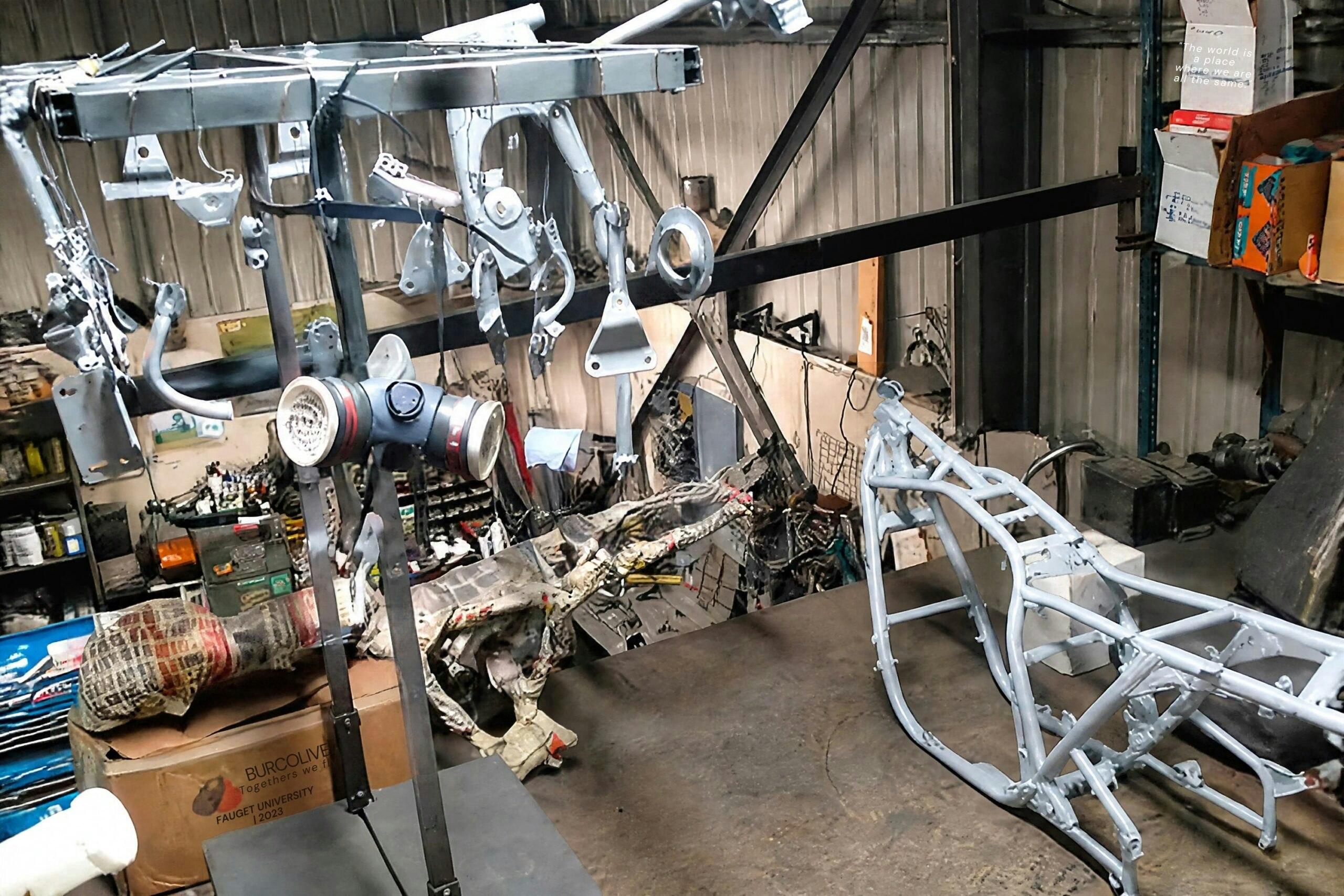
As per original, the frame was painted, although it was blasted and primed first
The overall package boosts power and increases midrange torque. Win/win on track – and on the road. In many ways, this homologation model is the forerunner of better-known racers on the road like Honda’s CB1100R and RC30, and Yamaha’s OW-01. But, unlike them, it wasn’t created with the sole intention of securing competition success. Cooley and Yoshimura had already delivered that on a reworking of the GS1000E. The GS1000S homologation model allowed Cooley to run the distinctive bikini fairing in 1979 and may have put more Suzukis on AMA Superbike grids, but it was more a reaction to Cooley’s exploits than the genesis of his championship-winning performances.
It captured Ian’s imagination, and he began restoring the bike straight away. “A lot of people would probably have said that it didn’t really need restoring,” he smiles. “The previous owner had resprayed the paintwork and the bike looked fairly tidy. But I wanted to know everything was done right. That’s just how I am.”
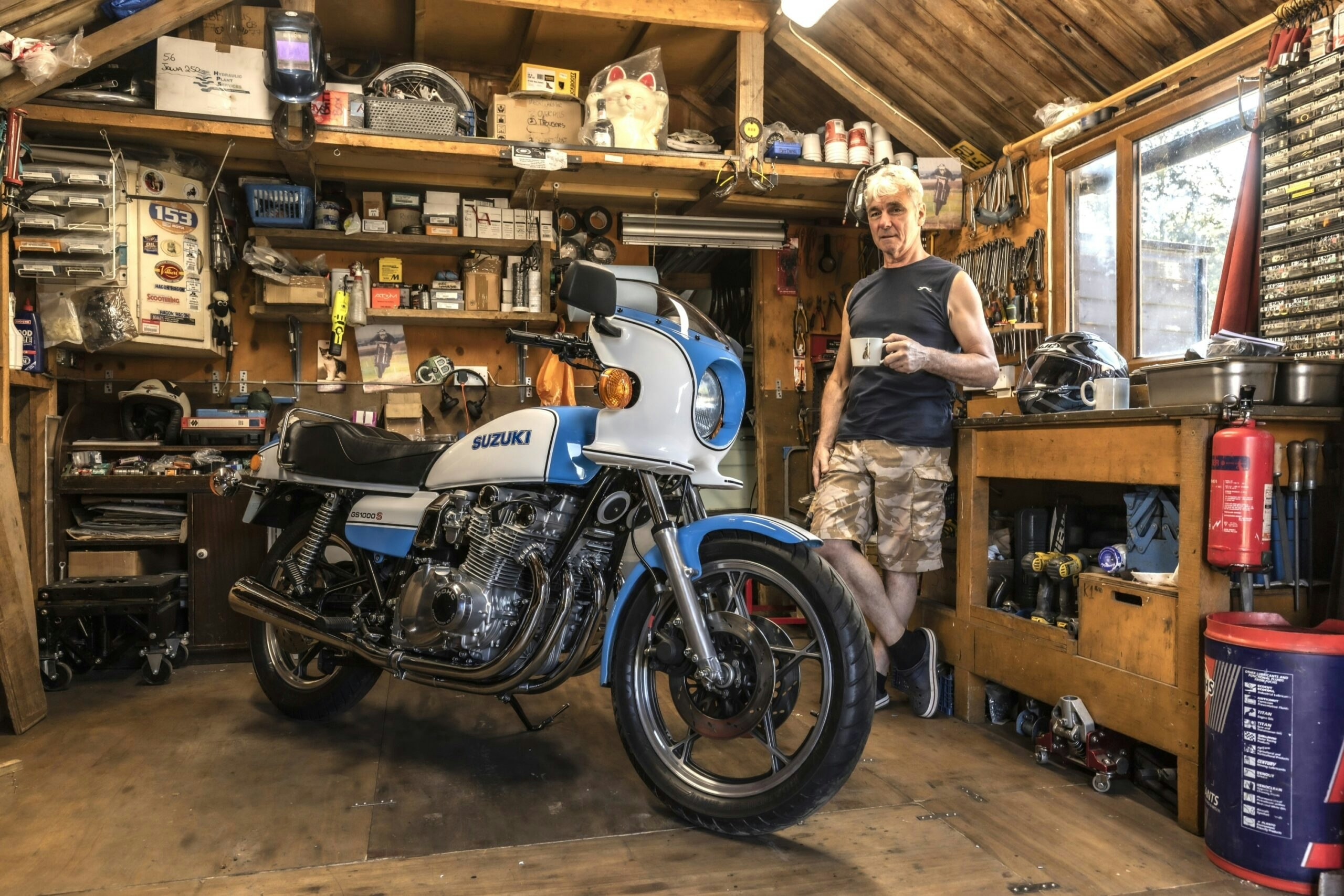
Even though the engine had just 17,000 miles on it, Ian stripped it completely. “I measured every clearance,” he reveals. “Most of it was perfect, though. The ring gaps were still a little on the tight side, and there were honing marks still visible on the bores. It’s certainly never been thrashed. There was some slight cosmetic damage to the clutch case and a couple of cooling fins, which I repaired with TIG weld and carefully refinished them. Then I just had to rebuild the engine with new gaskets and seals – and replated original fasteners. I fitted a new camchain to be on the safe side, too.”
Ian’s perfectionist streak came to the fore again on the frame. “Suzuki used fairly thin-walled tubing on all the GS1000 models to help keep weight down,” he explains. “The frame is easily damaged – even falling off the side stand can cause problems. So I had the frame, forks and brake discs checked over by Maidstone Motoliner (motoliner.com). They made a few tweaks to the frame, one fork stanchion and the discs, so I’m glad I did. I think it’s made a difference. I’ve ridden plenty of GS1000s, and they are a good handling machine, but this is the best one I’ve ridden.”
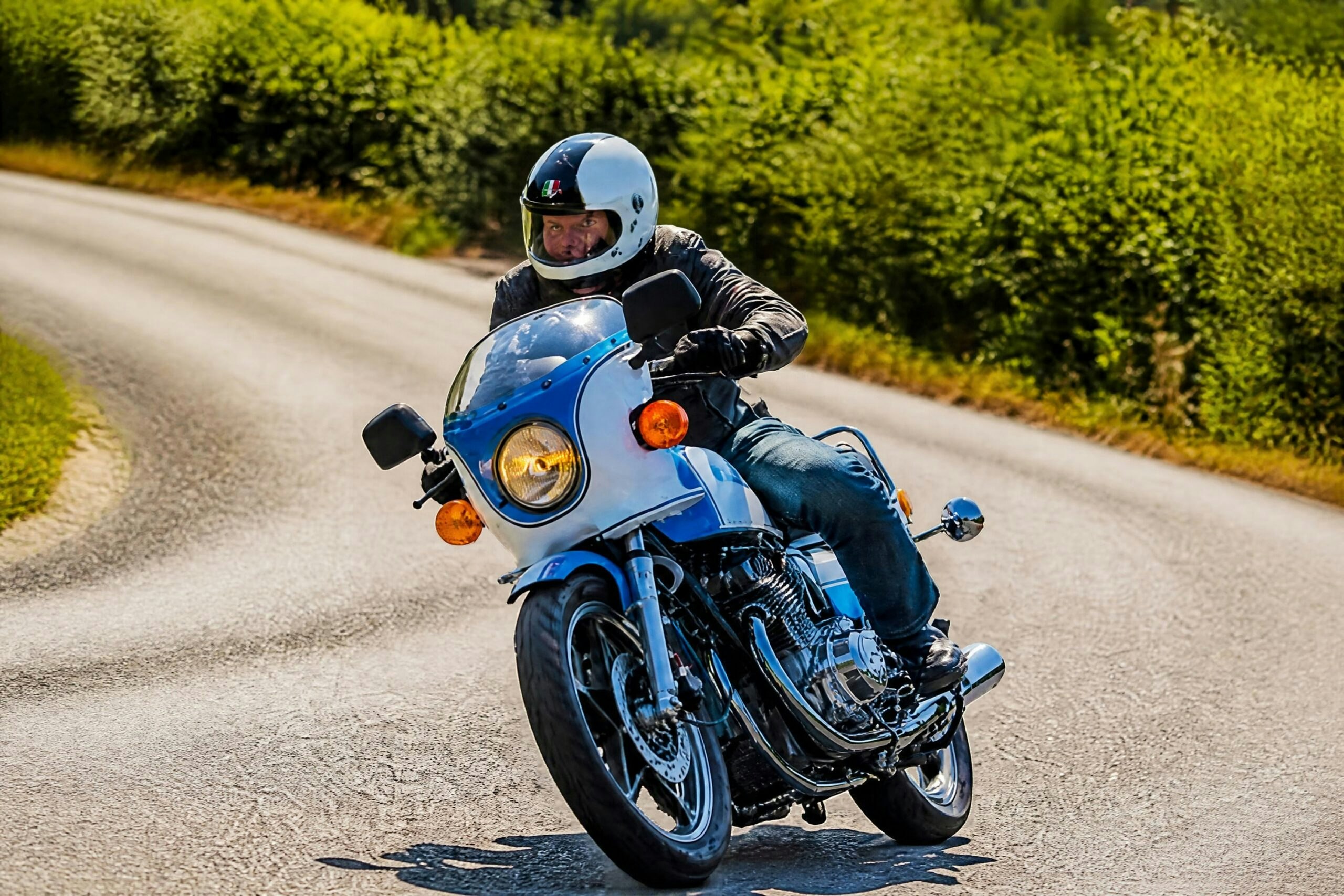
Gez has happy memories of his GS1000S in the ’80s – and this one’s even better
Rather than powder-coating the frame and swingarm, Ian went for a more authentic finish. “I wanted to keep the bike as original as possible,” he says. “It’s been vapour-blasted and painted by a mate of mine. Suzuki didn’t use primer under the frame paint, but I have. I wanted the finish to last, as well as look right.”
The exhaust system – unique to the homologation model – has benefitted from the Webster touch, too. “The standard baffles rot out,” he explains. “So I carefully unpicked the spot welds, removed the old baffles and made up replicas in stainless steel. The silencer doesn’t look any different from the outside, but I know the baffles won’t be rusting away unseen.
“The only non-original parts are the front brake Ian’s top three tools, Axminster milling machine master cylinder and the brake lines,” adds Ian. “Oh – and the tyres. I still have the correct master cylinder, though – I just couldn’t get any seals to rebuild it. The chrome parts have been re-plated (apart from the grab rail) but are all original; the fork springs and shocks are the factory-fitted parts, as is the seat cover. I’ve polished the wheel rims, but not touched their paint.”
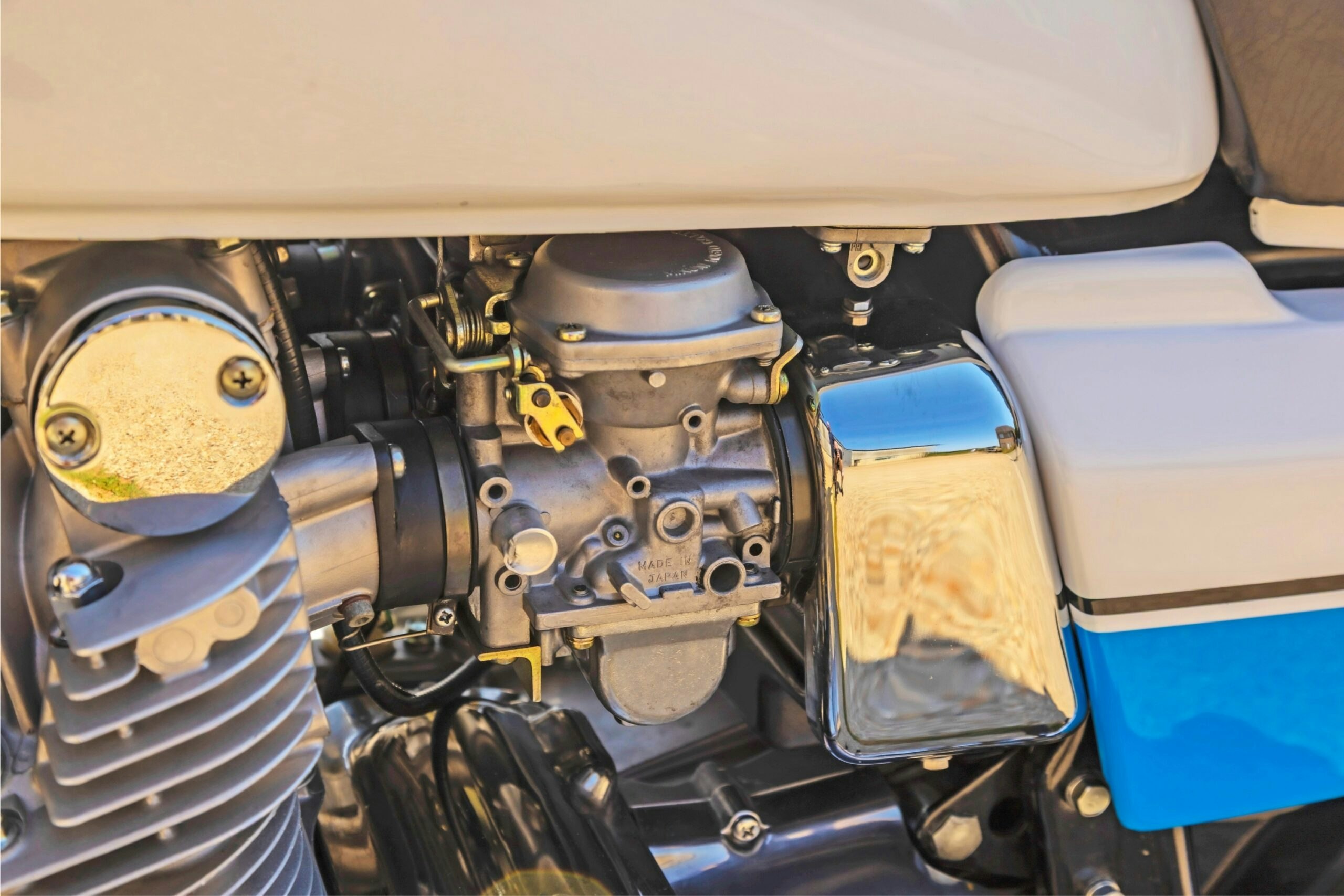
Homologation bikes got larger carbs as well as top-end changes
Overall, Ian is pretty pleased with how it turned out. “I’m not 100% happy with the paintwork,” he admits. “I usually do it myself, but this was just too good to justify doing it again. And it is the right colour for a homologation model – the blue is subtly different to the shade used on the standard production bikes. I like my restos to look like well-looked-after six-month-old machines, rather than over-restoring them.”
I’d say Ian’s hit the spot with this one. It looks the business, and personally I’d be more than happy with the paint. Now, following my earlier familiarisation run up the A21, I’m off for a longer ride to see how the big GS handles life away from A-roads.
It’s still a pretty big beast. I owned a GS1000S in the ’80s and have ridden quite a few over the years, so I’m interested to see just how different the homologation model feels compared to a stock machine. But, once on the move, the weight seems to melt away – the GS just feels neutral and well-balanced and I pick my way steadily through the maze of narrow lanes surrounding Ian’s home. So far, so good, but the real test will come when I can find some faster, wider and quieter roads.
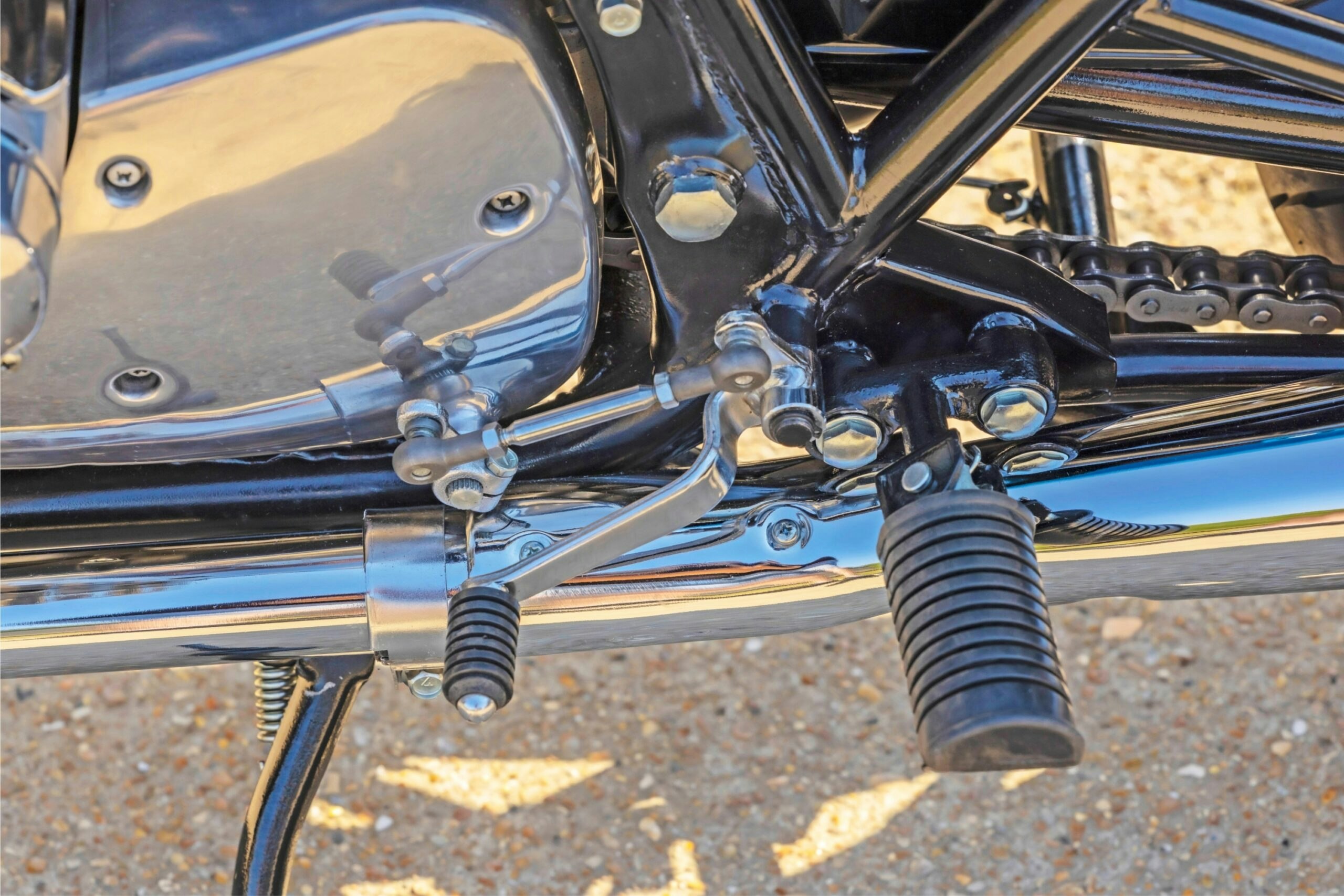
Rearset footpegs require different linkages for the gears and rear brake
Thanks to Ian’s local knowledge, I soon do – and they reveal that the riding position feels better than the standard 1000S. Those rearset footrests, while not radically positioned, tip me forward just enough to feel more natural when attacking corners – yet still feel comfortable and unstressed after a couple of hours on the road. They’re a definite improvement.
It’s more difficult to make a performance comparison without having a standard model to compare it with, though. Ian’s bike certainly sounds racier than a stock GS, thanks to the free-flowing exhaust with its lighter baffling. And cracking the throttle open provides even more punch than I remember – when the revs hit 5500, it really picks up and goes. I can’t vouch for absolute top-end performance, of course. But if the brutal midrange punch is anything to go by, I’d be prepared to believe it holds another 10mph over the standard bike. And I’m confident it’ll get there quicker, too.
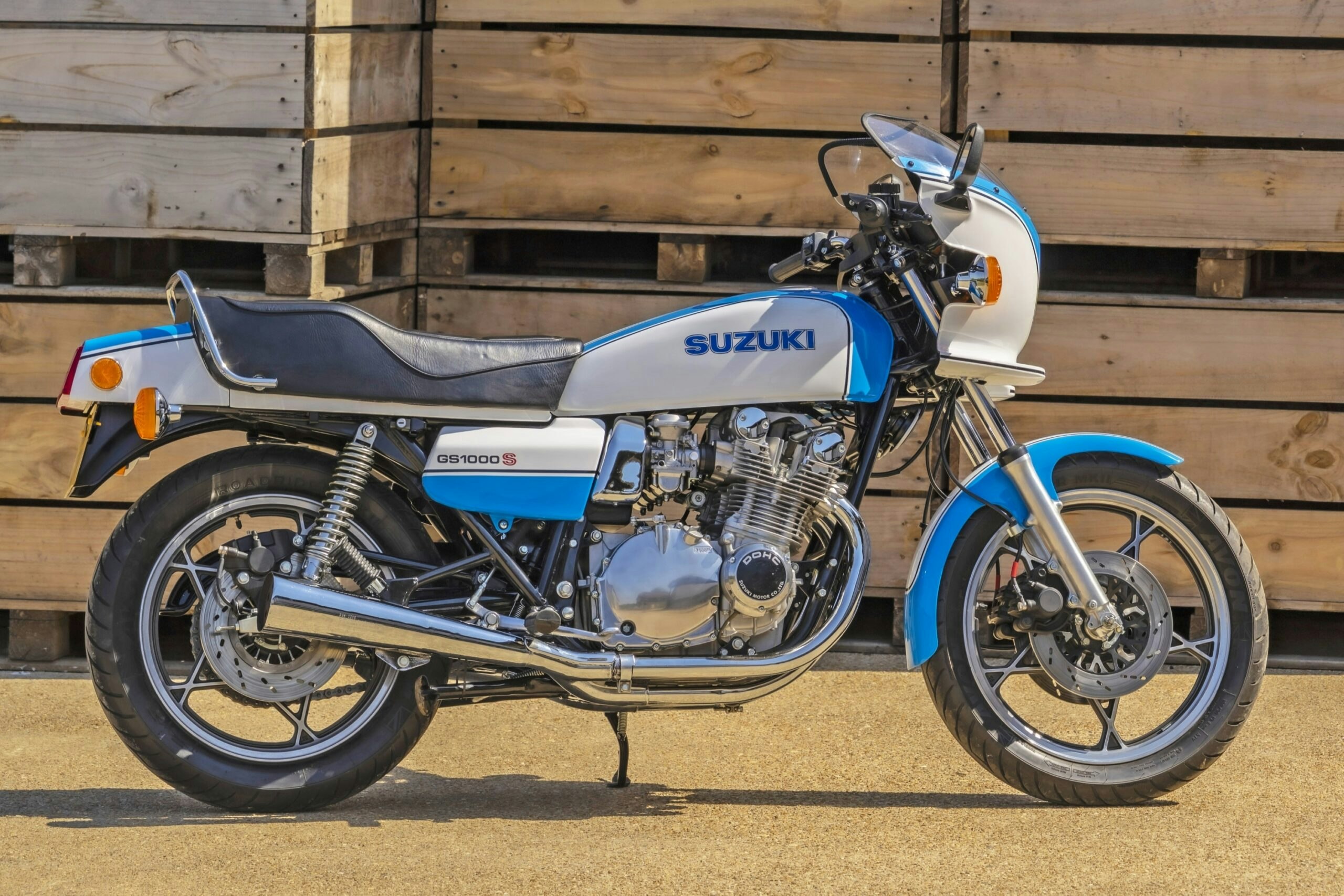
Ian is regretfully putting his ultra-rare GS1000S up for sale, inviting serious offers around £17,000. Contact him on 07941 970109
But it’s the handling – a game changer in the late ’70s – that’s perhaps the most impressive trick in the GS1000S’s repertoire. It’s genuinely impressive even today – closing in on half a century later. On decently surfaced, fast sweeping bends, it really is a match for most modern bikes. The steering is neutral and vice-free and, while super-quick changes of direction take a bit of input, it remains great fun to ride. Even the brakes are pretty good. Do I really have to give this back?
Sadly, I do. But not before I’ve enjoyed a great ride on a genuinely excellent motorcycle. A standard GS1000S is a great bike, make no mistake. But throw in a little more performance and the cachet of owning a genuine factory homologation machine, and you can see why Ian found it so irresistible.
Ian’s top three tools
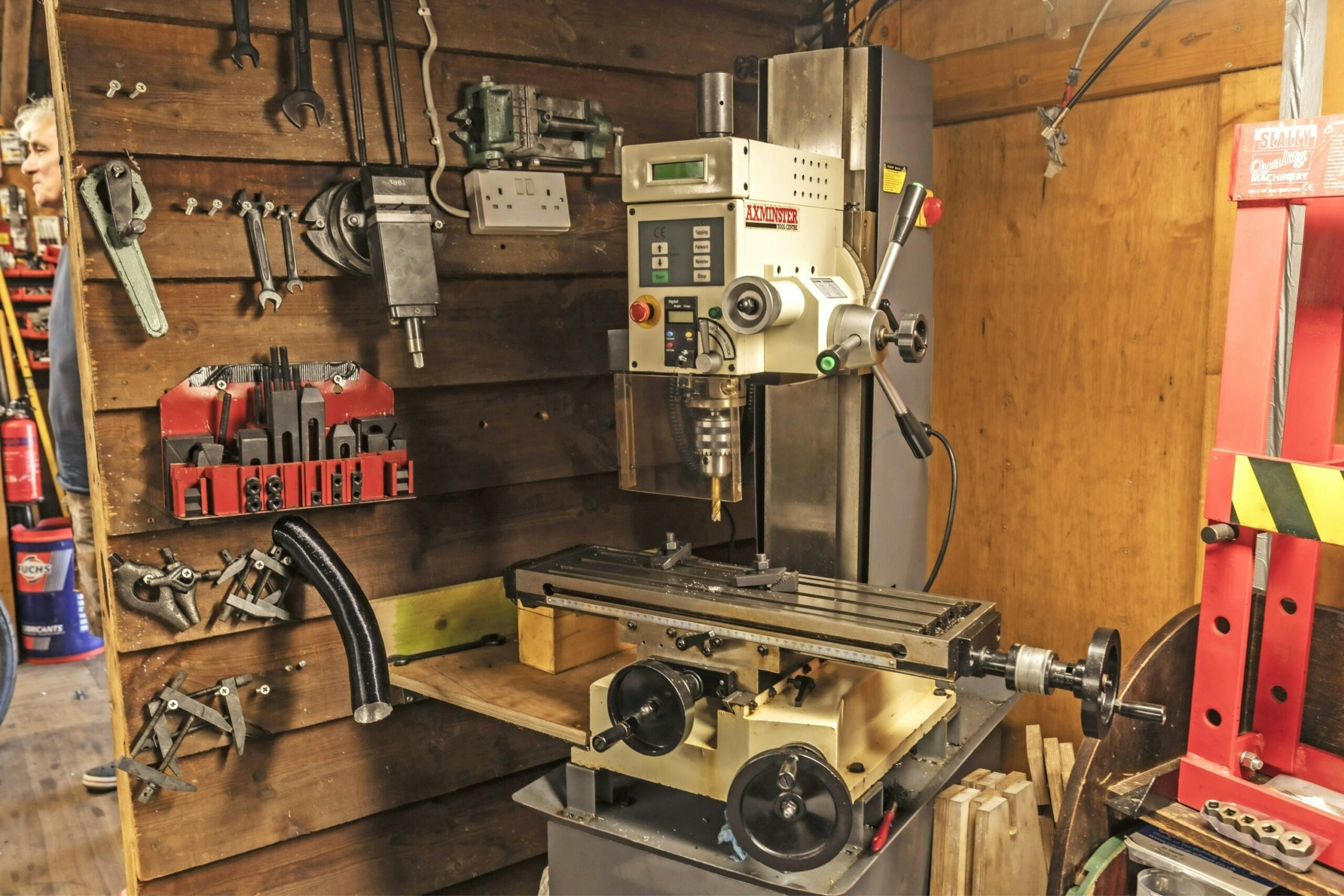
Axminster milling machine
‘I’ve owned this for about 15 years – such a handy bit of kit. It’s a tilt-head mill/drill; I use a better one at work, but wouldn’t be without this one at home. I used it to machine some of the exhaust baffle parts.’
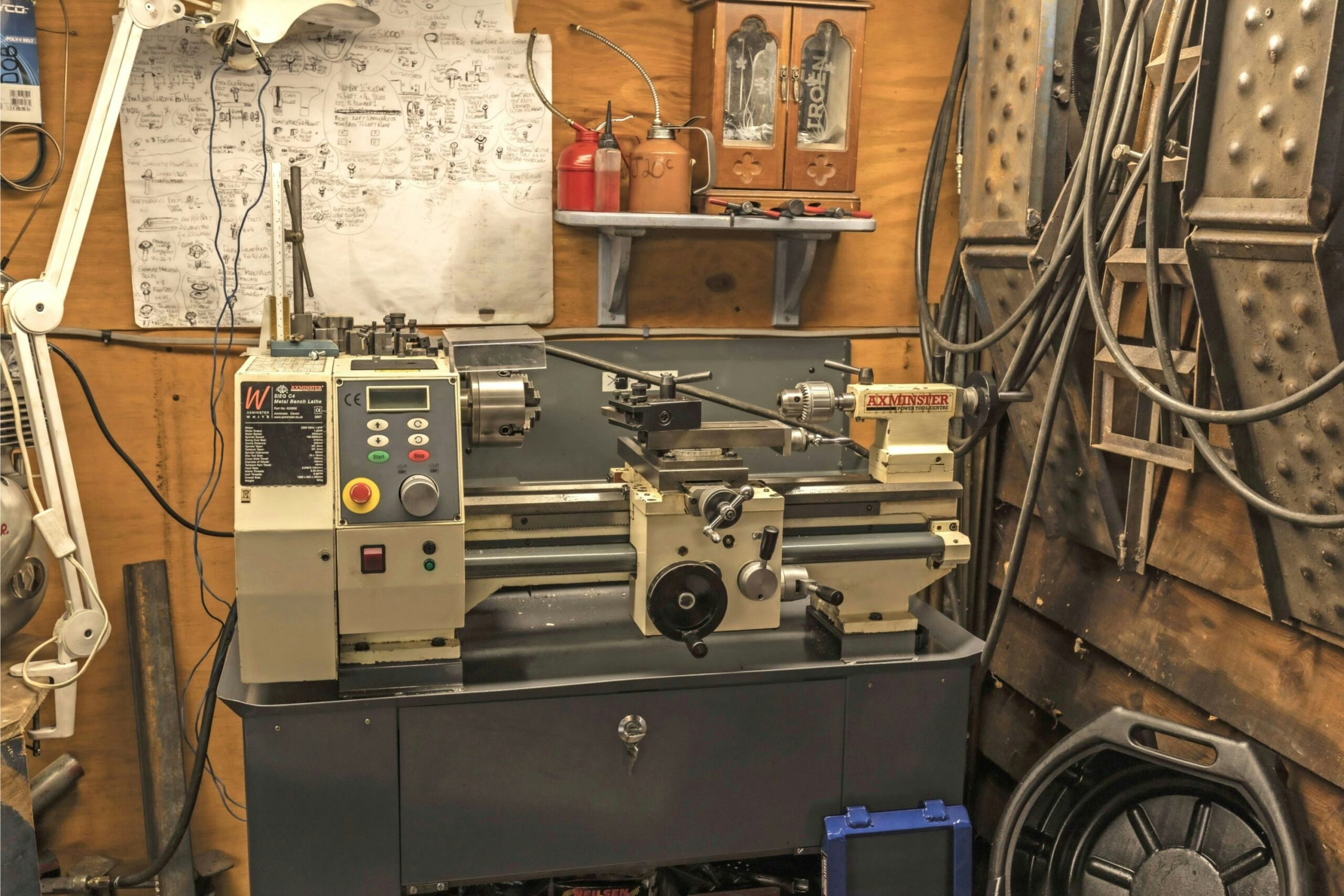
Axminster Sieg C4 lathe
‘I’m obsessive about using a bike’s original parts wherever possible, but they have to fit perfectly or I’m not happy. I spent hours turning down parts so they fitted better than when they left the factory.’
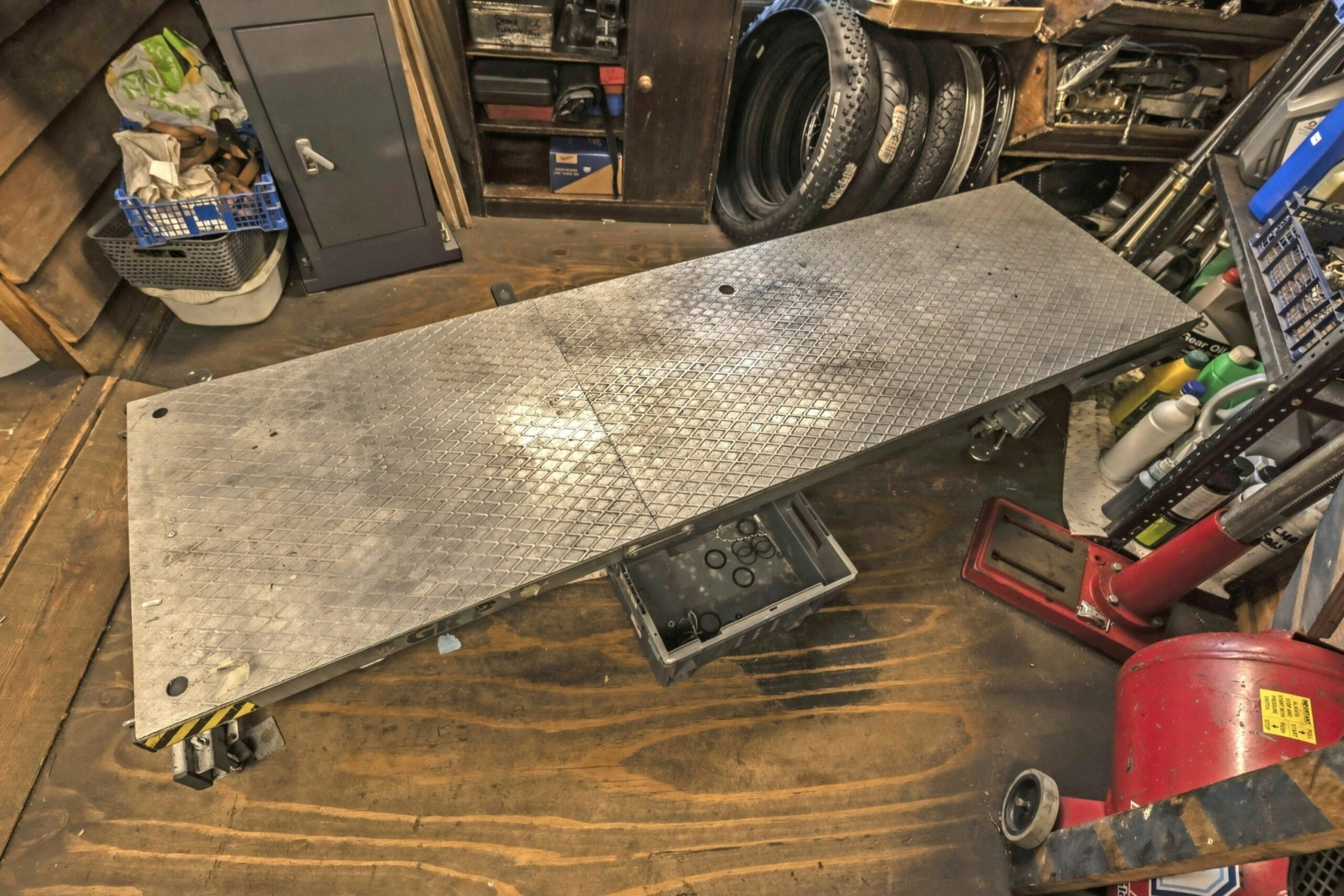
Hydraulic lifting workbench
‘I can’t remember where I got this from – but it was very expensive. I’ve had it for 30 years, and it cost around £400. It’s German-made and lifts more and weighs a third less than most benches on the market.’
SPECIFICATION: 1980 SUZUKI GS1000S HOMOLOGATION SPECIAL
Engine & Transmission
Engine Type: Air-cooled DOHC transverse inline four
Capacity: 997cc
Bore and stroke: 70.0 x 64.8mm
Compression Ratio: 9.2:1
Carburation: 4 x 34mm Mikuni CV
Ignition: Electronic
Primary/final drive: Gear/chain
Clutch: Wet multiplate
Gearbox: 5-speed
Chassis
Frame: Tubular double cradle
Front Suspension: 37mm forks
Rear Suspension: Twinshocks
Front Brakes Twin: 295mm (11.5in) discs
Rear Brake: 295mm (11.5in) disc
Wheels: Five-spoke cast alloy
Tyres: Front: 100/90 19. Rear: 120/90 18 (R)
DIMENSIONS
Wheelbase:1505mm (59.3in)
Seat Height: 785mm (30.9in)
Fuel Capacity: 19 litres (4.2 gallons)
Dry Weight: 240kg (529 lb)
Performance
Power: 95bhp at 8200rpm (est)
Top Speed: 140mph (est)