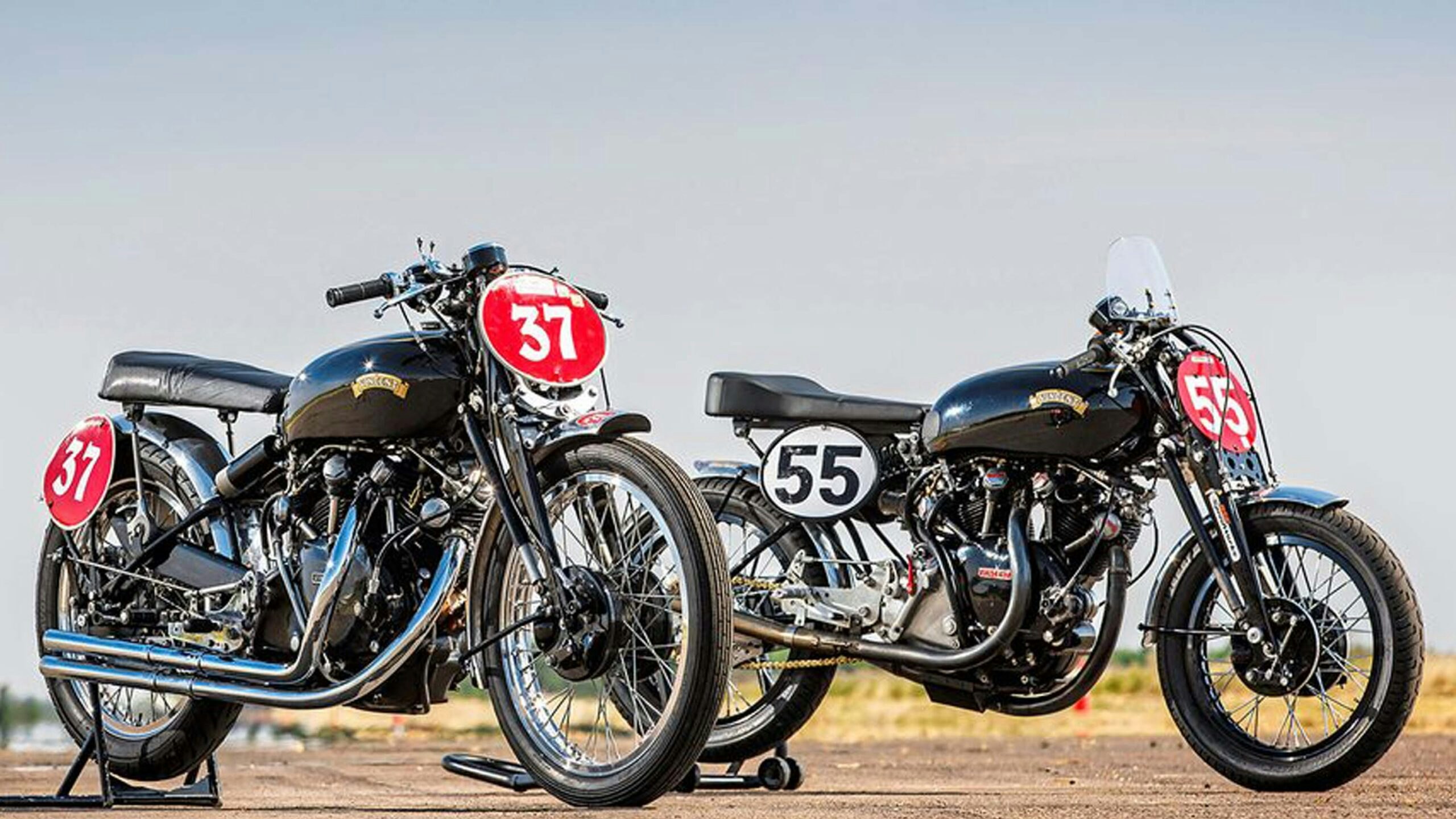
TWIN VINCENTS
When it comes to special, little outshines the Vincent Black Lightning. We get up close and personal with a pair of exceptional big twins
Words MARK GRAHAM Photography ADAM SHORROCK
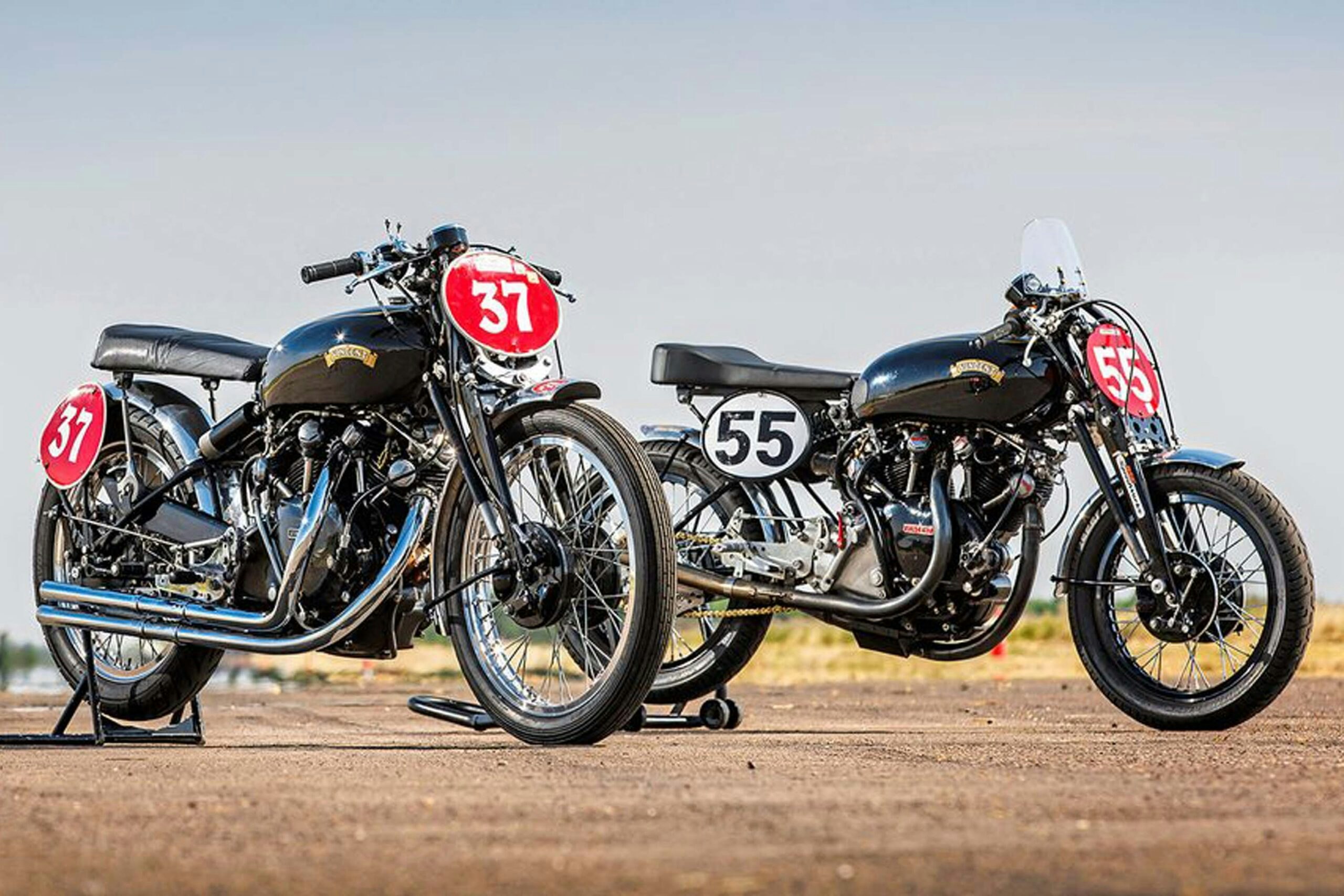
Sometimes ear plugs are not a thing. Occasionally, circumstances demand the 3M bungs remain in your pocket. A day like today. A day with not one, but two of the rarest, finest, loudest and most hallowed motorcycles ready to be savoured, revered.
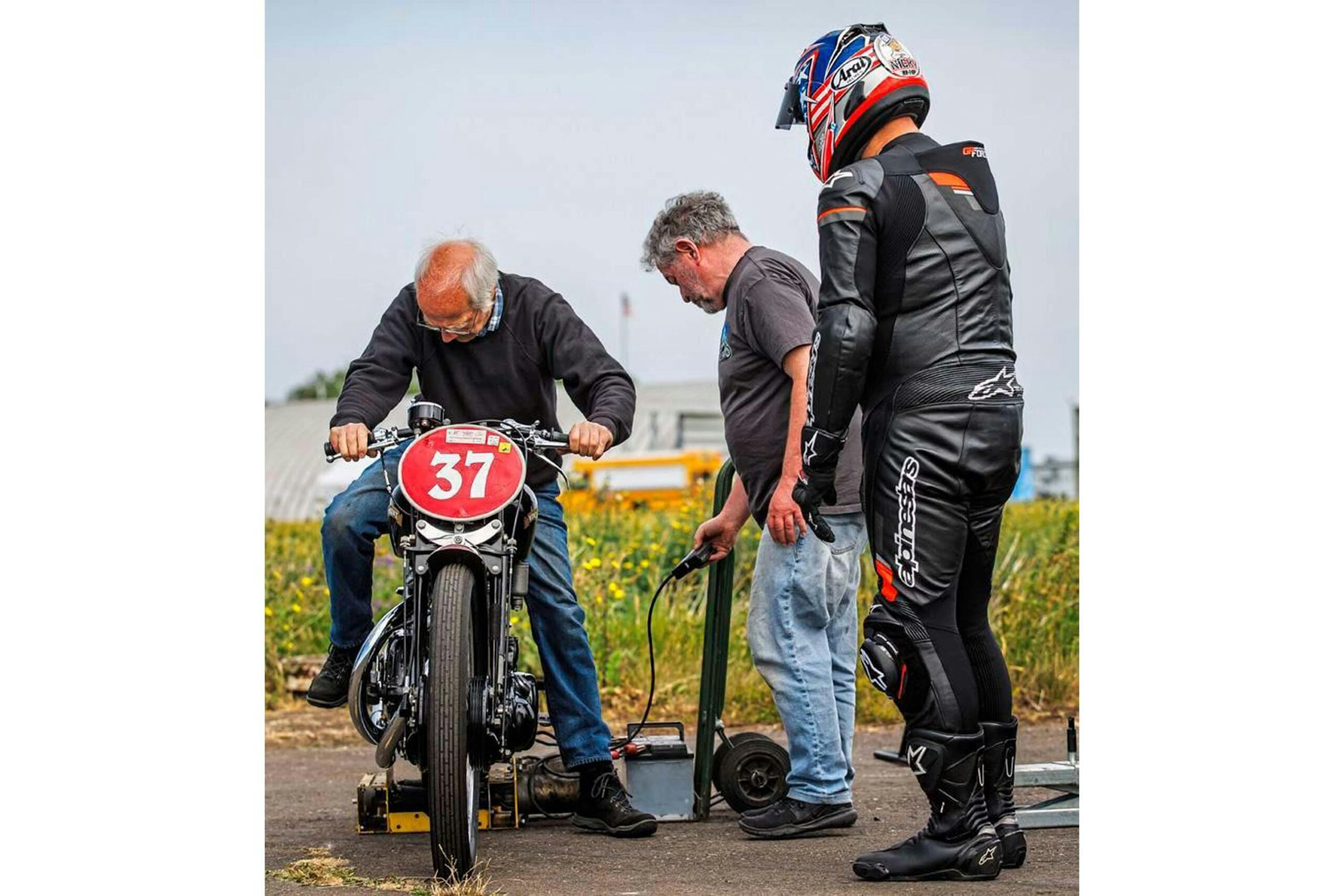
Days like this are golden. Deenethorpe Airfield near Corby; patchy tarmac shimmers in baking July heat, scarcely a breeze troubles the windsock, all is quiet, and we’re ready to stir the Black Lightnings into life.
Even standing in their presence, shuffling around marvelling at the dense blackness of stove-enamelled crankcases, inwardly trembling at the wispiness of the brakes, clocking the sheer nothingness by way of frame members, and gazing at that fuel tank legend: The Vincent.
All Vincents are special, but some are more special than others. Of the single-cylinder variants, the Grey Flash is the one. Only 30 were built. Maybe 20 survive. When it comes to the big twins, the Black Lightning, the Stevenage factory’s special-order hot rod is the ne plus ultra, the absolute daddy of all post-war V-twins. A mere 28 still exist from 33 produced.
‘It was not billed as the fastest production motorcycle on a flimsy pretext’
Black Lightning. Was there ever a heavier, more terrifying tag for a motorcycle? You know it’s bad from the moment those two words tumble from your lips. Say it again. No doubt. It’s a bad motorcycle. The baddest.
Rocked onto the starting rollers, into first gear (of four) and this machine, rebuilt to original spec, is spun up, clutch dumped...
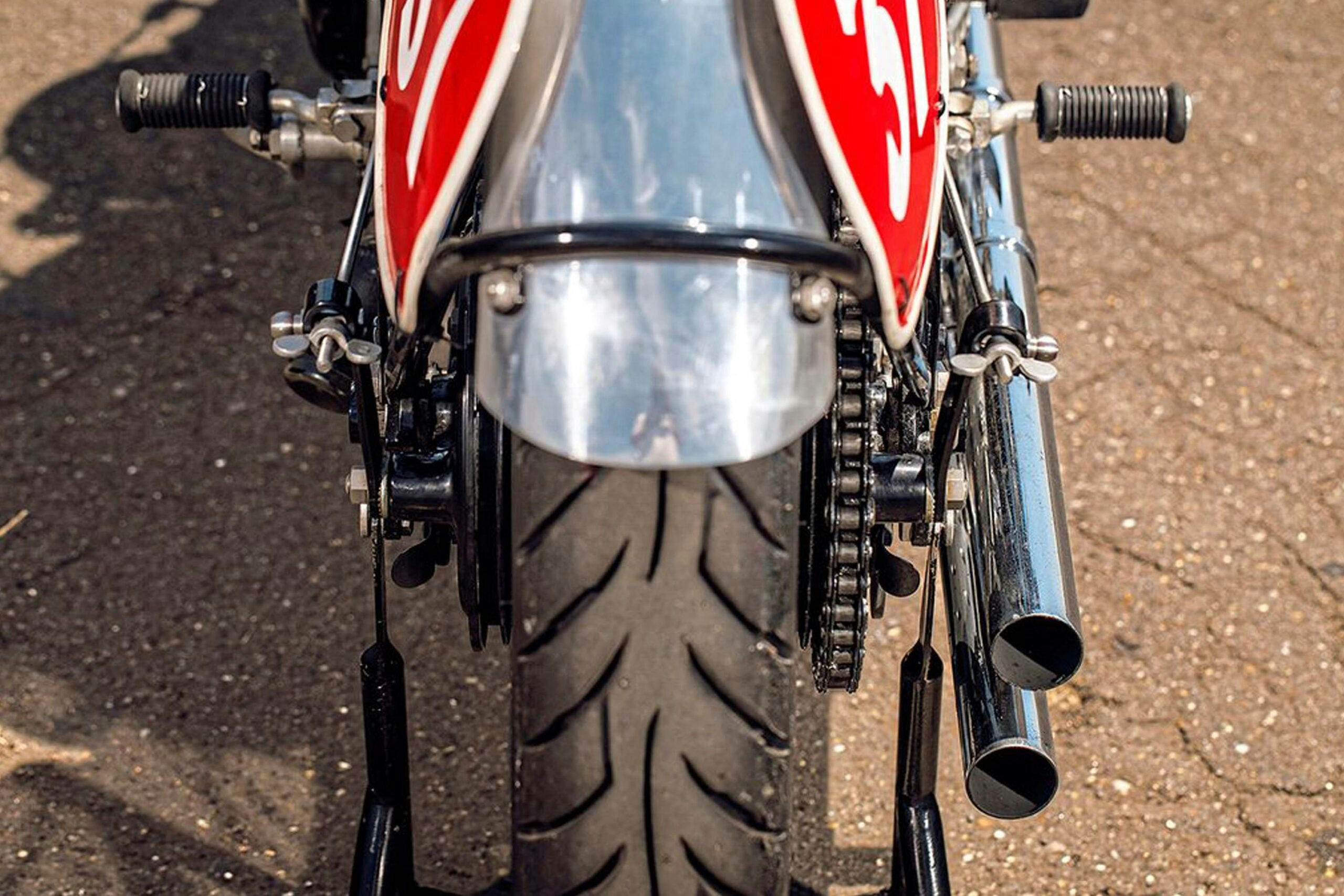
Slugs of combusted mixture exit the straight pipes at 350 feet per second. You feel the pulses 10 feet away. Birds scatter, control tower windows rattle, and the crowd around the barking machine can do nothing save smile broadly at one other. It’s one of the great classic start-up moments.
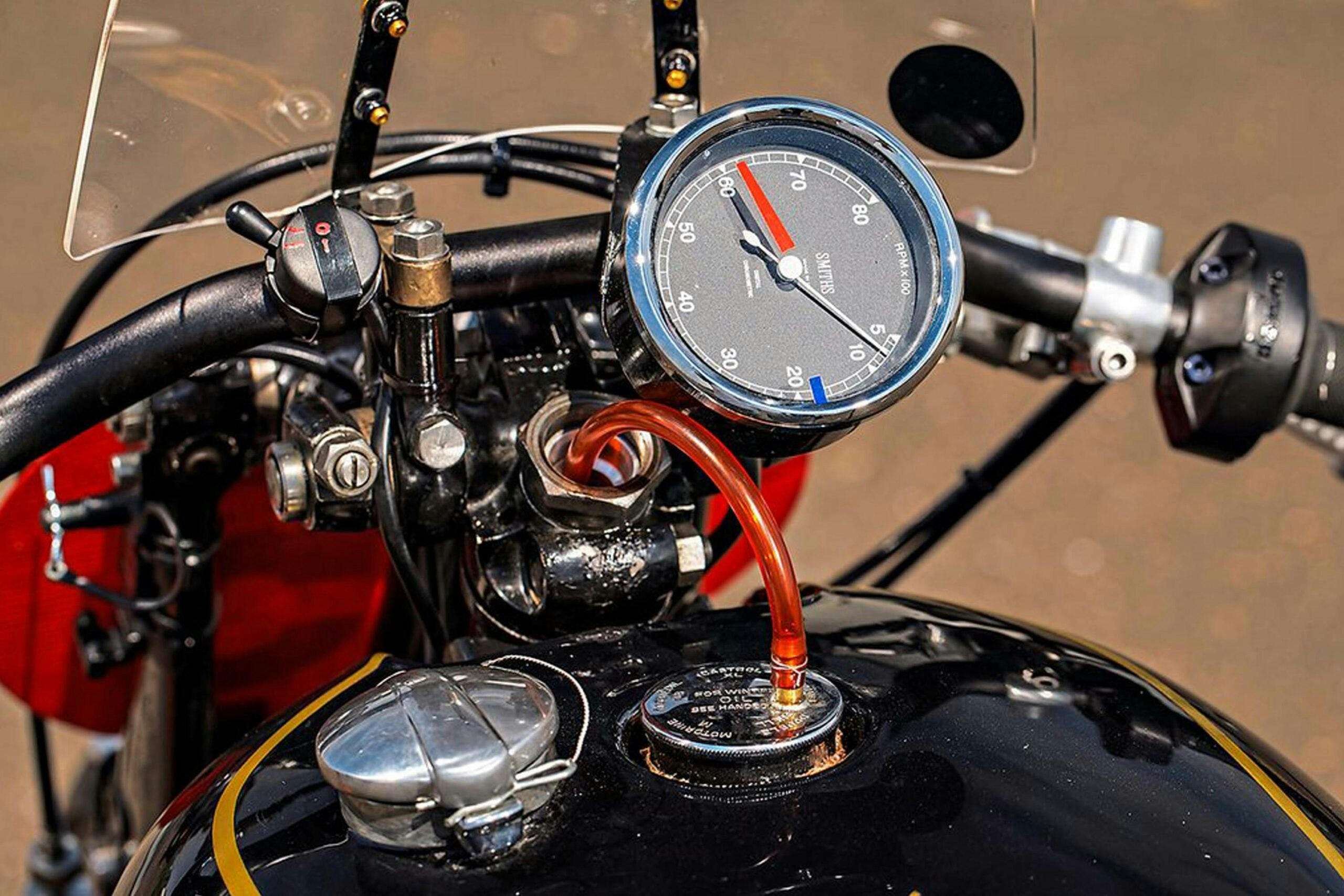
The power unit is mechanically quiet. All the while this stupendous exit noise plays, the whirring internals emit a light buzz while the valvetrain produces scarcely a tick. Six pints of Rock Oil TRM 20W-60 circulate the innards absorbing heat, while burnt Sunoco 102 octane race fuel residue wafts into the atmosphere.
t sounds and smells almost animal. Small wonder the Vincent bible by EMG ‘Eddy’ Stevens is titled Know Thy Beast. Few other big beasts of the classic world can hold a candle to this leviathan. The only other machines with such charisma are perhaps the AJS Porcupine, Honda’s RC166 250/6, Ago’s 500cc MV triple, King Kenny’s TZ750 dirt tracker, and the Norton RCW588 rotary race bike.
The mystique behind the Black Lightning is deserved. It was not billed as the fastest production motorcycle in the world on a flimsy pretext. Black Lightnings posted world speed records with numbing regularity. Rollie Free famously managed 150.313mph in 1948 (in his swimming trunks), Jack Ehret set an Aussie record of 141.5mph in 1953, while Kiwi Russell Wright hit 187.14mph in 1955 with a streamlined Lightning.
This factory hot rod could be ordered from the Stevenage works in 1949 for £508 (including purchase tax). It cost as much as a modest house, and you have to marvel at Philip Vincent’s sheer chutzpah in producing such a thing while the world was still trying to recover from the blight of war.
It was an extraordinary creation. Yet Vincent guru Glyn Johnson, who rebuilt Walo Bertschinger’s 1950 Lightning, says: “I’ve had three of these apart over the years and I’ve always been impressed at how un-special they are.” Johnson restored Bertschinger’s machine to original works spec, which is surprisingly close to Black Shadow roadster trim.
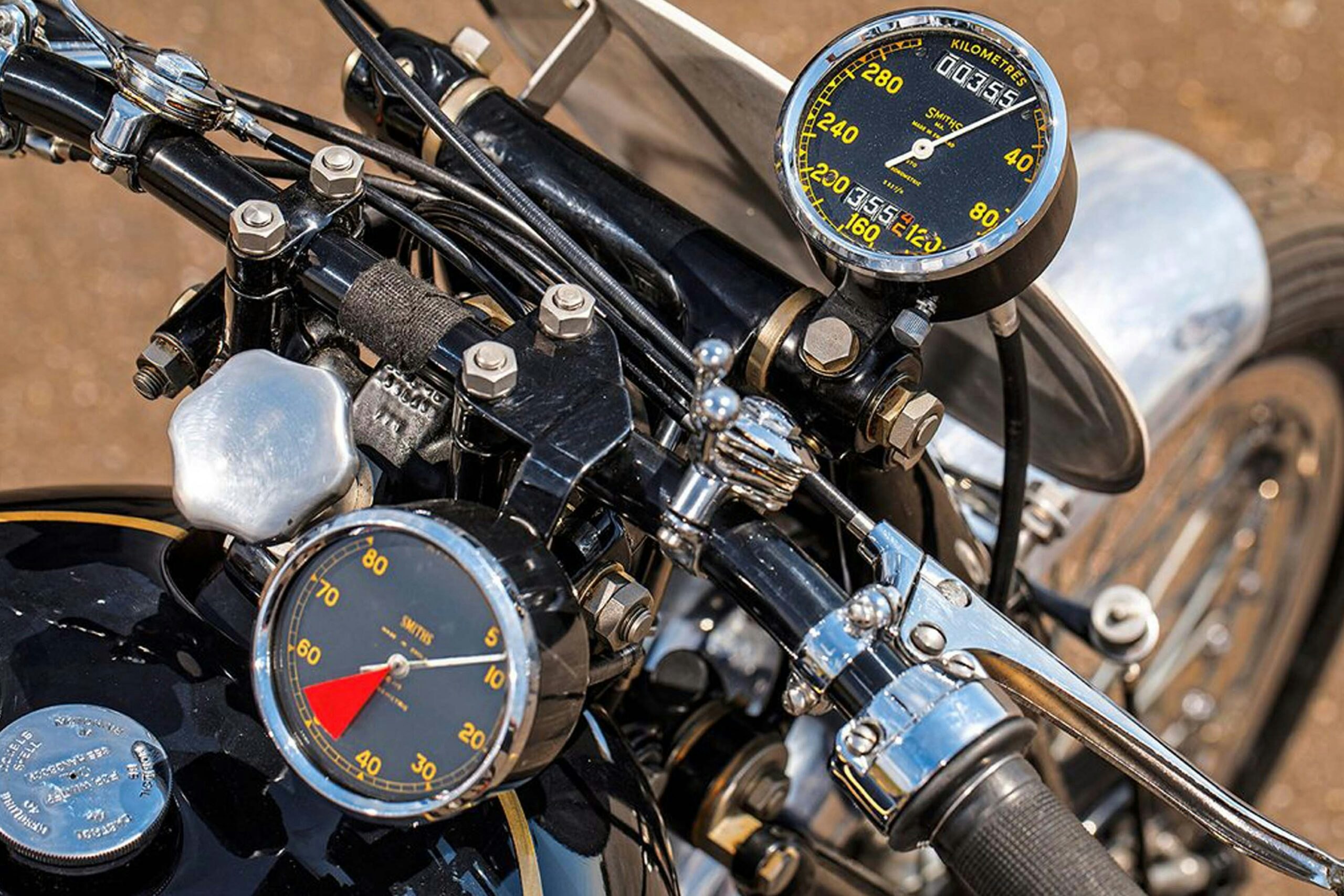
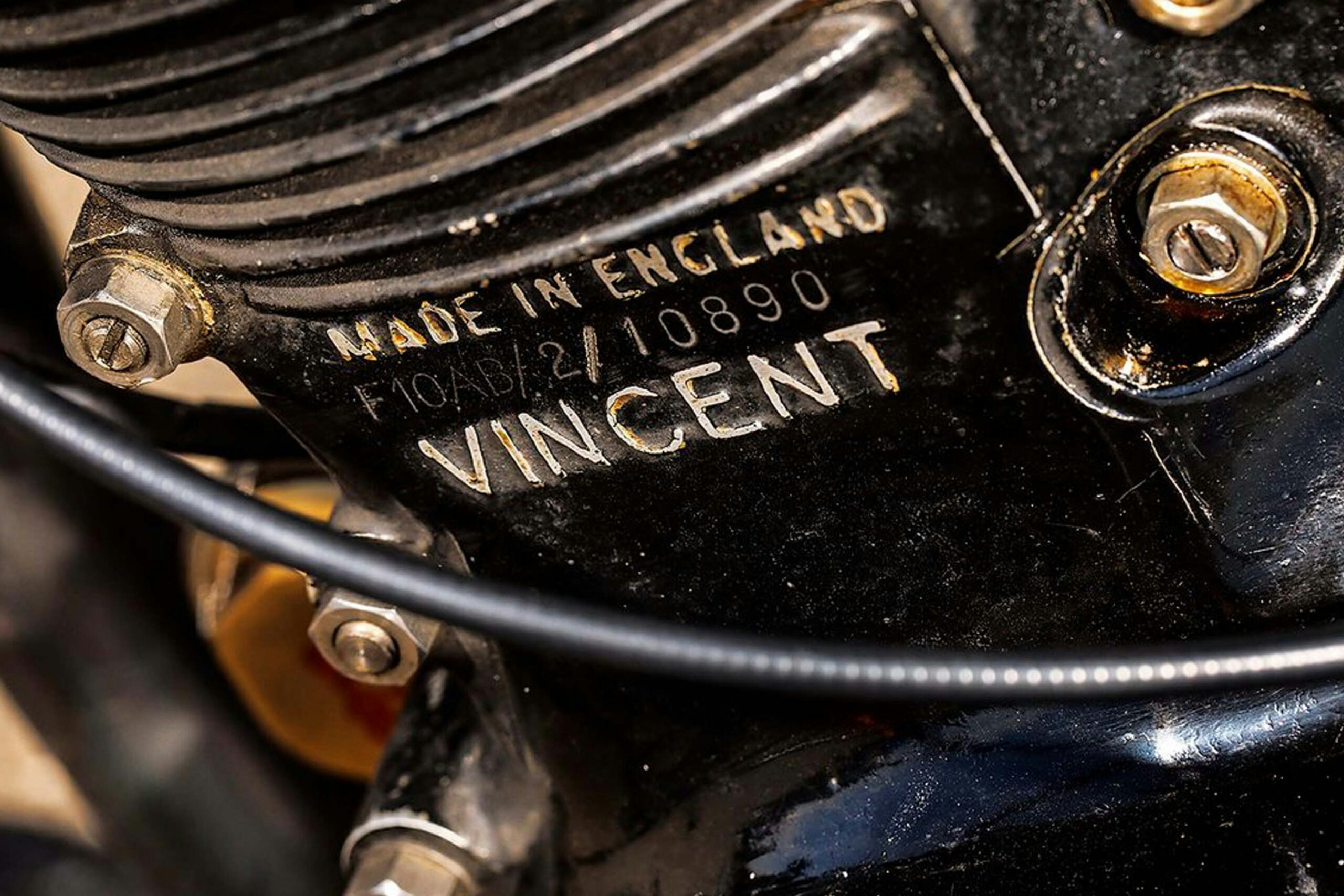
The Black Lightning is a 998cc 50º V-twin, as per Rapides and Shadows. It shares the same bore and stroke of 84 x 90mm, the same 30º valve angle, and the same pressed-up crankshaft with crowded roller big ends – although lightened, polished and dynamically balanced on the Lightning.
A key difference was the Lightning’s connecting rods, designed for heavy-duty performance. Machined from Vibrac – a nickel-chrome-molybdenum steel – they had a tensile strength of 80 tons per square inch (although the bike here has replacement Carillo rods fitted).
By 1951, the factory was fitting two front cylinder heads (not a designated front and rear) as the front head casting had more ‘meat’ around the rocker area to allow for opening up the inlet port to 32mm. Valve head diameters were the same as the Black Shadow’s at 1.8in inlet and 1.67in exhaust (45.72mm and 42.54mm). Lightning combustion chambers, ports and rockers were polished, and the MkII camshaft employed with a long 106º of valve overlap (where inlet and exhaust are open simultaneously). Ignition advance was 38º before TDC (although less with modern fuels).
With straight-through exhaust pipes of either 1⅝in or 2in internal diameter (smaller for circuits, larger for outright top speed), a Black Lightning would produce around 70bhp at 5600rpm. A rev limit of 6500rpm was an absolute maximum. Pistons were forged items made by high-end supplier Specialloid and could be specced at the desired compression ratio for petrol (usually 9:1) or methanol (up to 13:1). With all the road clobber left behind in the Vincent stores, a Black Lightning weighed in at a feathery 380 lb (172.5kg) where a Shadow tipped the balance to 458 lb (207.7kg).
‘It kicks like a spooked shire horse from as low as 2000rpm’
With numbers crunched, what does it all add up to when you’re lucky enough to straddle a Black Lightning and give it the gun?
We have two bolts of Lightning to sample: Walo’s stringently stock machine and Ben Kingham’s heavily reworked version. Both are race machines, built to be given generous handfuls of throttle within strict maximum-revolutions parameters, with clutches and gearboxes given proper respect, and with the overarching proviso that both are returned to the owners’ hands without so much as a scuffed seat from a boot heel slung too low on a dismount.
The Bertschinger Lightning barks again, and then Ben backs his machine onto the rollers. They can cope with the 9:1 compression on Walo’s bike, but not the similar ratio of Ben’s machine, differently geared. The Kingham bike bangs into life with a swift push start, and after a few squirts up the runway both machines are handed over to editor Mike and your correspondent.
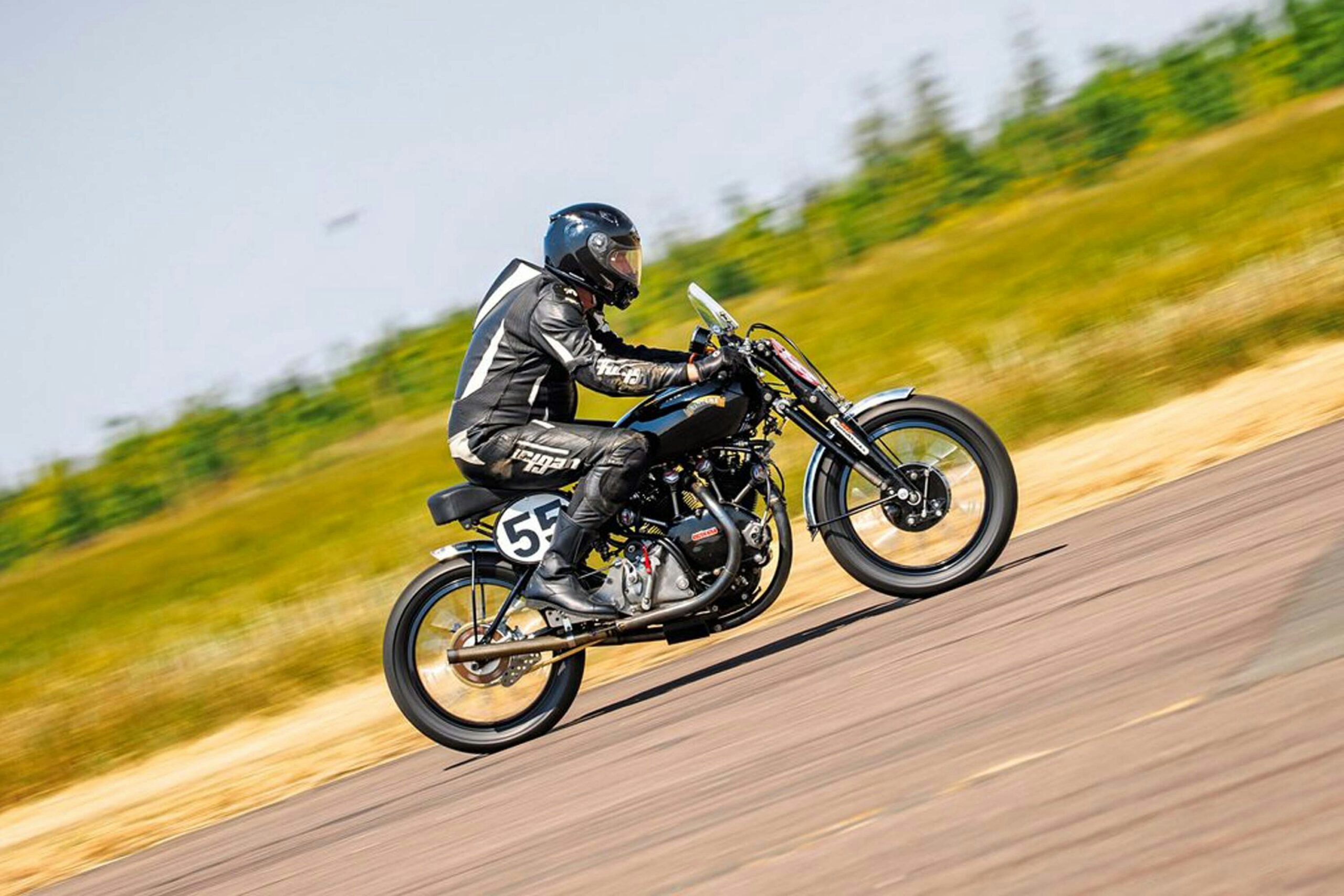
Both engines have to be kept on the boil – there is no tickover on either of these thoroughbreds. Rider transfer is no more fraught than with anything still worth the price of a house, and as excitement bordering on frenzy takes hold, we each snick first gear and fire these magical devices at the horizon.
The two of us have sampled much machinery over the years, many and varied motorcycles of great pedigree and prodigious performance, but we can’t help stealing a glance at each other as we power off. This is very special.
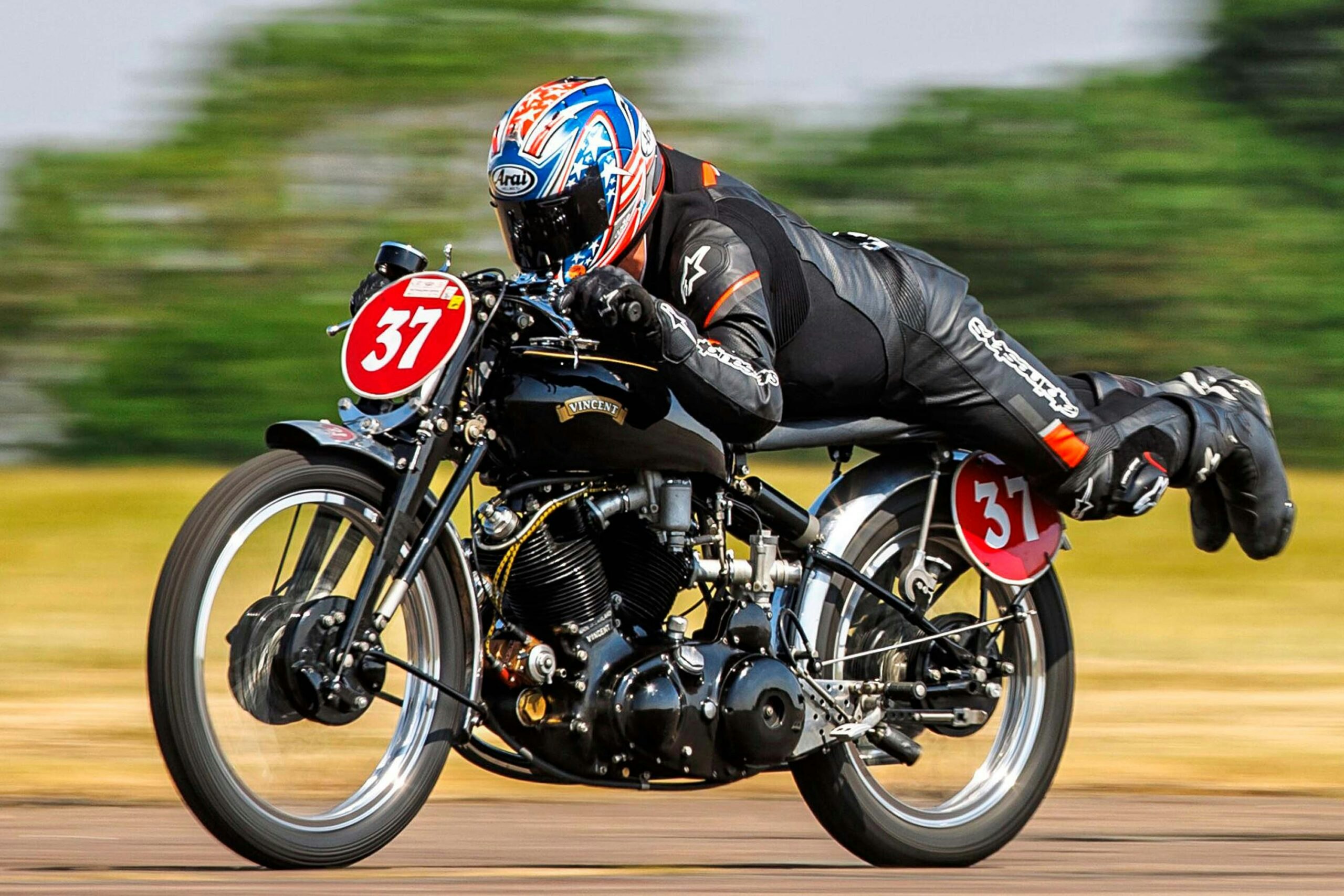
I’m on Ben’s highly developed, very far from stock Lightning. It kicks like a spooked shire horse from as low as 2000rpm on the tacho. And just keeps on stomping. You’re nowhere near the 6000rpm limiter and it’s devouring the asphalt in a blitz of sound and fury.
Gearchanges are measured more than slick, but with all that ripping torque (75 lb ft at 3000rpm) and maximum power (75bhp at just 4000rpm) you can afford to dwell on achieving a positive engagement without trying to bang in the next ratio like a quickshifter might. Vincent gearboxes are big, heavy things, as they had to be. Wafer-thin pinions and shafts would never handle the torque.
These engines make as much of a racket on the overrun as they do on acceleration. Back off the throttle and you leave a solid wall of sound behind. Something like 10 sheets of heavy tarpaulin torn in unison amplified through a Led Zeppelin-level stadium stack.
It’s those harmonics from the straight-cut pipes that do it, plus on the Walo bike the two pipes on the one side truly pump up the volume.
The Ben bike runs on 40-weight castor oil. Anyone familiar with the sweet aroma of that little film of bean oil creeping past the piston rings to be combusted and exhaled will imagine just how heady a day this is.
We complete a few runs and swap bikes. Still hard to take in that we’ve got a pair of the most storied machines of all time in one place with carte blanche to go out and have some fun. It’s beyond mere enjoyment. It’s an honour to get let out on stuff like this.
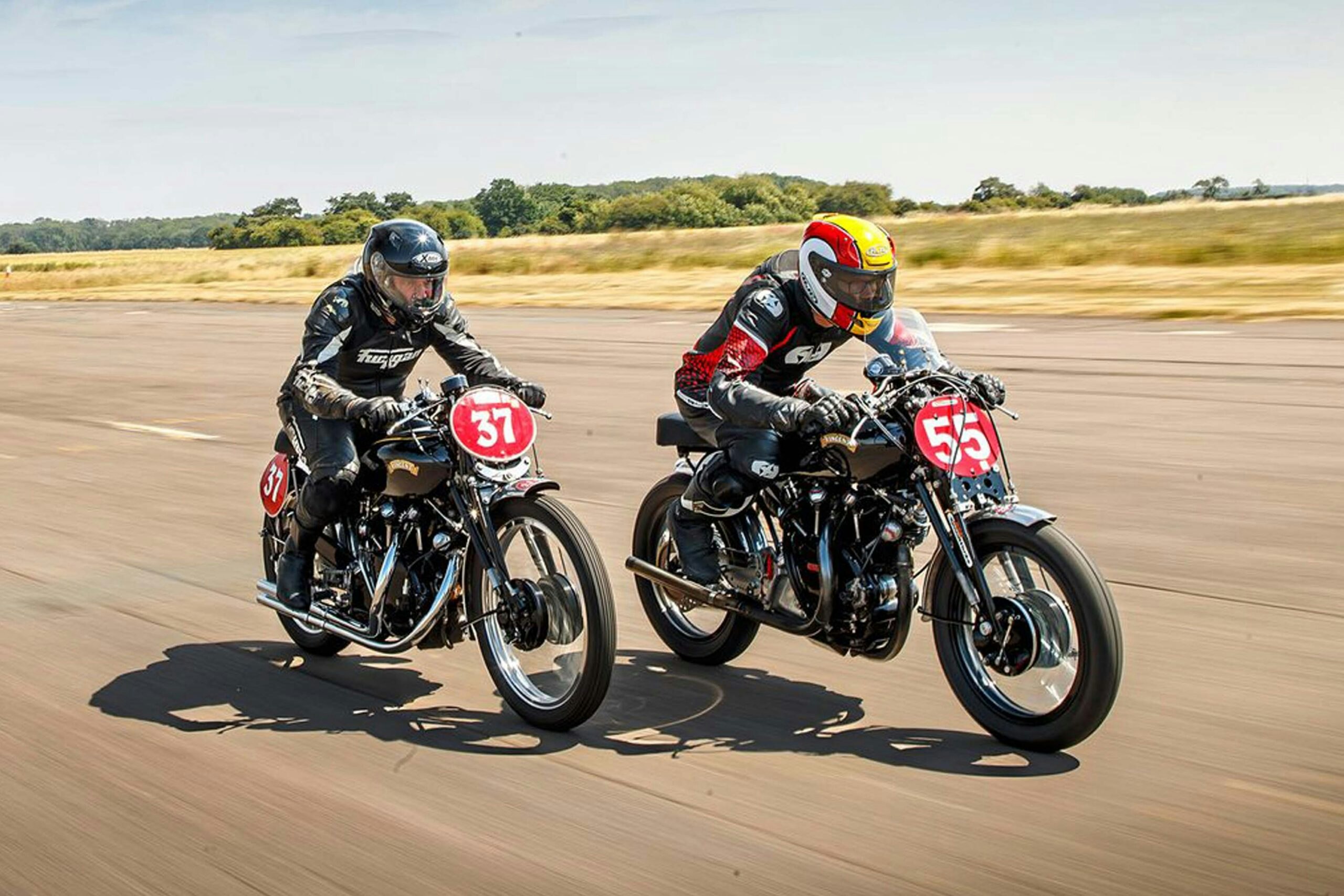
‘It barrels you forward in a cacophony of brutish aural treats’’
The ripped-up runway makes us concentrate like crazy. Get one of these beauties caught in the weedy crevasses on the edge of the strip and the consequences of a tankslapper and tumble hardly bear thinking about. Road rash would be the least of anyone’s concerns.
Now aboard the Bertschinger bike – and even in ‘standard’ Black Lightning order, it’s every bit the bike Ben’s breathed-on version is. It has a slightly softer edge, but not by much. The get-up-and-go is all there. The chassis is more pliant, mildly lazier with its longer wheelbase, yet just as arresting in the way it relentlessly barrels you forward in a cacophony of brutish aural treats. There will never be anything quite like a Vincent Black Lightning again. Sure, there exist factory V-twin specials from many manufacturers, some rarer even than these Vincents. There will no doubt be more to come. Nothing will match these.
Once sampled, never forgotten. What a day.
Ben Kingham
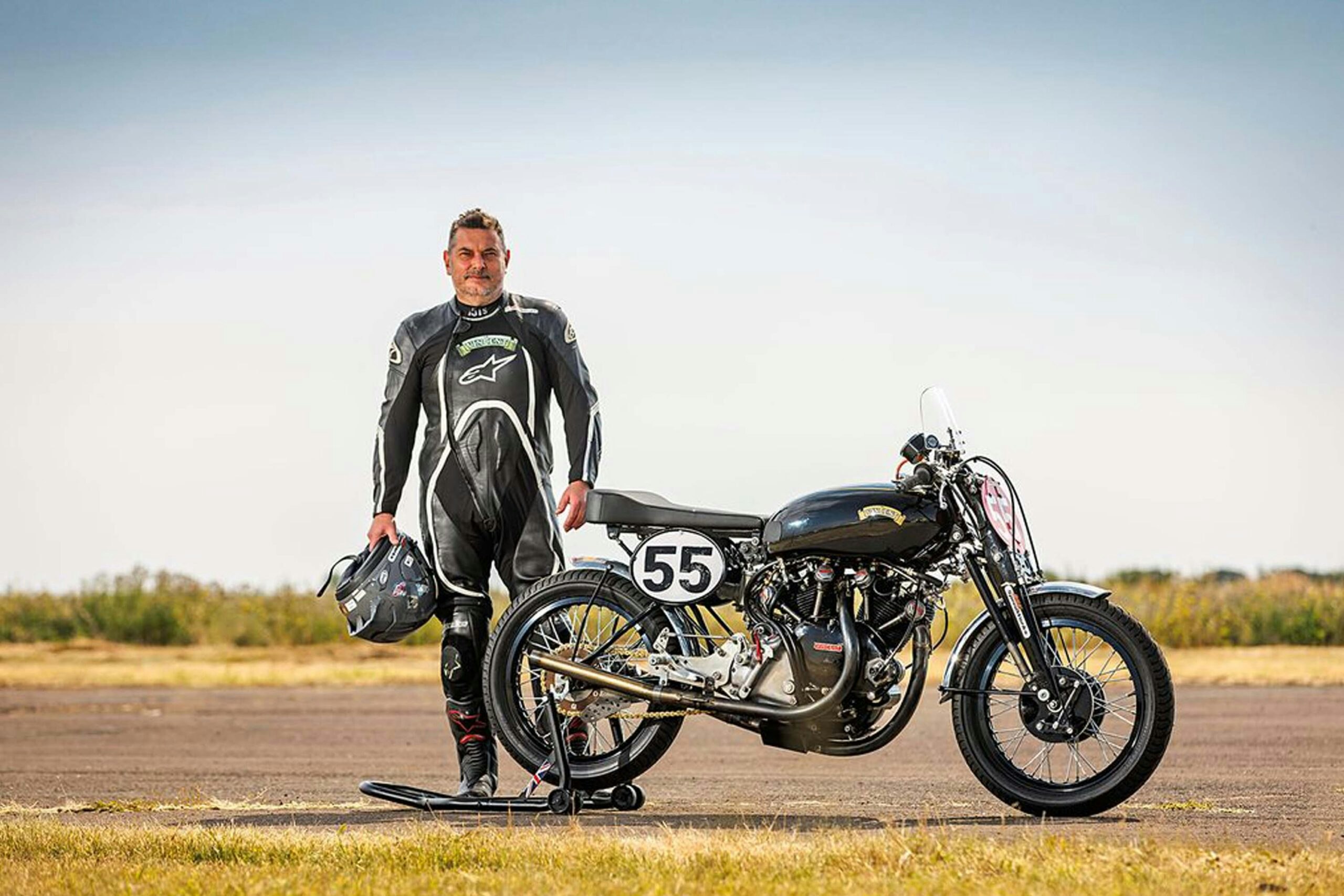
Ben makes no bones about his Vincent race bike’s provenance. “It’s a modified road bike with a logbook. We call it a Black Shadow, because it’s raced in the road bike class,” he says. “We built the bike in 2019, converting my dad’s roadgoing twin for racing and adding parts from my Vincent Comet race bike. It also has a Series B swingarm because it’s an inch shorter, and we generally try to keep it as close to Lightning spec as we can by avoiding the inevitable development that any race bike gets.”
The bike has undergone constant improvements since – and the current development that Ben now races is one of the most effective Vincent racing machines in the world.
“It’s won at Goodwood, been on the podium every time and set the fastest lap each year with Josh Brookes riding it,” says Ben. “He got on it and immediately went two seconds a lap quicker than me. I just thought: ‘Right, I think I’d better take up golf’.” In fact, he hasn’t taken up golf – more usefully, he works full-time running the Vincent Spares Company in Desborough, Northants.
Like the Walo bike, this machine runs 9:1 Omega pistons, MkII cams and Carillo connecting rods, but has 11/4in Amal GP carbs. Trispark ignition fires the mixture in twin-plugged cylinder heads, with the battery, coils and CDI unit hidden cleverly in the back of the seat.
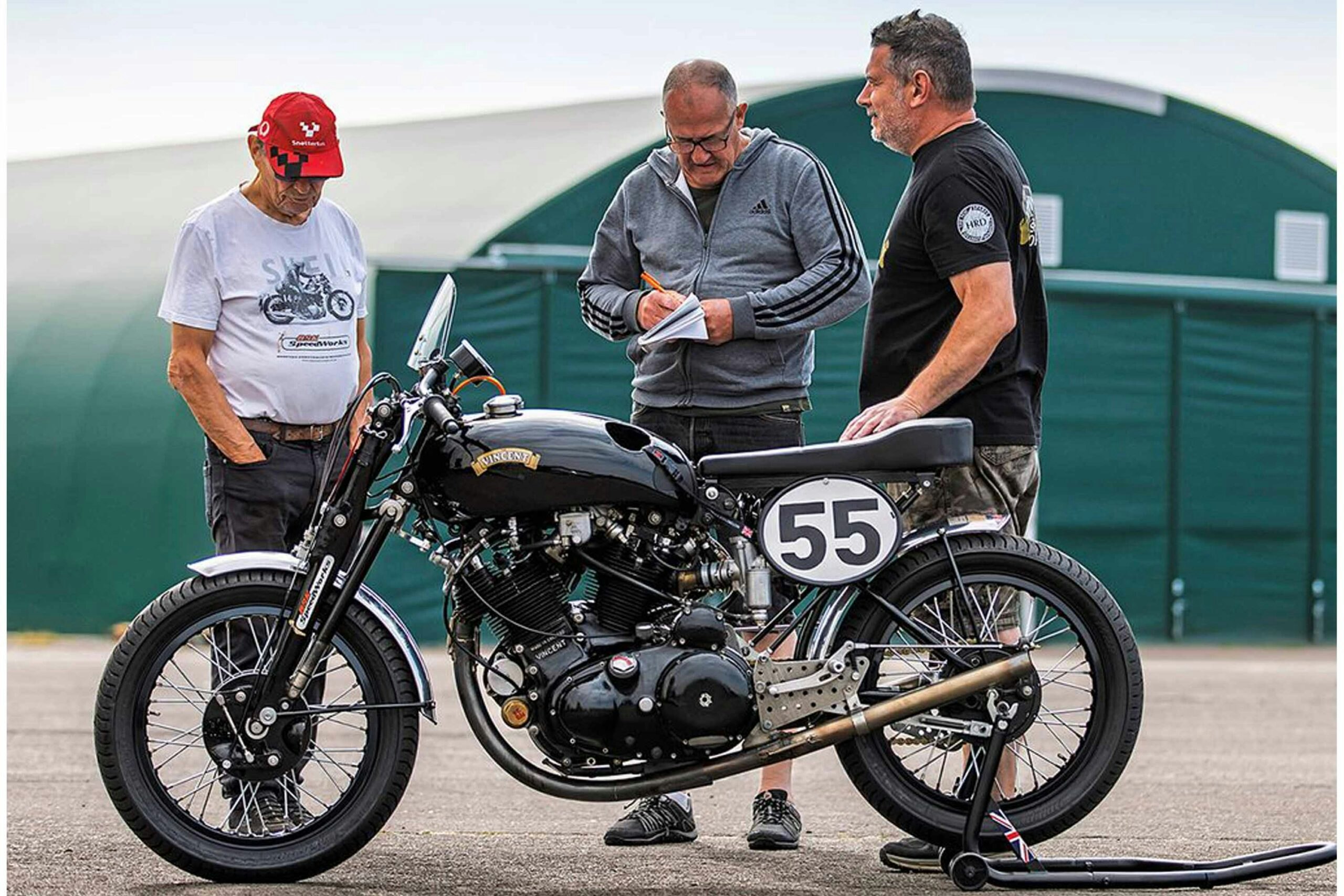
Both machines run multi-plate clutches as opposed to the original Vincent shoe design, while this bike is fitted with a five-speed Quaife/Surtees gear cluster. It is geared for a top speed of 140mph. Riding on 18in rims front and rear, and with stopping supplied by a (twosided) twin-leading-shoe brake conversion, it was never intended to be a faithful rendition of a factory Lightning.
“It’s a race bike and it has a hard life,” says Ben. “The engine hasn’t been touched since 2020. So aside from Covid, it’s done five seasons [of Lansdowne series] and two Goodwoods, which are each an hour and a half of thrashing. It’ll need an engine rebuild this winter.
“We’ve been trying to shed weight all the time, by running a DID520 superlight chain that saves 400g and using lots of titanium nuts and bolts. I reckon it weighs in at about 160kg (352 lb).”
It will be raced as intended on open pipes at Goodwood in September. “I was in a riders’ briefing one year, and the Clerk of the Course said to the guest riders that these bikes are all very precious to their owners and should be treated with respect. One well known Irish rider whispered ‘b*llocks to that’ to Dean Harrison next to him,” laughs Ben.
You can happily guarantee that every machine in pitlane at Goodwood this year will be ridden hard, just as the makers intended. This Vincent will be no exception.
Walo Bertschinger
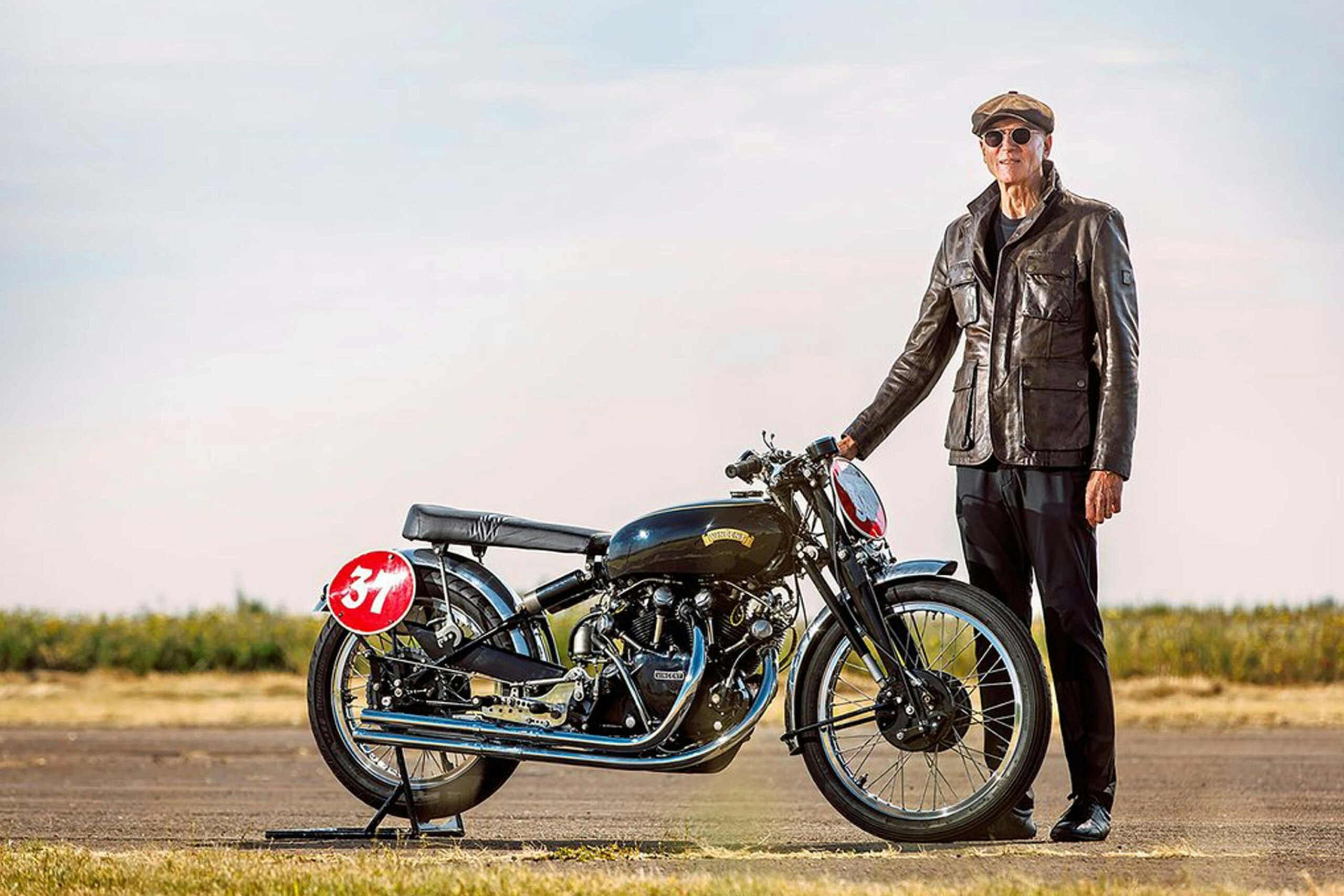
Swiss road-building magnate Walo Bertschinger came late to racing motorcycles. He was 50 before he began hill climbing and endurance racing on a Black Shadow. He also rode the 2011 Manx Grand Prix on a Honda CBR600RR and a 1968 Paton. But the Vincent bug bit him hard.
Fully infected, he went on a quest for a Black Lightning. The machine he found had ended up in the USA after first being exported to Belgrade as a sidecar racer in 1951. Walo bought it and imported it to Switzerland. After a few events, including the Grossglockner hill climb in Austria, he decided on a rebuild to original factory spec.
The man for this was Vincent specialist Glyn Johnson. “We didn’t want it to be a museum piece,” Johnson says. “It has to be respected, but it also has to be able to do what it was intended for – and that is to be raced.”
Glyn went through it with a fine-tooth comb. Timing gears were replaced, Omega 9:1 pistons fitted, engine tolerances honed to perfection, rear damper seals modified, a breather inserted in the front exhaust valve cover, and originality maintained – even down to the correct cloth-covered HT leads.
Inhaling through the correct 32mm Amal 10TT9 carburettors, fired by the original magnesium-bodied TT magneto, exhausting via straight pipes, it did not disappoint on the dyno. At 4800rpm, it equates to 66bhp at the crank, which compares favourably to the factory’s claim of 70bhp at 5600.
There’s plenty of go, but stopping is more of a headache these days. “It’s hard to get decent brake linings,” explains Johnson. “We keep trying different friction materials, and in the end you have to ask yourself: ‘How good were they back in the day?’
“The wheels would have been 21in front and 20in rear, but we now run a 19 rear due to race tyre availability,” he adds. “This means the bike now rides a little lower, so cornering clearance can be a slight issue; modern more “sticky” tyres probably contribute to this, too. We’ve also had to replace the original blade handlebar levers for ball-ended to get through scrutineering.”
Despite necessary deviations from standard, Walo is plainly delighted with the result: “We can run it at Goodwood as it was originally on open pipes, and at Donington, too. Cremona, south of Milan, is another place we can run it as it should be.”
Dario Tosolini, a former European Superstock runner and several times a winner at the Spa Francorchamps Classic Endurance on a 1968 Paton, is Walo’s designated rider for Goodwood. He tells us: “The amazing thing is how modern it feels to ride when you know it’s a motorcycle built in 1950.”
Vincents at the Goodwood Revival
‘It barrels you forward in a cacophony of brutish aural treats’
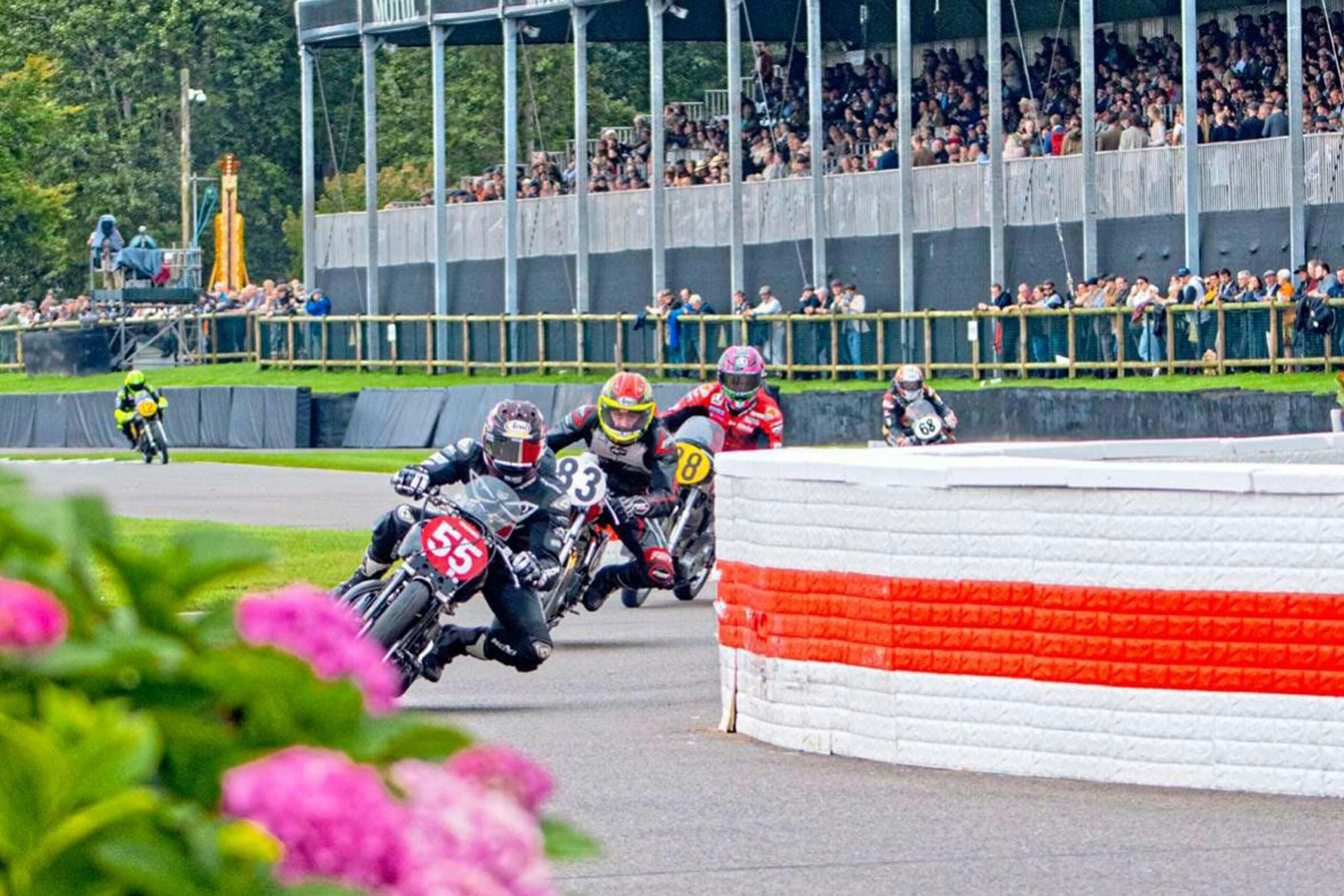
Vincents have form at Goodwood. In 1951, at the only bike meet held at the circuit in period, George Brown riding for the Vincent factory’s Experimental Department won the 400-1000cc scratch race convincingly on infamous ‘Gunga Din’, a heavily reworked Black Shadow. Vincents also finished second and fourth, proving the mighty twin well capable of running at the front of any field.
This year’s Goodwood Revival (September 18-20) marks the 75th anniversary of Brown’s victory. You will be able to witness Walo and Ben’s bikes racing, plus two Australian Vincent entries and a Grey Flash carrying number 97, as used by John Surtees on his bike at the ’51 meeting. It’s the place to be if you want to see, hear and smell these marvels at full song on open pipes, and the bikes will occupy adjacent shelters in the paddock. Get your tickets in advance from goodwood.com, and remember to dress for the occasion. It’ll be a special day.