INTERVIEW
He became the world’s most successful motorcycle journalist by winning races, getting rides on astonishing bikes and then telling us all about them. Sounds easy, but it definitely wasn’t…

Words John Westlake Photography Cathcart Archive, John Westlake
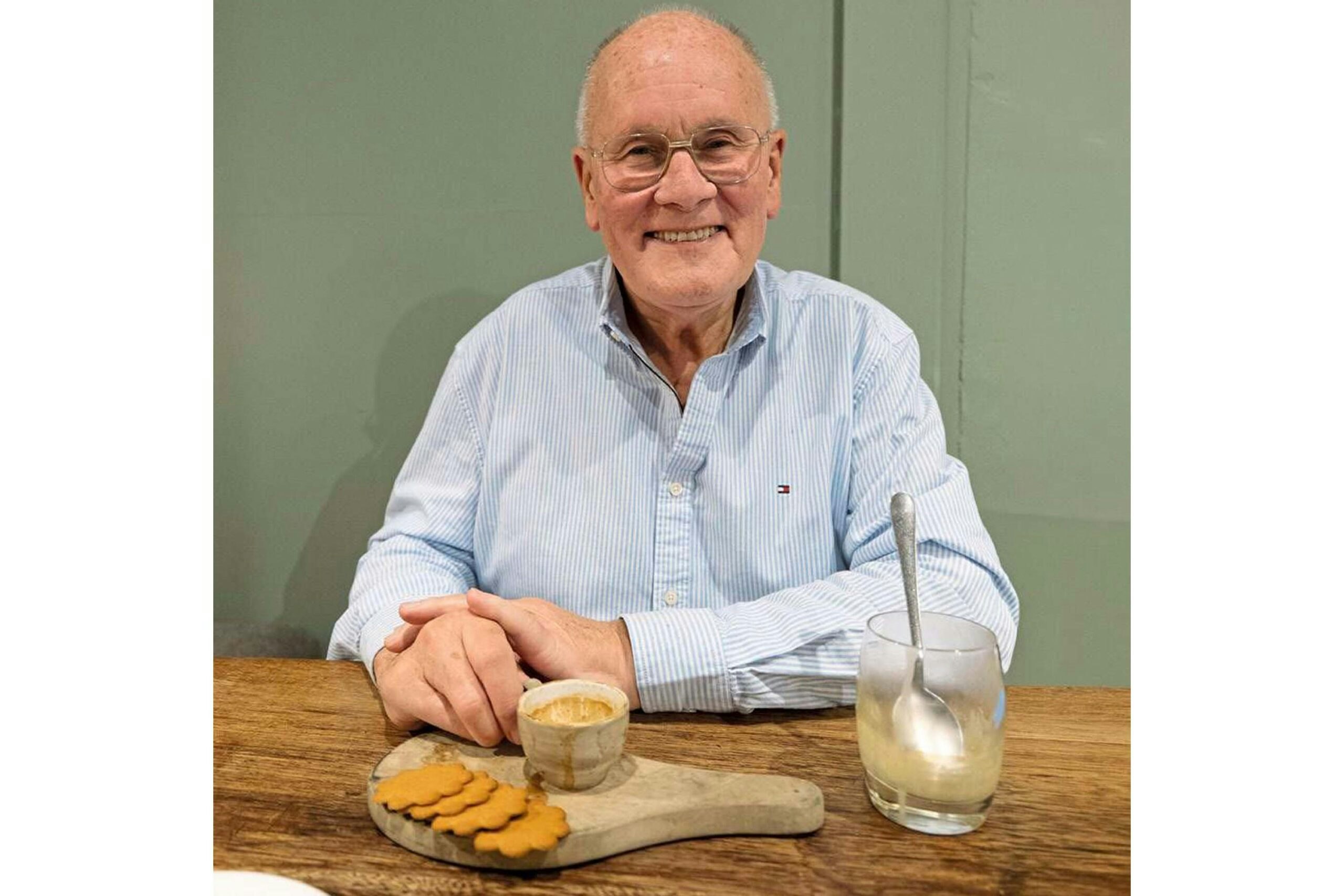
Has this man ridden more different factory GP bikes than any other human in history? We think so
In September 1980, Alan Cathcart and his wife Stella were on holiday in France, driving through the Rhône valley near Avignon. By then he’d had some classic racer tests published in Classic Bike, but was still a full-time businessman in the travel industry. That was about to change. Suddenly a stream of identical BMW twins came barrelling towards them. As they passed, Alan recognised them as the new R80 G/S he’d read about in MCN. This, it turned out, was perfect timing.
“I knew they must be on the press launch,” he says as we sit in a restaurant near his home in Hampshire. “A few months before, I’d been in Australia on business and used a copy of Classic Bike to blag my way into the press room at a round of the Australian Superbike series at Oran Park. I met Mike Hanlon, editor of Australian Motorcycle News, we got chatting, and he asked me to be his European correspondent. I explained I only wrote about old bikes as a hobby, but he persuaded me I could get him some good stories. So when I saw those BMWs I knew I had to track them down.”
Unfortunately, by the time Alan had turned the car around, the bikes were gone. “I was ready to give up, but Stella got out our Michelin restaurant guide and found the nearest one with a car park. Sure enough, we found the BMW launch team there. I told them I was from Australian Motorcycle News, and asked if I could have a ride. They loaned me some kit, and off I went. So my first bike launch happened by complete accident. But Mike published my article, sent me a cheque, and it occurred to me that I might be able to make a living from writing about bikes.”
So began one of the most extraordinary motorcycle journalism careers ever, with Alan going on to test dozens of factory bikes from GPs and World Superbikes, plus securing world exclusive first rides on multiple road bikes from the Ducati 916 to the first ever Buell. All this while running an international racing career in parallel that saw him win – take a deep breath – the Australian TT (twice), Daytona ProTwins (three times), 1997 Sound of Thunder World Series and British Supermono Championship, 1996 BEARS World Series, 1993 Dutch Open and Japanese Supermono Championships, and the 1979 British Single-Cylinder Championship. Plus he was twice runner-up in World Superbikes’ European Supermono support series, and got three top ten TT results. Oh, and he co-founded the Classic Motorcycle Racing Club (CRMC) and the International Historic Racing Organisation (IHRO) too.
He must have been into bikes from a young age then, I venture... “Not especially,” he says. “As a 16-year-old I got myself a Berini [a Dutch moped] and used it to ride into Warwick from the village I grew up in. But I started off racing cars.”
In fact, his passion for two wheels wasn’t ignited until 1968, when he met an American named Jeff Craig. “I’d started working for a travel company, looking after foreign students, and Jeff was part of a group of Americans on their spring break. Jeff was an avid student of British motorcycle culture – he had a Velocette – and when he came over to Britain later on we shared a flat and he got me enthused about bikes. Because of the car link, I wanted a Maserati motorcycle and in 1973 saw one for sale in MCN. Off I went, but the owner wouldn’t sell it unless I also bought his 1964 four-speed 250 Aermacchi racer.”
Alan behaved like any right-thinking motorcyclist: “I bought both, telling myself I’d just sell the Aermacchi. But Jeff said it would make a great road racer for him, and rushed out and bought some Lewis leathers.”
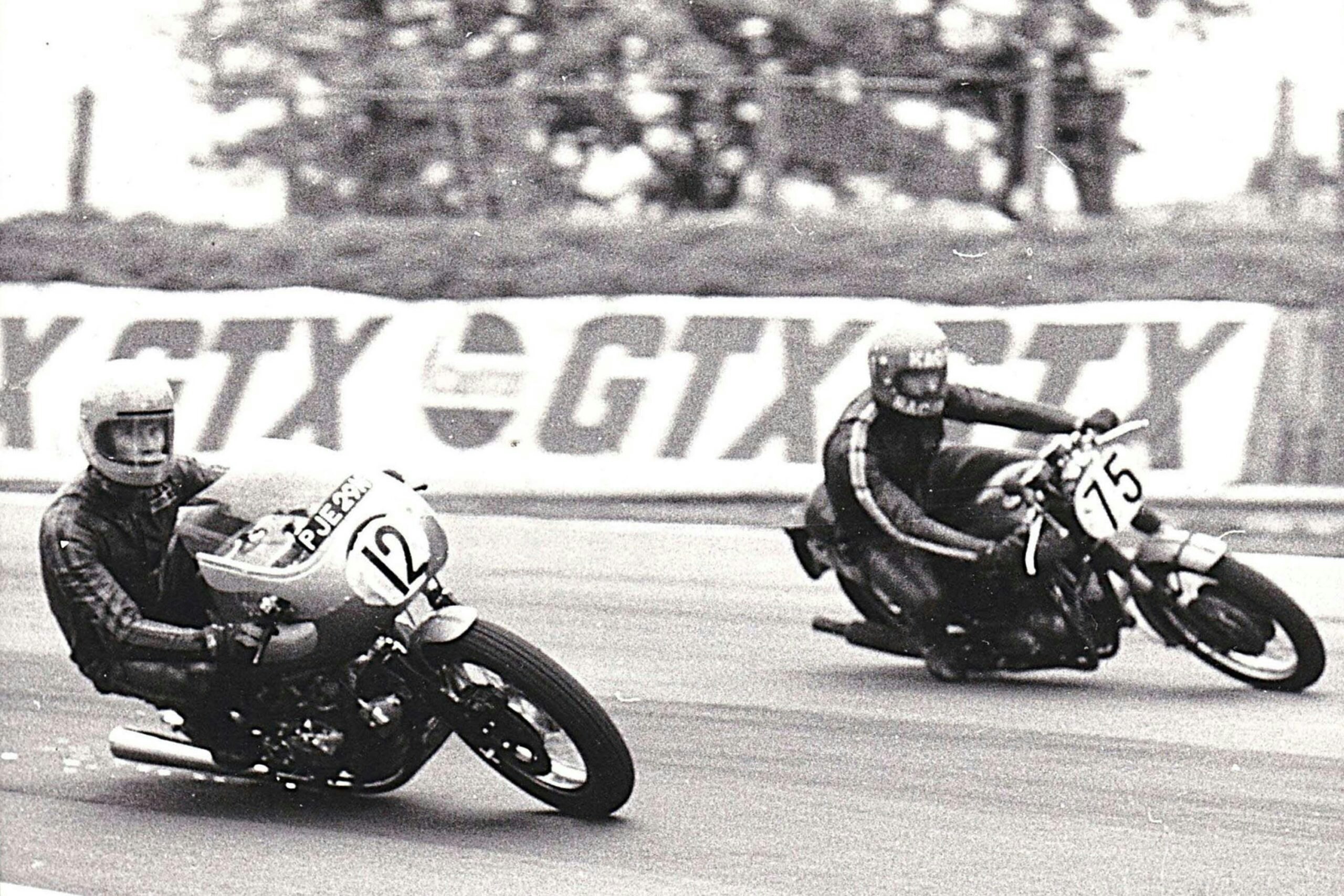
This got Alan thinking. “Racing cars was too expensive, so I found a Ducati 250 Mach 1S [the limited-edition single] and bought that instead. I came 14th in my first race at Brands – it took me a while to find the limits of my cornering speed – but I loved it.”
After that, Alan went full-bore into bikes. “I bought a 350 Manx Norton, a 500 G50 [which he still has], and later a 1974 Ducati 750SS.” When the conrod on the Ducati 250 broke at Brands in October 1974, he decided to race his brand new 750SS in the Production class.
“In the first race I just survived, but in the second race it rained and I came fourth. That convinced me that I might be OK at racing.”
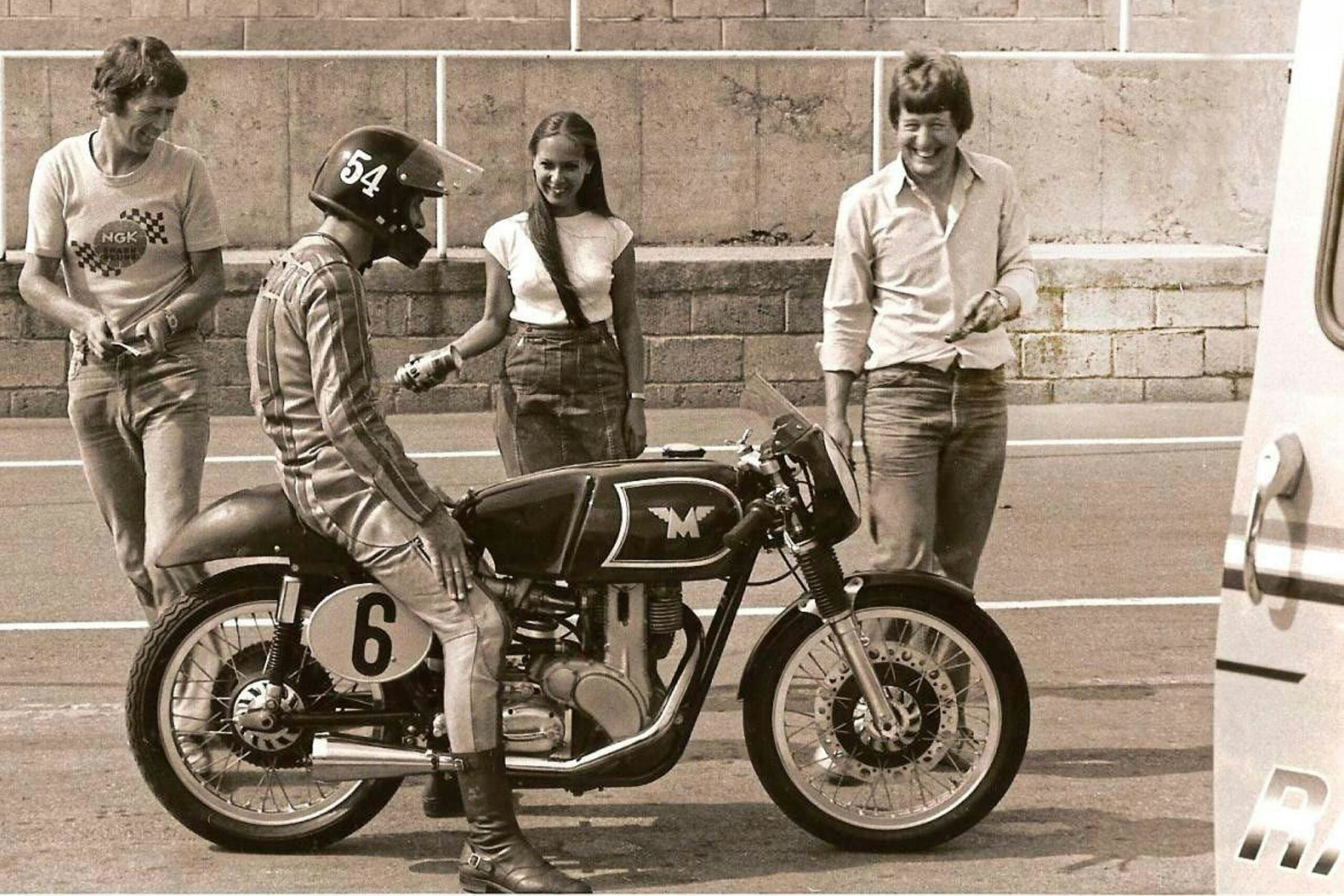
And indeed he was, gradually getting to the sharp end of various club racing classes. But trouble was afoot. “In those days the VMCC [Vintage Motor Cycle Club] had a 25 year cut-off, which meant that in 1979 you could only race a 1953 long-stroke Manx Norton, although they let short-strokes that had been built up to 1962 race. They weren’t applying the rules properly, so I argued I should be able to race my G50 Matchless [a 1961 bike]. But that didn’t work.”
Instead, the VMCC said Alan could organise a parade for ‘modern classics’, which he duly did. “But the secretary of the meeting really didn’t like me or the more modern bikes, and he accused me of cheating. In a parade! It was ridiculous. He told us that the VMCC would never invite us again, and that we’d have to find somewhere else to ride.
“Stella and I went home and had a chat with our friend Dick [Linton – a fellow racer] and we decided to create the CRMC to cater for pre-1973 bikes [ie, just before the start of the two-stroke era]. We needed to make sure there were enough people who would support us, so in November 1979 we announced we would hold a meeting at Donington’s Redgate Lodge [which was still a pub then] to gauge enthusiasm. We thought we might get 100 people.”
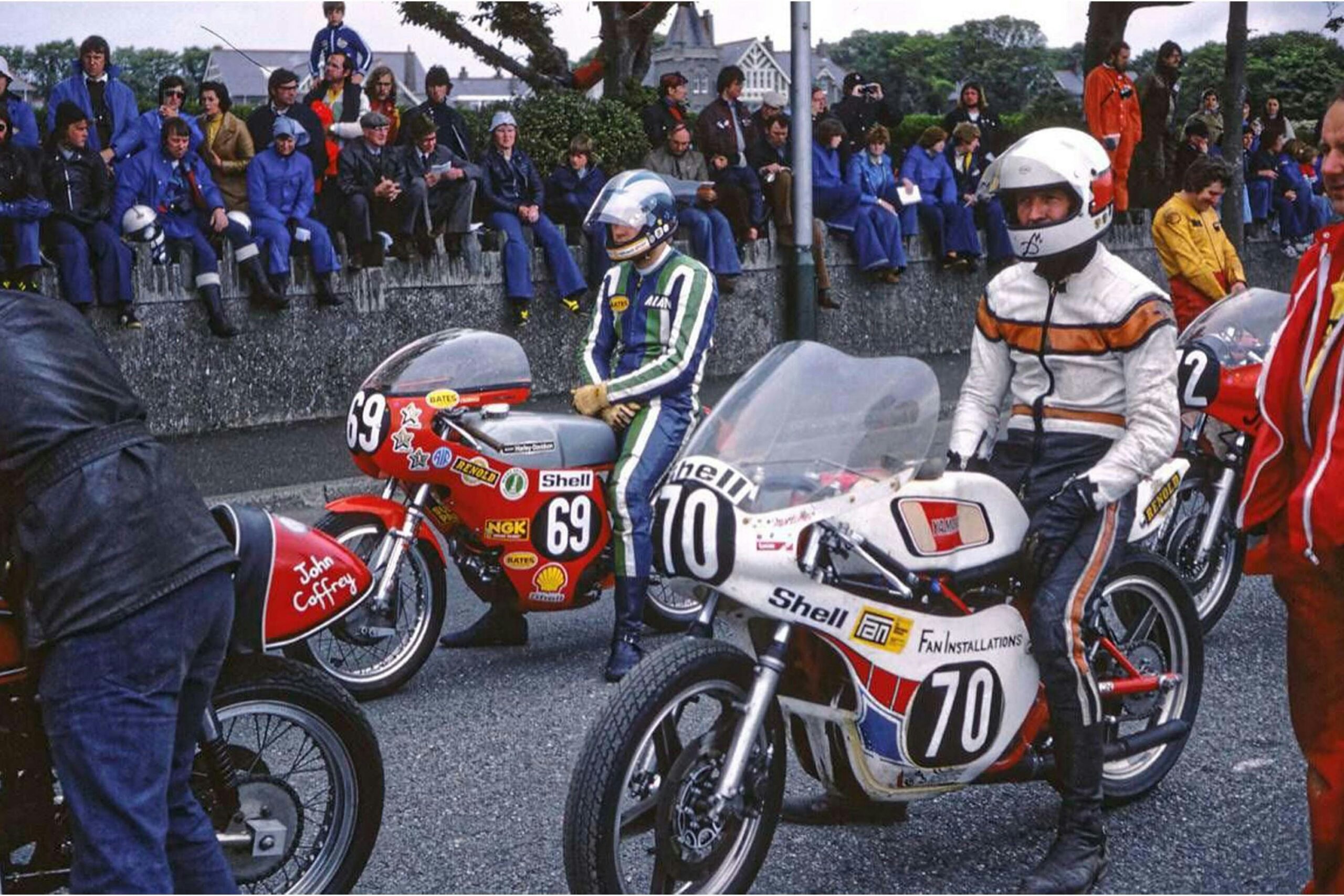
Alan (#69) awaits the start of the 1977 Manx GP on his Aermacchi 350. It was his Isle of Man debut
In fact, over 500 turned up. “It was incredible. We had to open the windows so the people outside could hear me. And it really was 500 because I’d printed 500 membership cards and they all went, at £6 for a year’s membership. There was obviously huge demand.”
But to get the club off the ground, Alan, Stella and Dick had to persuade circuit owners to take a punt on them. “Then we had a bit of luck. I’d won the 1979 Bemsee single-cylinder 350 championship and had to go to the dinner-dance to get my trophy. By chance, I was on a table with Snetterton circuit manager Peter Stayner. I got on well with Peter and chatted about our new club, and he introduced me to his boss Chris Lowe.
“Chris ran Motor Circuit Developments, who owned Brands, Snetterton, Oulton and Mallory, and I offered to bring 30 classic racers to do parade laps at each round of the British Championship at his circuits in return for two entry tickets per bike. Obviously he agreed – it was a good deal for him to get more entertainment. But it was good for us too, because it got the idea of classic racing into the minds of the general racing public. And it meant that Peter was allowed to give us our own first race meeting at Snetterton.”
‘I bought a Maserati motorcycle... the owner made me buy his Aermacchi racer too’
Alan also had some high profile supporters. “Croz [GP star Graeme Crosby] was a good mate of mine – he’d been sleeping on the floor of our neighbours’ flat in Ealing while prepping his Moriwaki TT F1 racer at Peckett and McNab nearby. Back then, I was racing a P&M Kawasaki myself, which is how we met. But for 1980 he was racing for Heron Suzuki, and when he heard about the classic parades, he wanted to ride in one. I got a 7R for him for Snetterton, and in the wet he practically lapped us all before pulling in five minutes early to get ready for the TT F1 race, which he won. What a rider – and a genuinely lovely bloke.”
The CRMC’s first race meeting at Snetterton in August 1980 turned out to be a hit, with every grid full apart from the sidecars, which grew over the years. “Overall, it was hugely successful – thanks to all our supporters, the CRMC was off and running. And it’s still the world’s largest historic road racing club.”
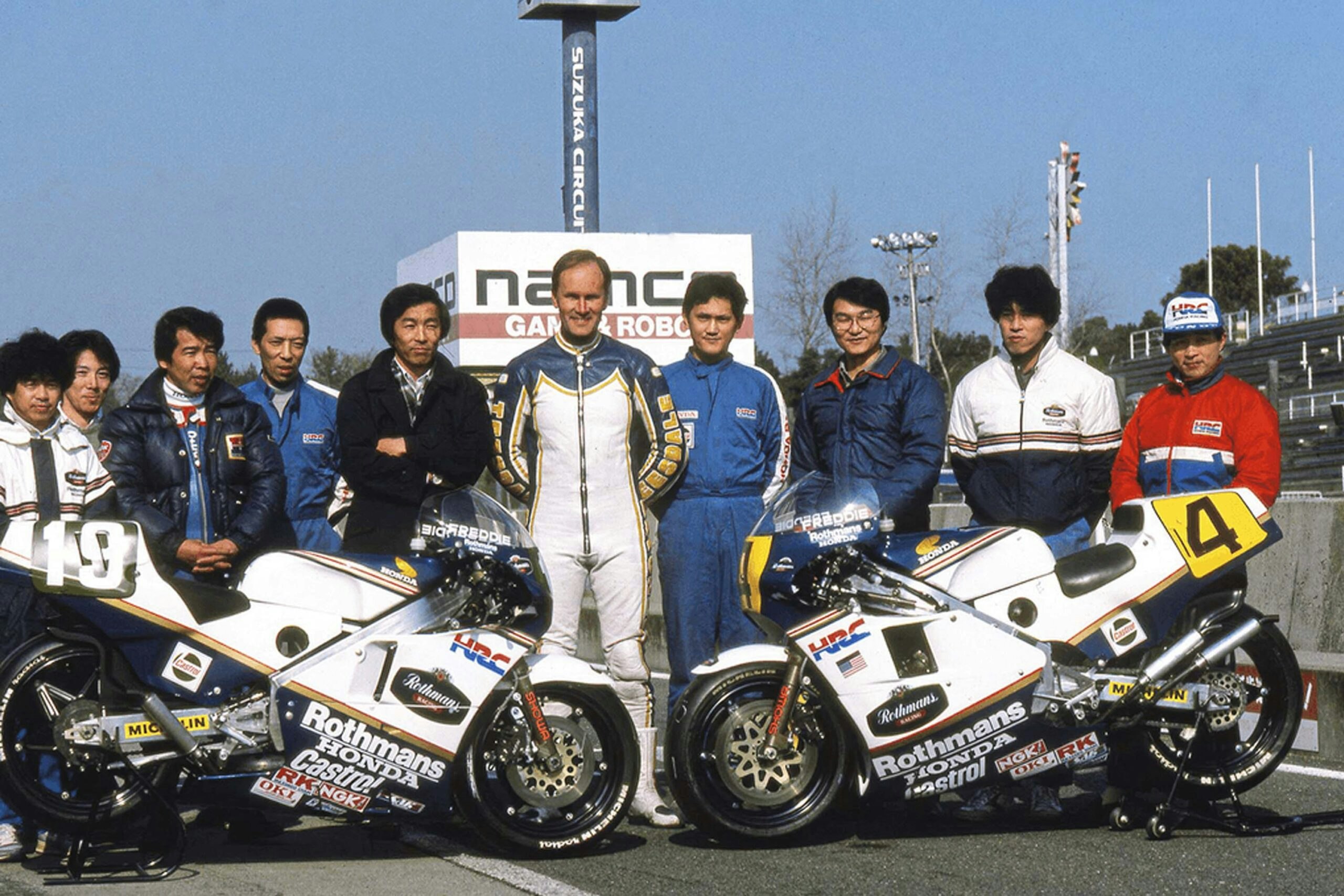
With the CRMC rolling, Alan decided to throw himself into motorcycle journalism. He realised the only way to make decent money was to sell stories to different countries, getting paid multiple times for each feature. It was a nice idea, but extremely difficult to pull off due to language difficulties securing a global audience. Fortunately, Alan had a few crucial advantages.
For a start, he’s an excellent linguist, speaking five languages fluently and getting by in several more. Secondly, he’s a doer – he gets on with stuff. Having decided to get into motorcycle journalism, he drove to Italy and visited 17 race teams and manufacturers in two and half weeks. “I just walked in off the street and asked for interviews – speaking Italian was a huge asset and, as it turned out, a lot of the junior engineers I met on that trip went on to become bosses, so I was in on the ground floor.”
It helped that anyone who met Alan tended to remember him. Well-spoken (he went to a prestigious public school), well educated (he studied law at Cambridge University), and well travelled, he wasn’t your standard racer. Hence the ‘Sir Alan’ nickname bestowed on him by one of his UK editors. Plus, he’s entertaining company and a good listener. Loads of his tales include the line “he was a good mate”, relating to everyone from GP stars like Crosby to legendary designers such as Massimos Bordi and Tamburini. It’s easy to see how he managed to get so many world scoops – people liked him.
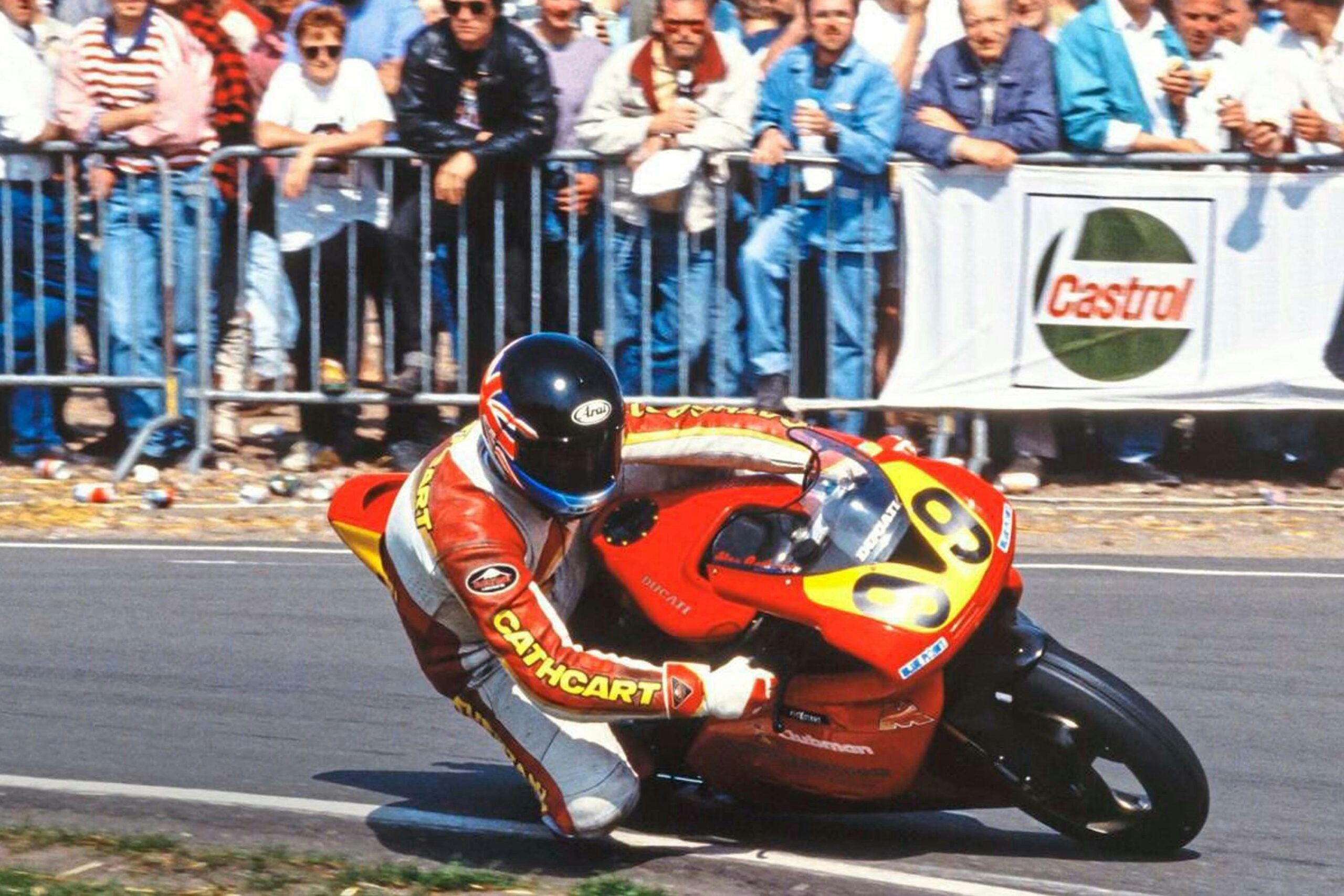
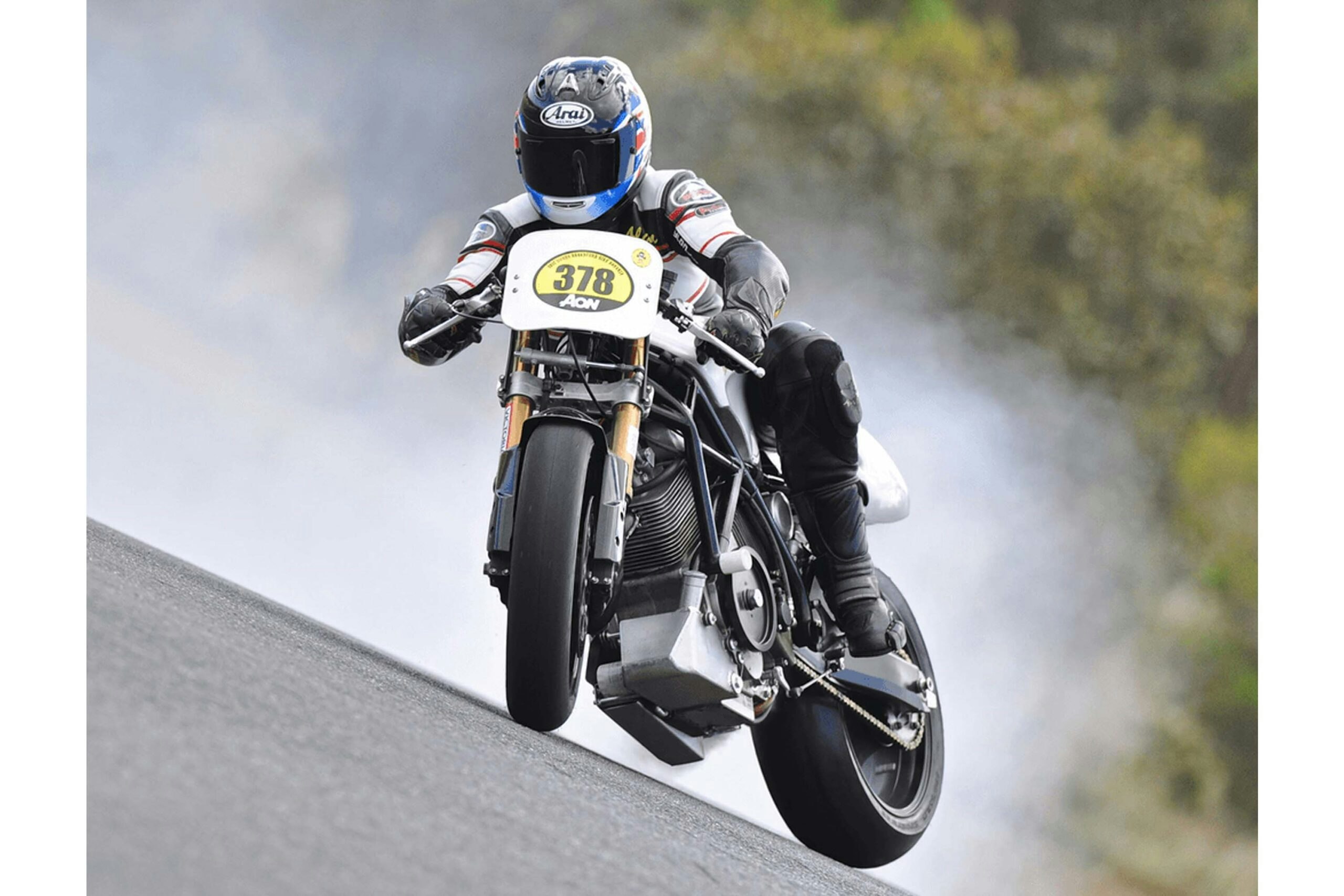
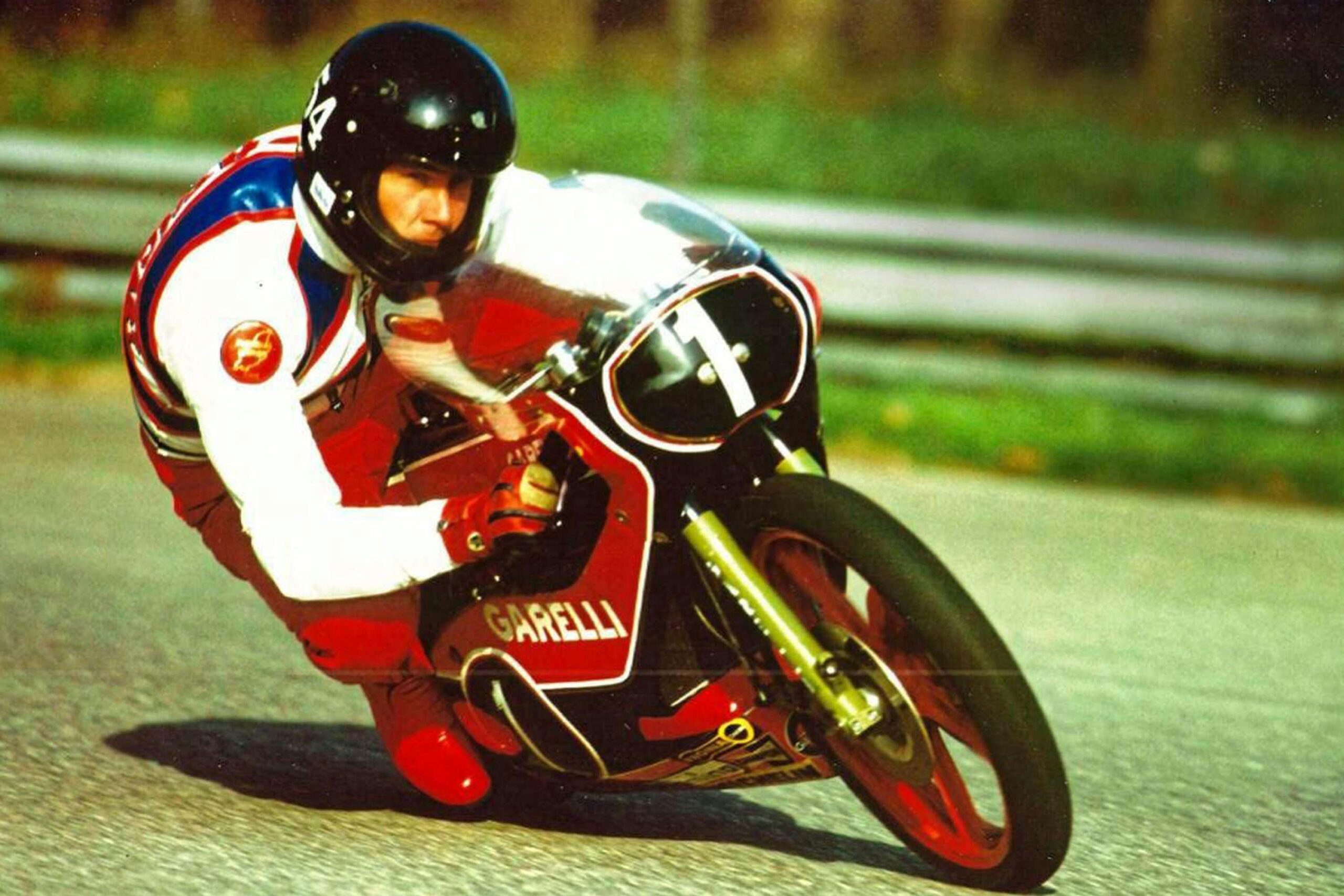
Plus there was his racing, which often fed directly into his journalism. “I always regarded my racing as a source of raw material – I wanted to ride interesting bikes. That’s why I raced the Saxon Triumph or the Bimota Tesi or the Ducati Supermono. I was interested in experiencing unusual motorcycles.”
The Saxon Triumph gig started with a test ride of the Saxon Engineering-framed Laverda Jota at Mallory Park – good material for a feature, he thought. But because his lap times were so good, Paul Taylor, the man behind the Saxon, asked if he wanted to race it.
Of course, Alan did. He took it to Assen for an international four-stroke meeting, won, and agreed to race it the following year in the Sound of Thunder World Series. “I did OK until Austria, when the motor blew to smithereens in practice. But I wondered if I could get another triple motor, because Triumph had recently started up again. I’d done an interview with John Bloor, so I thought I’d ask him because I knew he liked racing. I gave him the pitch, he agreed and gave us a couple of engines, spares support, and put us in touch with the R&D guys.
“We went from shakedown testing at Mallory in April 1994 straight to racing at Monza later that week in the big Thunderbikes meeting, where I finished third. At the next race in Austria we won – and a year later at Monza we beat the Brittens and won again.” And, inevitably, Alan got a great feature out of that as well.
Racing success led to testing GP bikes and WSB racers. It all started when he rode Joey Dunlop’s TT F1 world championship-winning Honda V4 750 at Brands in 1984 and got within two seconds of the lap record. “When that news got back to Japan, my testing career with Honda was pretty much assured. The manufacturers talk to each other, so that led to more.”
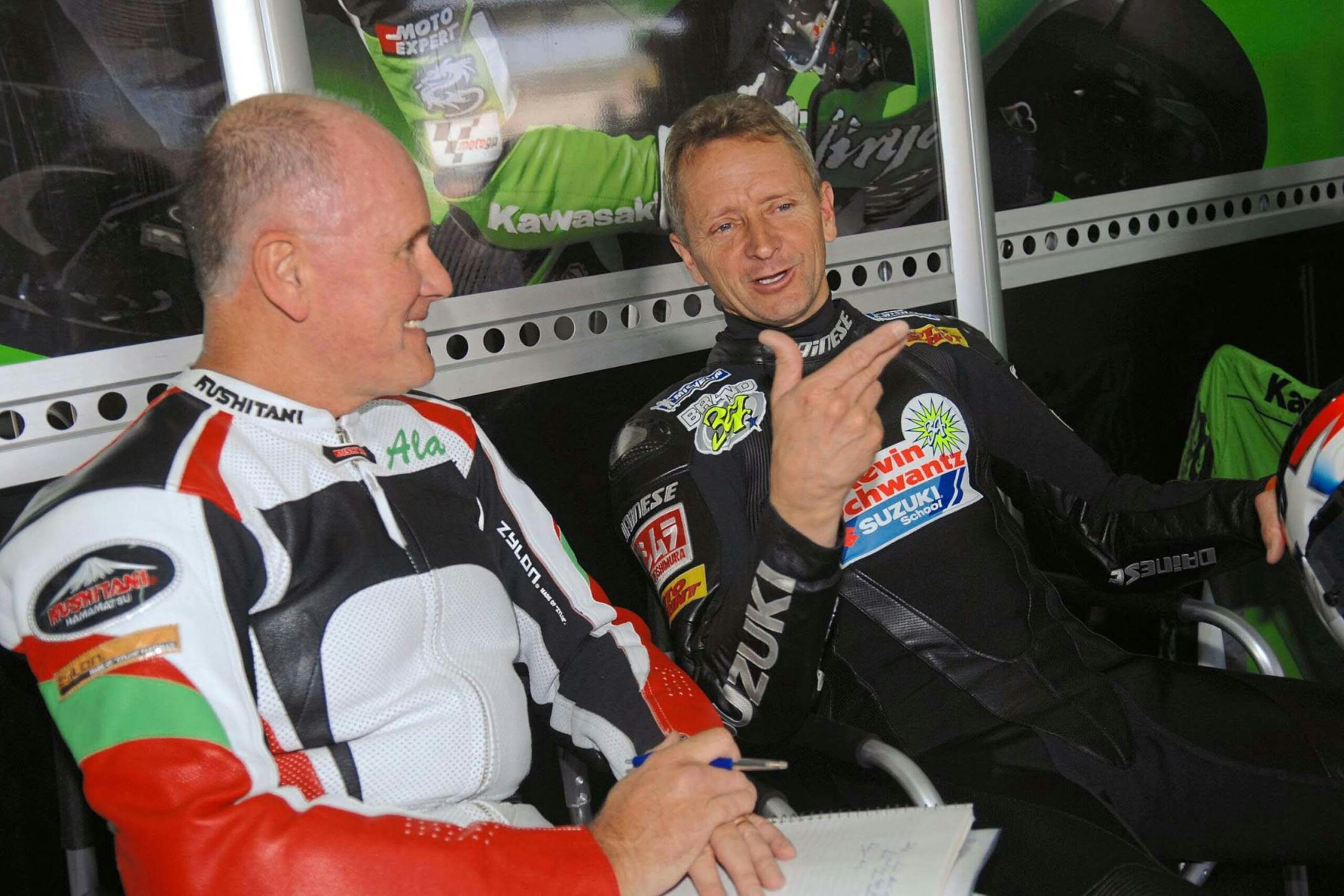
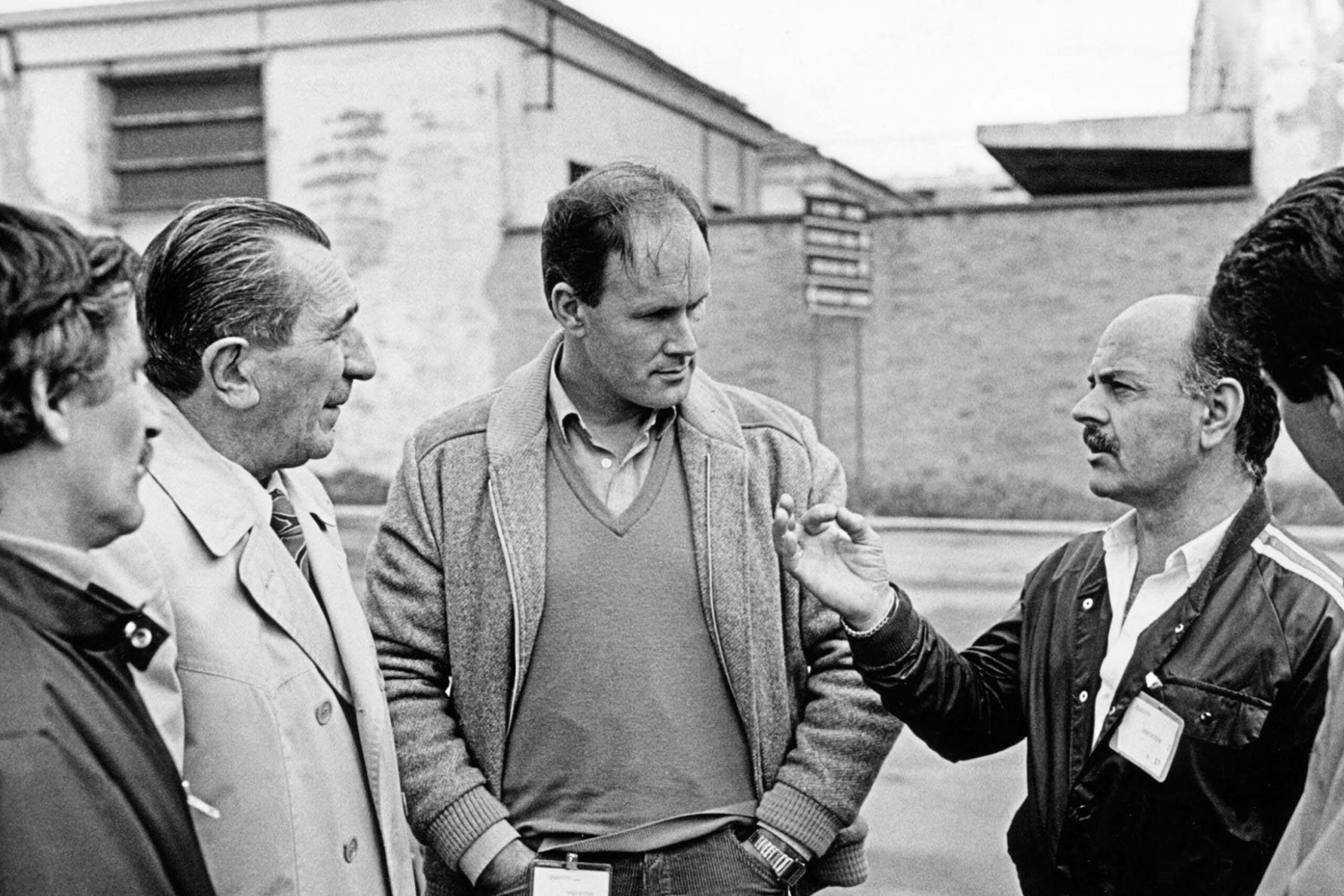
At a track test in 2006 with one of his all-time heroes, Kevin Schwantz. Other Cathcart-approved riders (who match talent with a generosity of spirit) include Eddie Lawson, Johann Zarco and Graeme Crosby
In 1989 he got to ride Eddie Lawson’s championship-winning Honda NSR500. “At every track test, we got the fairing removed for photos. And when I saw Lawson’s Honda, I couldn’t believe how many layers of aluminium there were around the steering head that had obviously been added over the season. It was reinforcement on top of reinforcement.
“Anyway, coming out of the chicane, I pinned it in third gear and the bike went mad, shaking its head and trying to kill me. Somehow I stayed on and rode back into the pitlane. It turned out the mechanics hadn’t tightened the steering damper after removing the bike from the truck. But when they tightened it, the steering was completely locked. I complained – how was I meant to catch a slide with it like that? ‘Eddie-san always rides like this,’ they said. How he ever won the title on that bike I will never know.
“That December, I went to the Bologna Motorshow where Eddie Lawson was competing in a Supermoto event. I went to find him and when he saw me coming he started smiling – and with every step closer I got, his smile got wider. ‘I hear you rode my bike,’ he said, smirking. I told him I did and that it tried to kill me. ‘Join the club,’ he said. He’d won the championship on a lemon. I was a fan of Eddie’s before that, but my respect went through the roof. What a rider.”
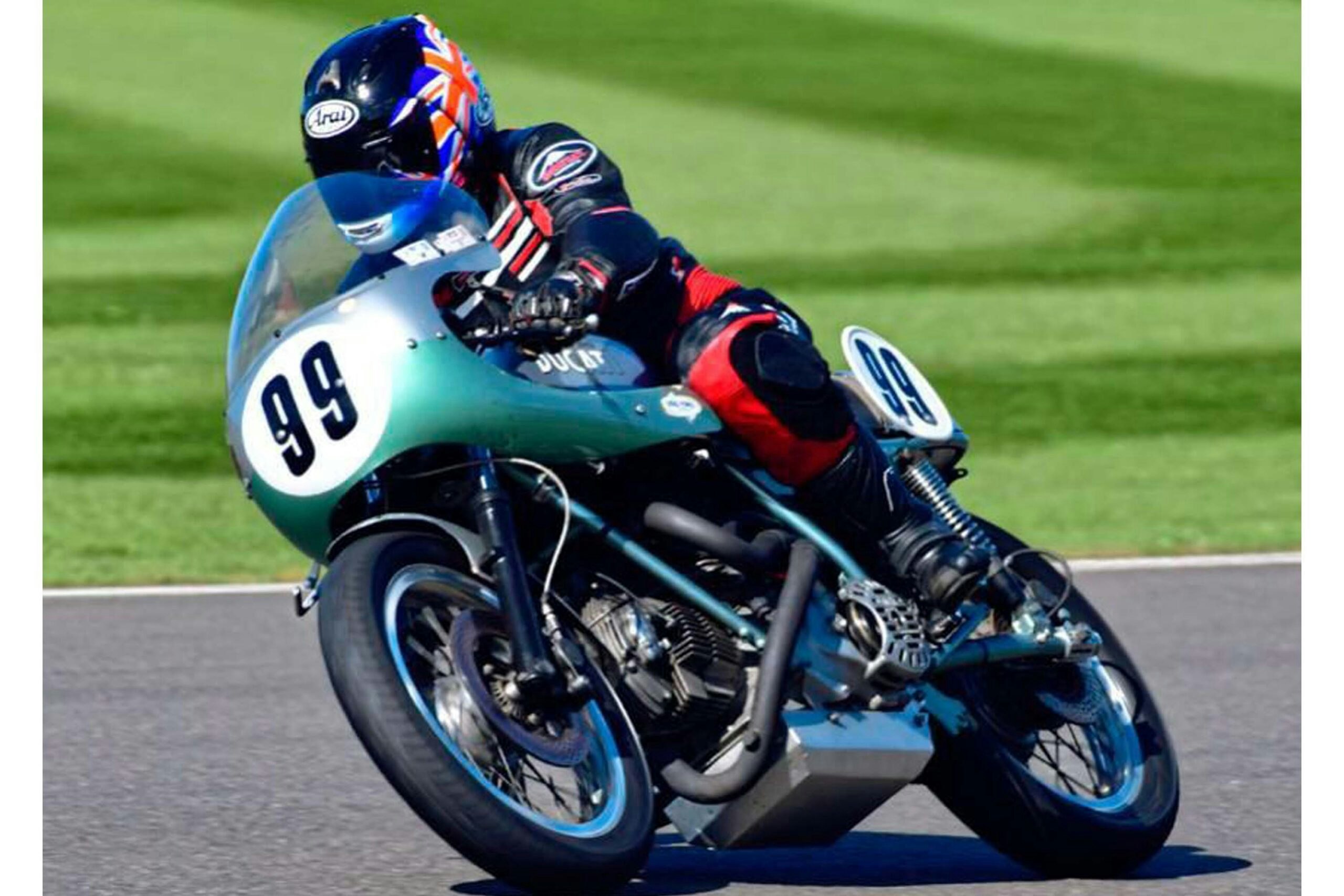
We’ve finished our meals and Alan has things to do – aged ‘over 70’ he’s still far from retired. I’m aware we need at least two more lunches to cover his TT forays, World Superbike tests, winning the Sound of Thunder World Series and starting the International Historic Racing Organisation. So how does he reflect on a life crammed with racing, writing and organising?
“Honestly, I don’t regret any of my choices. I was a late starter racing bikes, but I’m satisfied with what I achieved and I enjoyed achieving it. And doing everything backwards made for a nice progression – starting out racing vintage bikes, then classics, then twins and singles, then superbikes. I’m happy, and as passionate about bikes as I was all those years ago when I turned the car round to find those BMWs...”