
Every summer a few hundred enthusiasts gather in the Alps for ‘Les Meules de Savoie’. It’s a rally in celebration of the humble Mobylette (and a few of its more exotic brethren) with herds of dinky two-stroke step-throughs riding up a mountain and down the other side.
“The going is tough,” says Bill Gysin, who has made the trip for the past couple of years. “But the scenery is fabulous and the sense of achievement in reaching an altitude more suitable for skis than mopeds is considerable... although at this point it must be admitted that some people cheat. Namely me.”
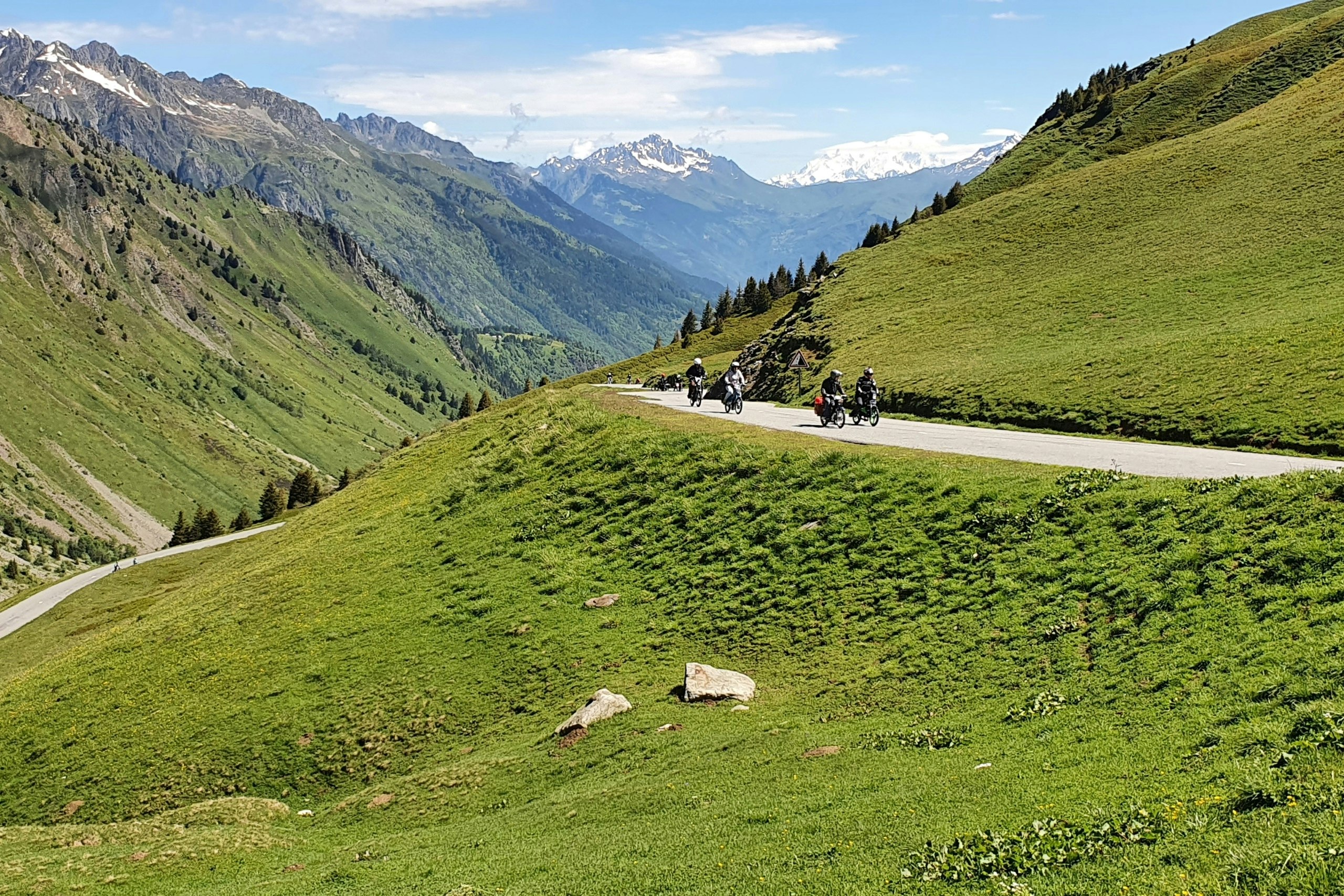
‘Cheating’ means not putt-putting over the peak on a standard 1.4bhp Mobylette. Bill zings to the top on a three-cylinder ripsnorter with ten times the power.
Building hilarious multi-cylinder mopeds was perhaps always on the cards. As kids, Bill and his brothers Rob and Jim were given a New Hudson autocycle to tear around the fields, and an NSU Quickly along with Evarious Mobylettes and Raleigh Runabouts came the brothers’ way. Bill’s first motorcycle was a BSA Bantam, followed by Triumphs and a Suzuki GT380. Then he got into souped-up cars, which led to modified two-wheelers which may ring a bell to long-term readers. “We built the ‘3 Brothers’ bikes [a Triumph Bonneville, Triumph Trident and BSA Lightning] which were featured in Classic Bike and Bike, which is our finest hour from a motorcycle point of view.”
Bringing hot-rodding to the mopeds of his youth is therefore entirely natural. “The art of mating two, three or four Moby engines together has been a fringe activity in Europe for years, but understandably doesn’t even make the fringe of a fringe in the UK,” says Bill. “It was Antibes-based Franck Vivet who set me off on the mission. As well as being a superb largely self-taught engineer, he’s been generous with his knowledge – and although heavily dependent on WhatsApp and Google Translate, it’s massively improved both rusty schoolboy French and fledgling machining skills.”
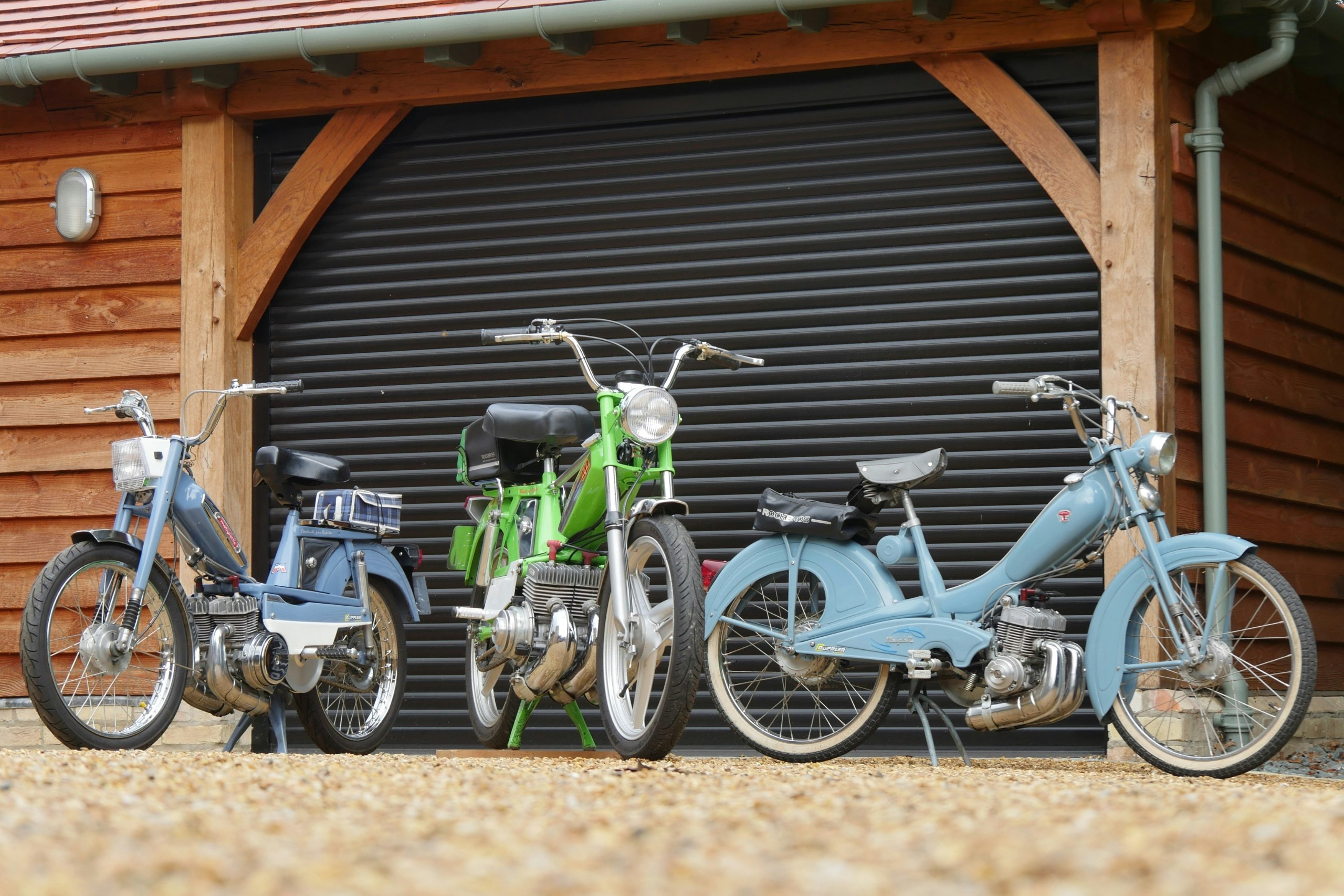
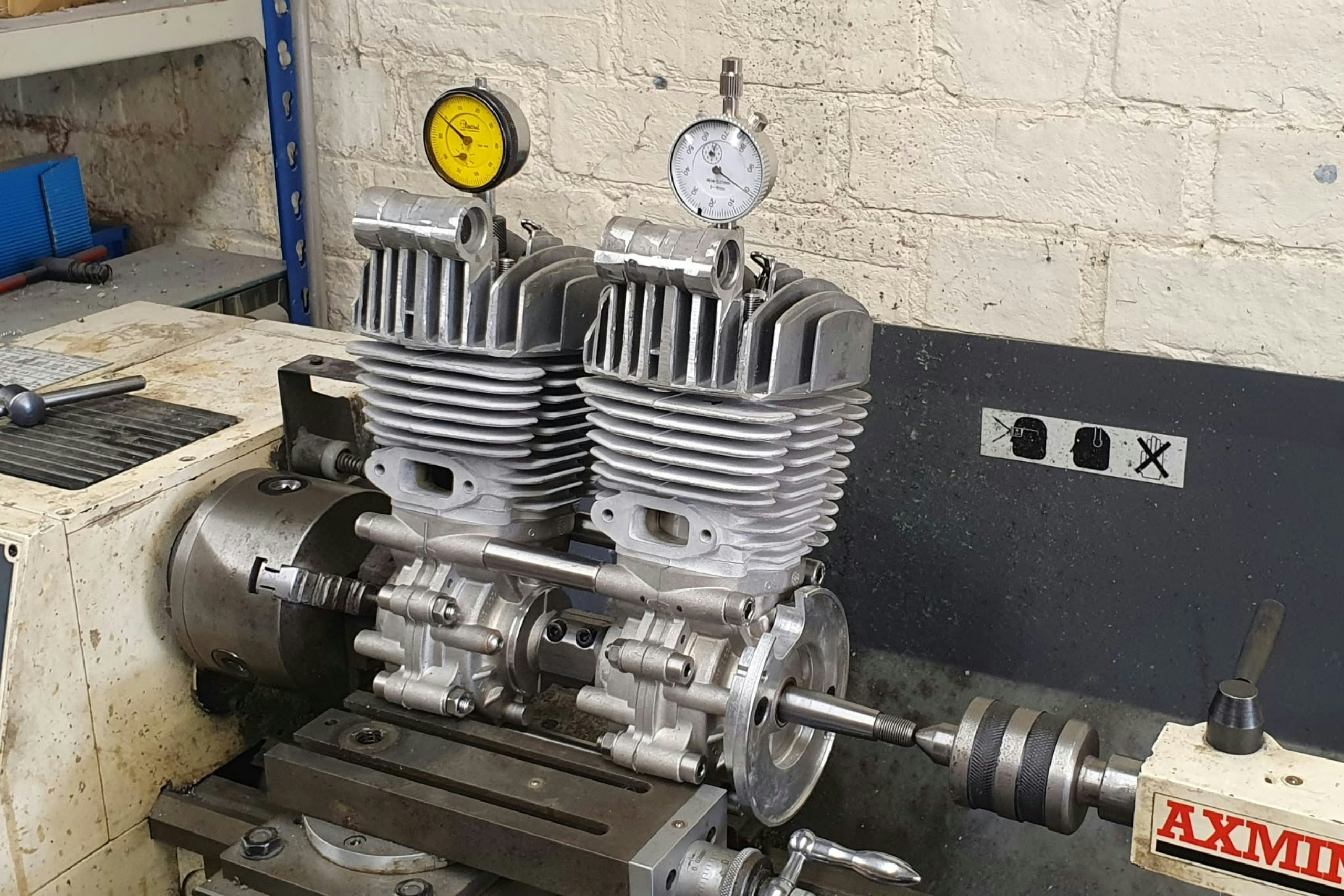
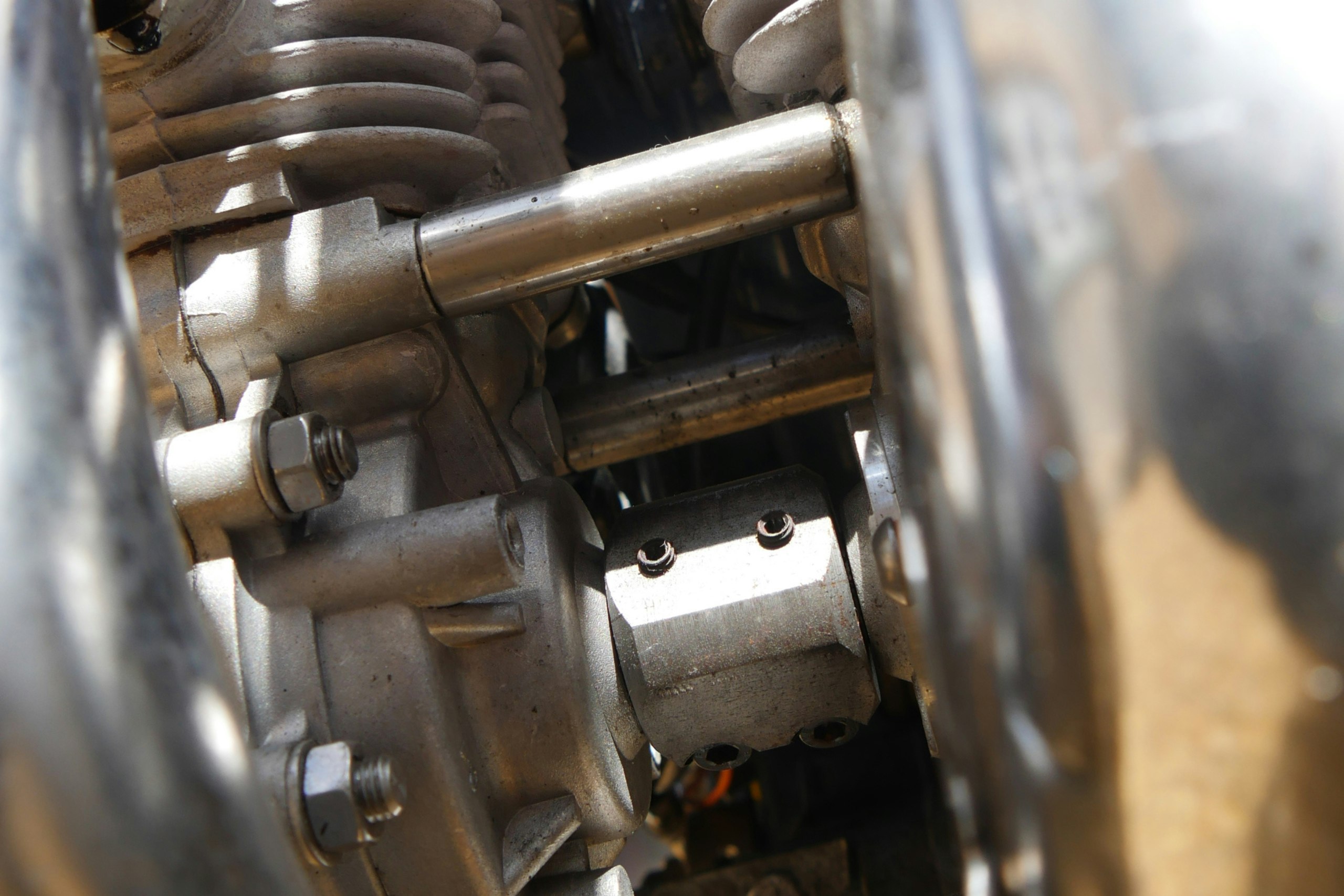
First came a twin-cylinder conversion of a 1959 AV79. Mobylette engines are simple and self-contained, with flywheel ignition on the right end of the crank and a variator pulley and clutch on the left end. To join a pair together, Bill sliced the left crankshaft off one engine and the right off another, leaving 20mm stubs protruding that could be linked with a well-fitting split collar and high-tensile bolts. The engines were set up in the lathe with the cranks indexed 180˚ apart, and the crankcases joined using rods and spacers through their bolt holes. Ignition was an off-the-shelf electronic kit with a second spark at 180˚. For transmission, the frame-mounted pulley was moved outwards to line up with the variator, with the front sprocket offset back to its original position to line up with the rear.
Pleased with his efforts, Bill built another based on a 1977 bike for youngest sibling Jim, who’d owned one in original form when he was 16. The pair of blue ‘Mobytwins’ were taken to Meules de Savoie in 2024, conquering the gradients and performing faultlessly.
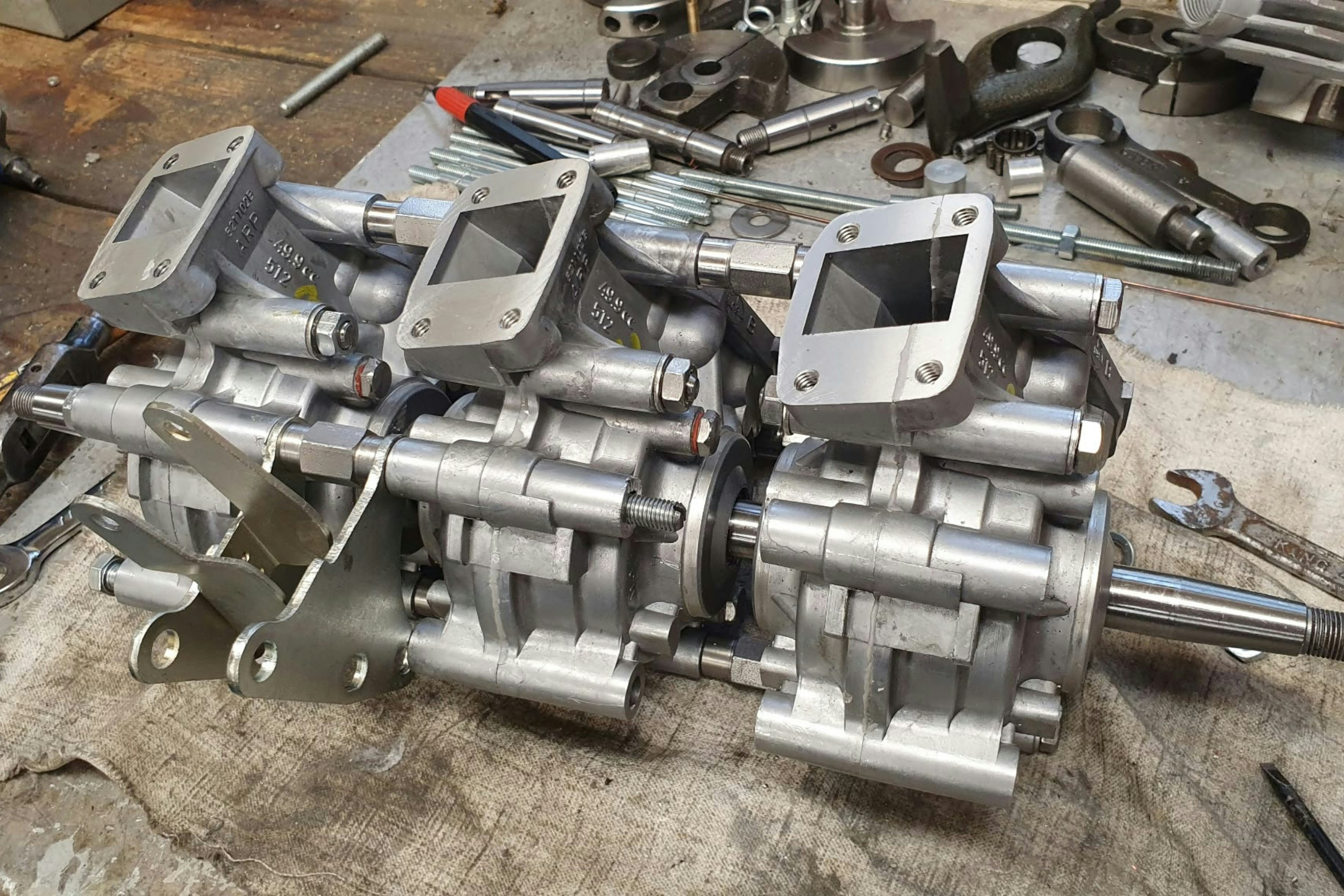
Bill had been toying with the idea of creating a triple for a while, and a desire to revisit the mountain run seemed an adequate excuse. But more cylinders need more thought. “The same method as the twins can be employed, but the resulting engine is too wide and insufficiently rigid,” says Bill. “I wanted something that does a passable impression of a baby Kawasaki S1 – and that requires a different approach. To allow the crankcases to be immediately adjacent to each other, the barrels must be made narrower and the external clamps deleted. The trick is to use the crankshafts themselves as the clamps – but as my scrap bin will attest, this is easier to say than to do. It can be improved by using splined rather than simple clamped joints – but that requires professional machining and spark erosion. This engine was a purely amateur effort.”
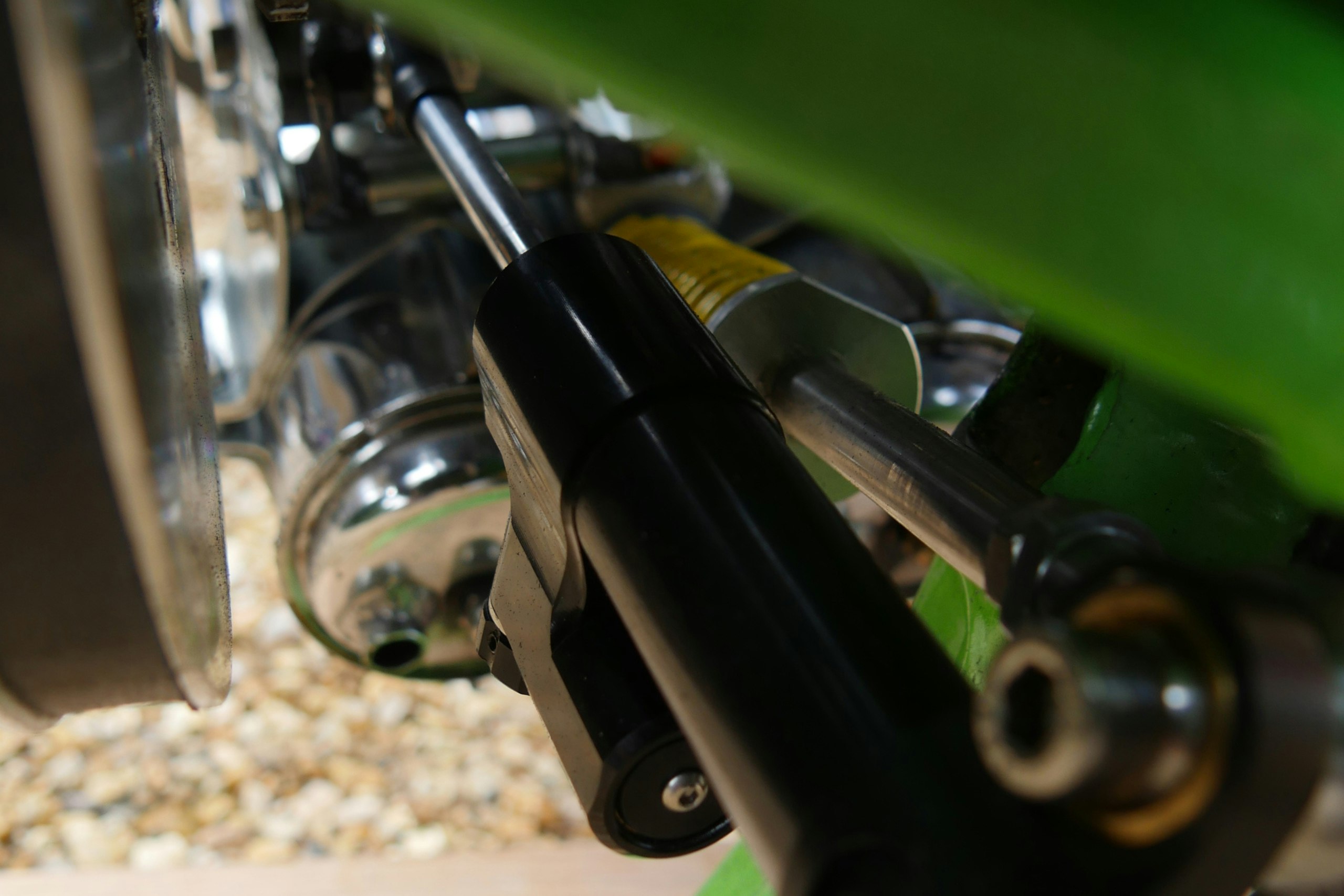
Ignition is by a heavily modified Peugeot 103 electronic unit with three triggers set at 120˚. Drive reaches the rear wheel via a crossover shaft (through the crank bracket for the original pedals) to a right-hand chain, ensuring the offset pulley is supported without needing an outrigger bearing. Belt tensioning is dealt with via a repurposed steering damper alongside the tensioning spring to halt the violent oscillations discovered on test rides. “Aftermarket variators allow the torque-to-revs equation to be retuned to match the engine,” continues Bill, “and numerous options exist to replace/upgrade the centrifugal clutch.”
Finished the week before the 2025 Alp gathering, there wasn’t much time to fully test the triple beforehand. Fuelling was a tad rich – fine in East Anglia, but less suitable halfway up a mountain. The Moby also devoured its clutch – the ‘OEM quality’ part disintegrated. “Franck Vivet delved into his hoard of dismantled bikes, retrieved a barely worn original and fitted it for me before we had finished the bottles of ice-cold Evian he furnished on our arrival. ‘Only use factory original clutches,’ he opined. As such things have not existed for years, I thought this was fairly unhelpful – until he gave me several more to take home for future projects. What is ‘diamond geezer’ in French?”
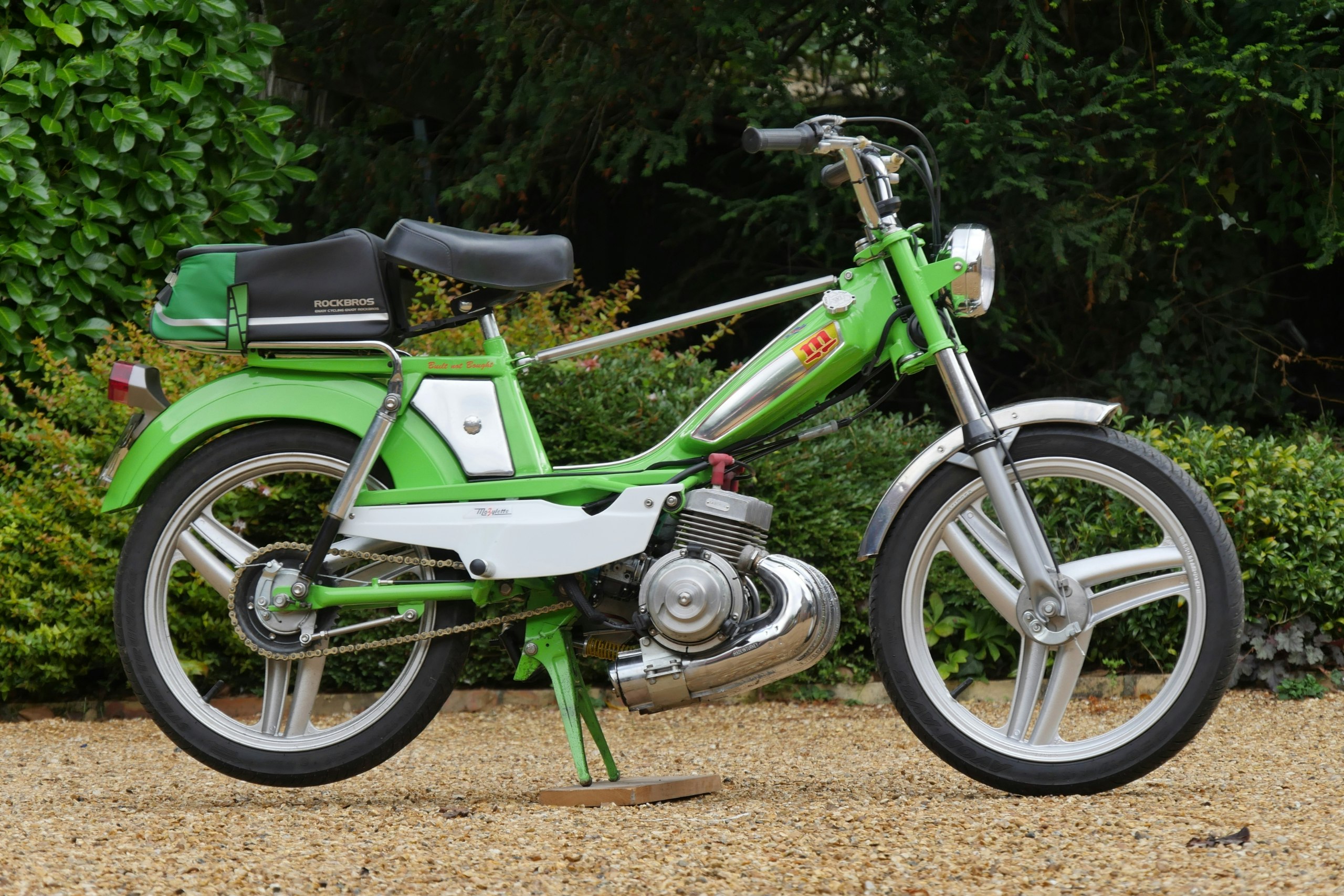
With smaller main jets, adjusted variator weights and a proper clutch, the triple is now properly sorted. Bill is modest about his abilities, using words like ‘amateur’ and ‘fledgling’, but the build and finish are spot on – with its carefully extended engine covers, neatly executed frame brace and perfect presentation, there’s little to suggest it’s anything but a restored original Mobylette. Until you spot that it has three exhausts...
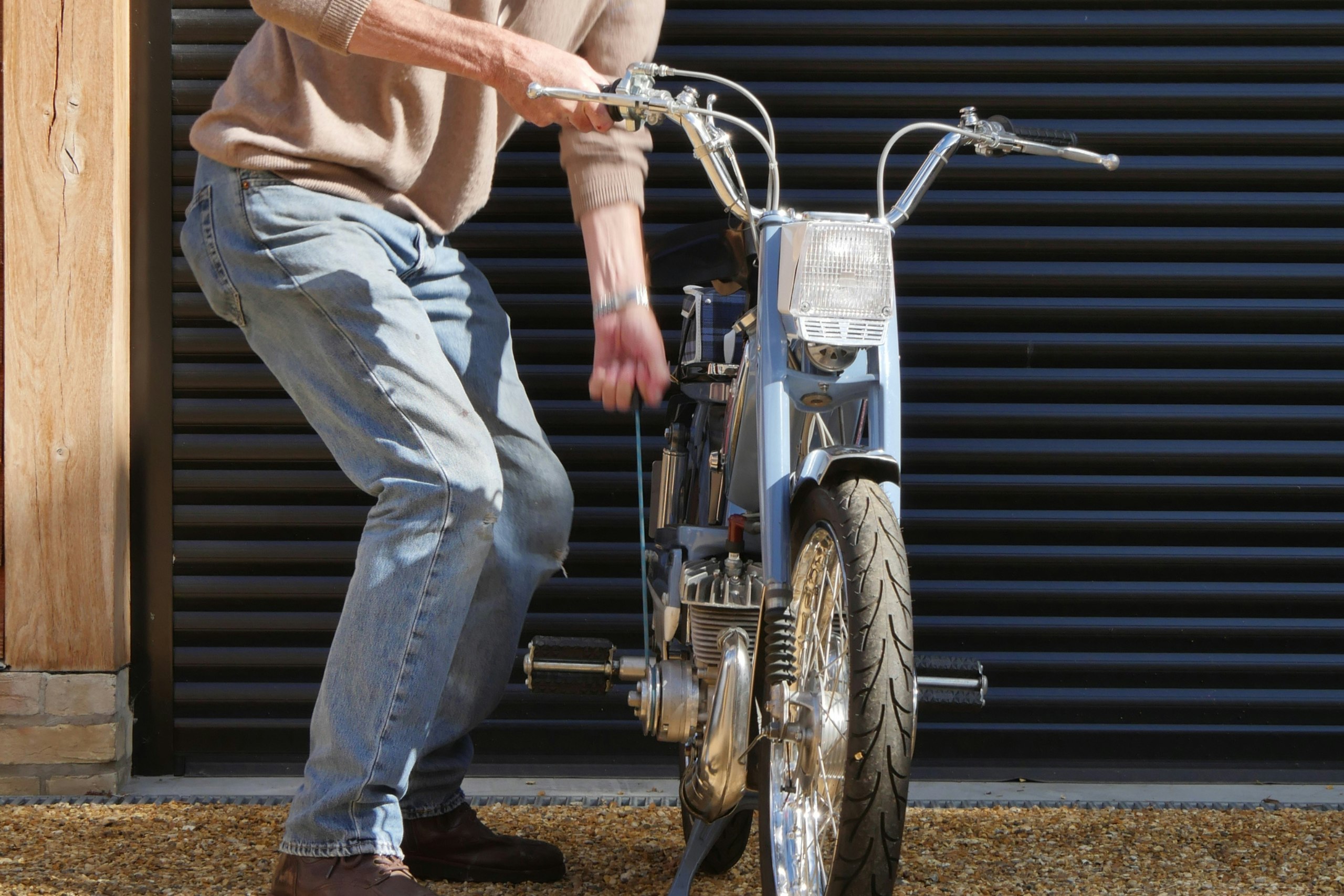
Or until you open the throttle. Started with a pullcord around the end of the crank, the triple twitters into life with a smooth, even exhaust note from its 120˚ firing interval. Tease in a bit of throttle – the modified transmission is effective but still prefers gentle application of drive at low speed – and the revs pick up briskly, the machine whisking itself forward with the sound and feel of any other Moby... until you glance down at the discreet digital display and see 60mph instead of 28.
With big-bore cylinders and fancy carbs, the conservative estimate is around 15bhp – and it delivers top-drawer amusement. The crisp chirp from the trio of standard, surprisingly sporty-sounding exhausts and bemused expressions from other road users make it impossible to ride without letting out joyous whoops.
All tiddlers provide much entertainment, but the easy-access frolics of the Mo3ylette are a whole new level of fun. And isn’t that what it’s all about?